
Livraison le jour même ou le lendemain

Qualité garantie

Débloquez vos offres de bienvenue: Livraison GRATUITE | Jusqu'à -80 % | 30 jours d'essai gratuits à JoyPlus
Téléchargez l'application
Video gaming has broken free from the living room. Thanks to technological advancements, powerhouses now fit in your pocket, making AAA gaming accessible anywhere, anytime. But with an overwhelming number of options, finding the right handheld console can quickly become a headache. Should you go for a closed ecosystem with its rock-solid exclusives, or opt for the versatility of a pocket-sized gaming PC?? This guide is here to help you navigate the landscape and find the machine that truly matches your gaming habits.
Before you start comparing models, it's essential to define your priorities. Three main criteria should guide your decision.
The choice of operating system is absolutely crucial. On one hand, consoles like the Nintendo Switch (OLED model) offer a closed, perfectly optimised environment and, most importantly, an unbeatable catalogue of exclusive games. It's the ultimate "plug-and-play" solution, ideal for hassle-free family gaming.
On the other hand, Windows-based machines like the ASUS ROG Ally X or the Lenovo Legion Go behave like true PCs. Their biggest advantage?? Total flexibility, giving you access to all your existing game libraries (Steam, Epic Games, PC Game Pass...). A Windows handheld is therefore the dream alternative to the Steam Deck for PC gamers who don't want to rebuy games they already own.
The spec sheet is where the battle is won: it determines the quality of your gaming experience. The power of the processor (CPU) and graphics chip (GPU) dictates the console's ability to run recent titles with a high level of detail.
The screen is just as crucial. A 120?Hz handheld console guarantees far superior image fluidity, a real treat in fast-paced action games. The resolution (Full HD, or 1920 x 1080 pixels, is the current standard) and brightness (in nits) are also important for optimal visual comfort, especially outdoors.
A portable console must, by definition, be... portable. Battery life is therefore a critical factor. It varies enormously depending on the machine's power and the demands of the games, ranging from barely 2 hours on the most demanding titles to over 8 hours on less intensive indie games.
Finally, ergonomics, weight, and grip are essential for powering through long gaming sessions without fatigue.
Here are three devices that excel in their respective fields, from the nomadic PC purist to the family seeking shared entertainment.
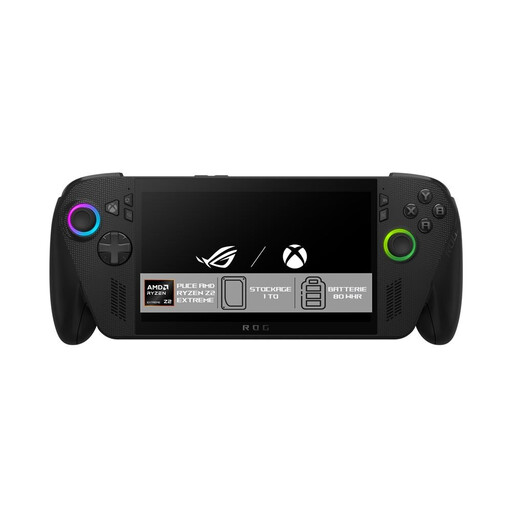
Why it stands out?: The ASUS ROG Ally X is for gamers who want to make zero compromises on performance. Armed with the AMD Ryzen AI Z2 Extreme processor, 24?GB of RAM, and a 1?TB SSD, it runs the latest AAA blockbusters on Windows 11 without breaking a sweat. Its generously upgraded 80?Wh battery promises much more comfortable battery life.
Pros:
Who is it for? The demanding PC gamer who wants to take their entire library and gaming experience everywhere, without sacrificing performance.
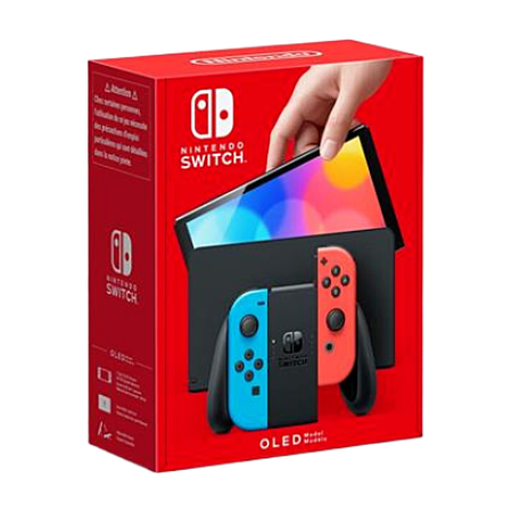
Why it stands out?: The Nintendo Switch (OLED model) continues to shine with its unique versatility and magnificent screen. Its 7-inch OLED display offers vibrant colours and infinite contrast that literally transform the gaming experience. Its still-brilliant hybrid concept allows you to switch from handheld to TV mode in the blink of an eye.
Pros:
Who is it for? Families, casual gamers, and of course, die-hard fans of Nintendo franchises. It's the ideal choice for those seeking conviviality, simplicity, and a truly unique game library.
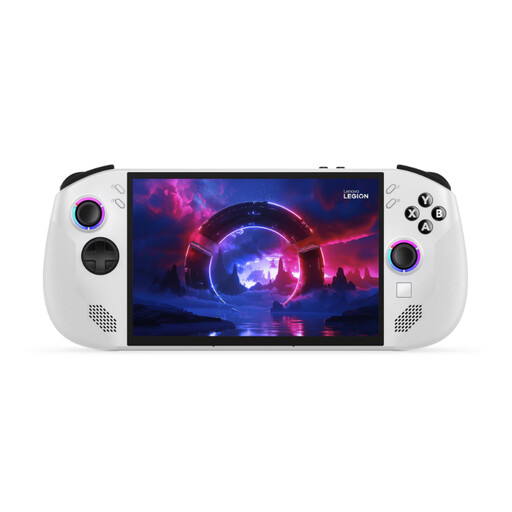
Why it stands out?: The Lenovo Legion Go S is all about immersion with its massive 8-inch screen. Powered by an AMD Ryzen Z2 Go processor and running Windows 11, it combines the immersion of a large screen with the versatility of a PC. Its Legion ColdFront cooling system keeps things in check to maintain stable performance, even during marathon sessions.
Pros:
Who is it for? The technophile who wants the largest possible screen on a handheld console for maximum immersion, without giving up the power and flexibility of the PC ecosystem.
The handheld gaming console market is booming, with models for every budget and player profile. If the machines in our selection don't check all your boxes, other options are worth your attention.
? Discover our full selection of gaming consoles
Absolutely. In fact, it's the main advantage of Windows 11 models like the ASUS ROG Ally X and the Lenovo Legion Go S. You can install the same launchers as on your computer (Steam, Epic Games Store, GOG, the Xbox app...) and access your entire library without spending an extra dime.
Battery life varies wildly. On a less demanding 2D game with moderate brightness, you can expect 6 to 8 hours. Conversely, when running a recent AAA blockbuster with graphics maxed out, the battery melts away and rarely exceeds 2 hours on the most powerful models. It's the unavoidable trade-off between power and mobility.
A 120?Hz refresh rate means the screen displays 120 frames per second, compared to 60 for a standard screen. The result?? A much sharper image in motion, and a massively enhanced feeling of fluidity and responsiveness. It's a decisive advantage in fast-paced games (racing, FPS, fighting) where every millisecond counts. For slower-paced games (strategy, adventure), the difference is less noticeable, but still appreciated.