
Livraison le jour même ou le lendemain

Qualité garantie

Débloquez vos offres de bienvenue: Livraison GRATUITE | Jusqu'à -80 % | 30 jours d'essai gratuits à JoyPlus
Téléchargez l'application
Whether you're a mechanics enthusiast, a weekend DIYer, or a seasoned professional, the quality of your hand tools makes all the difference. Good equipment is more than just a convenience—it's your guarantee of precise, safe work. But with an overwhelming number of options, it's hard to know where to start. This guide is here to help you navigate the choices, understand the essential criteria, and introduce our selection of indispensable tools for automotive and motorcycle repair and DIY projects.
To build a smart toolkit, you need to pay attention to a few technical details that make a huge difference in the long run. Here are three crucial points to check before assembling your tool case.
The choice of material is undoubtedly the number one criterion. Chrome vanadium steel (often abbreviated as Cr-V) is the gold standard for tools. This alloy is renowned for its incredible resistance to torsion, wear, and corrosion. A heat-treated Cr-V steel tool guarantees exceptional durability, even with intensive use. It's a true mark of reliability, especially for a mechanic's wrench set subjected to high stress.
A good tool must be effective, but also comfortable. Its design is paramount, especially for working in hard-to-reach areas. For example, offset box-end wrenches can fit where standard straight wrenches would be blocked. Similarly, the ergonomic handles of a cable cutter reduce hand fatigue and amplify your strength without extra effort.
To avoid buying more tools than you need, it's best to opt for well-designed tool sets. A good mechanic's wrench set should cover the most common sizes (typically from 8 to 19?mm for basic mechanics). The combination wrench, which features both an open-end wrench and a box-end wrench, is a model of versatility: the open end for speed, and the box end for a more secure grip and maximum torque.
Now that we've covered the basics, let's get practical. Here are three products that caught our attention and meet common needs in both DIY and mechanics.

What sets it apart Its deep offset angle is the secret weapon for reaching fasteners tucked away in inaccessible spots, where a standard wrench would give up. A decisive advantage in automotive and motorcycle repair.
Advantages
Who is it for? The ideal companion for amateur or expert mechanics working on cars, motorcycles, or utility vehicles who often encounter stubborn bolts.
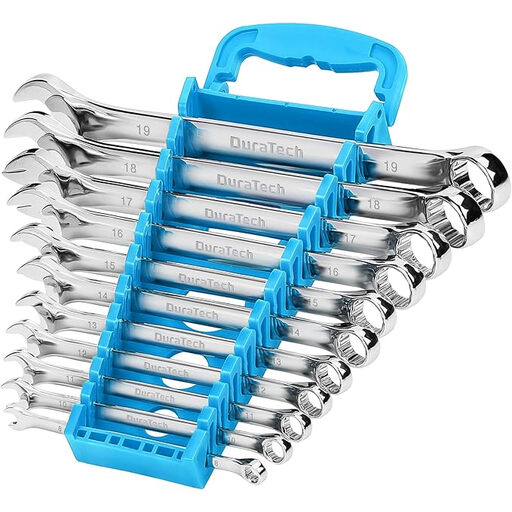
What sets it apart This set is, quite simply, the essential foundation of any good toolbox. Each combination wrench has an open end and a 12-point box end. The box-end wrench head is angled at 15 degrees, a detail that provides knuckle clearance and greatly simplifies manoeuvres on flat surfaces.
Advantages
Who is it for? An excellent starting point for home maintenance, DIY projects, or for aspiring mechanics who want a versatile and reliable first wrench set.
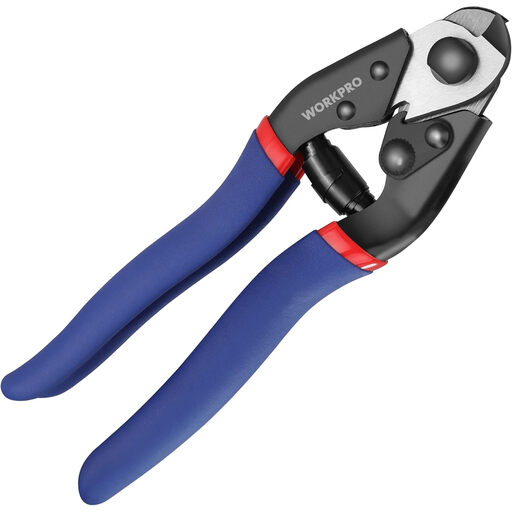
What sets it apart This cable cutter is a specialist tool, designed for one mission: to slice through wire ropes cleanly, without ever fraying them. Its forged and heat-treated Cr-V steel jaws ensure a formidable and durable cutting edge.
Advantages
Who is it for? The indispensable tool for cyclists who maintain their own bikes, DIYers working with wire rope, or anyone looking for a dedicated cutter for clean cuts on steel wires.
Our selection covers the most common needs, but every project is unique. Whether you're looking for other types of wrenches, specialty pliers, or a more comprehensive tool case, there's no shortage of options.
To explore a wider range of equipment renowned for its durability, take a look at our complete collection.
Discover Our Collection of Chrome Steel Tools
Chrome vanadium steel (Cr-V) is a steel alloy to which two key components are added: chrome, for resistance to corrosion and oxidation, and vanadium, for hardness, strength, and wear resistance. The result? Tools that don't deform under stress, don't rust, and remain effective for much longer. It is simply the material of choice for quality, long-lasting hand tools.
The open-end wrench (or fork wrench) has an open end to grip a nut or bolt head from the side. It is very practical for clear access and for quick tightening or loosening. The box-end wrench, in contrast, has a closed end (a ring) that completely encircles the nut. It offers a much more secure grip, distributes force across all sides of the nut, and thus prevents damaging it (the infamous "rounding off the corners"). It's the preferred wrench for applying high torque.
Simple but regular maintenance can literally double the lifespan of your tools. The best practice: after each use, wipe them with a dry cloth to remove dust, grease, and moisture. Then, store them in a dry place, ideally in their tool case, pouch, or rack. For hinged tools like pliers, a drop of lubricating oil on the mechanism from time to time will ensure they always move smoothly.