
Livraison le jour même ou le lendemain

Qualité garantie

Débloquez vos offres de bienvenue: Livraison GRATUITE | Jusqu'à -80 % | 30 jours d'essai gratuits à JoyPlus
Téléchargez l'application
Dry hands, tightness after washing, rough cuticles or a greasy film feeling: a hand cream needs to address a genuine need, not just make a pretty promise on the tube. Lightweight texture, organic formula, anti-spot treatment… the differences in composition and format can really change your day-to-day comfort.
A hydrating hand cream often contains humectants, such as glycerin or sodium PCA, which help the skin retain water on the surface. A nourishing hand cream typically relies on fatty substances: shea butter, plant oils or squalane.
If your hands are very dry, a formula that is too light may not provide enough comfort. Conversely, a rich cream can leave an annoying film if you need to go back to the keyboard, take the wheel or handle objects straight after.
Not all sensitive skins react to the same ingredients. Fragrance and certain fragrant allergens, such as limonene, linalool or geraniol, deserve your particular attention. Even when a hand cream for sensitive skin presents itself as gentle, take the time to check its INCI list.
A fragrance-free formula, like Mixa Ceramide Protect, can be more comfortable if you wash your hands often or prefer to avoid scented products.
An anti-ageing hand cream or an anti-spot hand cream may contain hydrating agents, antioxidants or a sun filter. That does not mean it will make marks disappear or transform the skin’s appearance. To compare products seriously, look at the ingredients, the protection factor and the usage conditions stated on the packaging.
For a shea butter hand cream, check the position of the butter in the ingredients list. The earlier it appears, the more significant its presence in the formula. However, this alone is not enough to predict the result on your skin.
A non-greasy hand cream will be more practical at the office, on public transport or after washing during the day. A richer texture is often better suited for the evening, in winter or when the skin is very rough. The best compromise also depends on how often you apply it: a cream that is pleasant to use will more easily find its place in your routine.
A 30 to 50 ml tube slips easily into a bag. 75 to 100 ml formats are suitable for regular use, while a 150 ml tube can be more practical at home or in the office. Also check the usage precautions: external use only, avoid the eye area and stop using if irritation occurs.
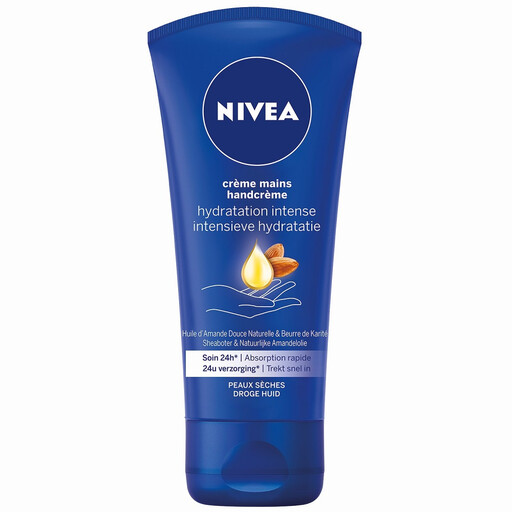
Why this choice suits this profile: Its 75 ml format and formula based on glycerin, shea butter and sweet almond oil make a good starting point for a daily routine.
The product page states fast absorption and a non-greasy finish – two points to check if you plan to use it during the day.
Shea butter, sweet almond oil, compact format and a formula stated as dermatologically tested.
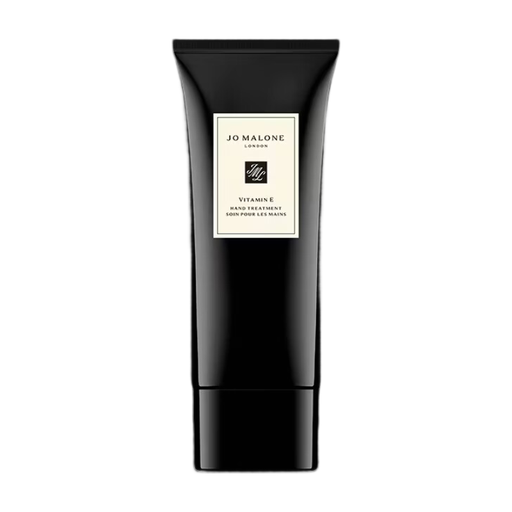
Why this choice suits this profile: This 100 ml treatment combines apricot kernel oil, vitamin E and sodium hyaluronate, with the brand’s signature fragrance.
The product page details the main ingredients and states a texture designed to absorb without leaving a heavy finish. If you are sensitive to fragrance, be sure to check the INCI list.
Apricot oil, vitamin E, hyaluronic acid and a 100 ml capacity.
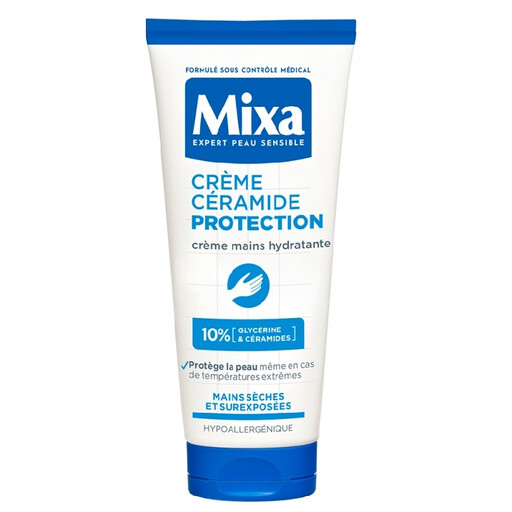
Why this choice suits this profile: Its fragrance-free formula, enriched with glycerin, shea butter and ceramides, was designed for dry hands subjected to repeated washing.
The absence of fragrance removes a common source of discomfort. The product page also recommends application after washing hands.
Fragrance-free formula, 100 ml format, glycerin, shea butter and ceramides listed in the composition.
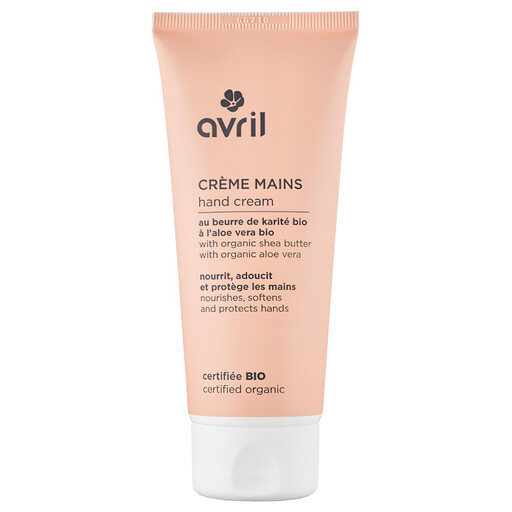
Why this choice suits this profile: This organic hand cream, made in France, holds Cosmos Organic certification, a vegan formula and 99 % naturally derived ingredients, according to its product page.
The organic and vegan claims are backed by a certification and precise percentages, making it easy to verify on the packaging.
Organic shea butter, aloe vera, Cosmos Organic certification and a 100 ml format.
We have put together a comprehensive, real-time updated selection of products that meet these demanding criteria, in compliance with European safety regulations.
Apply a small amount of cream to clean hands, paying particular attention to the knuckles, the backs of the hands and the cuticles. Reapply after every wash or exposure to cold. With a repairing hand cream that is rich, favour application in the evening: you will benefit from its nourishing power without it getting in the way of your activities.
If you use an anti-spot hand cream with SPF15, follow the frequency stated by the manufacturer and reapply according to your exposure. For prolonged exposure, a dedicated sun protection product may still be essential.
There is no universal frequency. For hands that feel tight, applying after each wash is a good baseline. If you use a richer texture, you can reserve it for the evening. Follow the recommendations on the product and adjust the amount to your needs.
Opt for a formula combining glycerin, shea butter, plant oils or panthenol. A nourishing or repairing hand cream will generally be more suitable than a very light emulsion. If your skin reacts easily, always check the INCI list.
Respect the expiry date or the period after opening indicated on the packaging. Close the tube after each use and store it away from heat and humidity. If the smell, colour or texture changes, it is best to stop using it.