
Livraison le jour même ou le lendemain

Qualité garantie

Débloquez vos offres de bienvenue: Livraison GRATUITE | Jusqu'à -80 % | 30 jours d'essai gratuits à JoyPlus
Téléchargez l'application
Prepare soup, compote or a smoothie without getting out a bulky appliance: that is the whole point of a hand blender. Also known as a stick blender or immersion blender, it is easy to store and can be used directly in a suitable container.
You still need to choose the right model. High power alone does not guarantee a smooth texture, some accessories end up at the back of a cupboard, and an appliance marketed as easy to clean can become awkward if its blending foot is not detachable. Here are the criteria to consider before you buy.
A powerful hand blender is particularly well suited to cooked vegetables, thick sauces and regular use. However, the wattage alone is not enough to assess its performance. The shape of the bell guard, blade design, how the ingredients circulate and the maximum operating time also play a role.
A well-designed 600 W model can be perfectly suitable for preparing soup every day. Conversely, a more powerful appliance may heat up quickly if its motor runs for too long. Take the time to read the instructions and follow the operating cycles specified by the manufacturer.
A hand blender sold with several accessories may include a whisk, chopper, measuring beaker or masher. This broadens its capabilities, provided you will actually use them. If you rarely prepare beaten eggs, chopped herbs, nuts or mash, these accessories are more likely to clutter up a drawer.
Remember to check the capacity of the containers too. A 500 ml chopper bowl is suitable for small quantities, but you will need to work in batches to feed the whole family. For soups, a sufficiently long blending foot will be much more practical in a deep stockpot.
The blades are particularly sharp, and food can become trapped beneath the bell guard. A hand blender that is easy to clean should ideally have a detachable foot or removable parts that are dishwasher-safe, in accordance with the manufacturer’s instructions.
The motor unit, cord and plug must never be immersed. Always unplug the appliance before removing the foot or changing an accessory. For hot preparations, choose a stable container and observe the maximum temperature stated in the instructions.
For everyday use, power between 450 and 650 W is generally sufficient for soups, compotes, sauces and smoothies made with soft ingredients. Models rated at 800 to 1,000 W offer more comfortable power reserves for thick mixtures and repeated use. However, take care when comparing figures: some manufacturers distinguish between rated power and maximum power.
Operating time deserves just as much attention. Several appliances in this selection limit continuous use to around one minute before requiring a cooling period. This pause helps prevent the motor from overheating.
A single-speed model, such as the Braun MultiQuick 1, focuses on simplicity. Two speeds and a turbo function provide greater control when switching from a smooth compote to a thicker sauce.
Variable speed settings allow you to fine-tune the texture, but a sophisticated dial is not essential in every kitchen. Look for a control that can be operated with one hand, without having to let go of the container, and check for a safety button or accessory locking system.
A stainless-steel foot will generally withstand stains and repeated use better than a plastic model. It may, however, be slightly heavier. A bell guard designed to minimise splashing helps prevent mess, provided you immerse it fully before starting the appliance.
For a multifunction hand blender, check the exact contents of the box: bowl capacity, type of whisk, whether a chopper is included, dishwasher compatibility and availability of spare parts. This information is far more valuable than a long list of poorly explained functions.
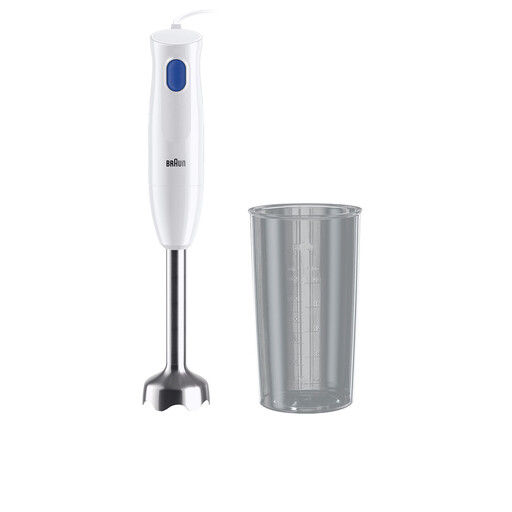
Why this choice suits this profile : With its 450 W motor, single speed and 600 ml measuring beaker, this model focuses on the essentials and stores away without taking up much space.
The product details clearly state that it operates at a single speed and for short periods: there are no exaggerated promises of versatility.
450 W, BPA-free 600 ml bowl, foot and bowl dishwasher-safe according to the product details.
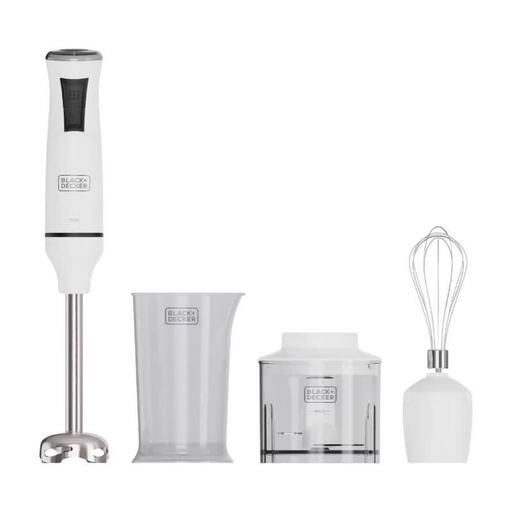
Why this choice suits this profile : Its 20 speeds, turbo mode and three accessories cover a family’s everyday needs: soups, mash, compotes, emulsions and smoothies.
The many speed settings serve a practical purpose and are combined with a bell guard advertised as splash-resistant.
600 W motor, 20 speeds, turbo, whisk and detachable chopper, dishwasher-safe according to the description.
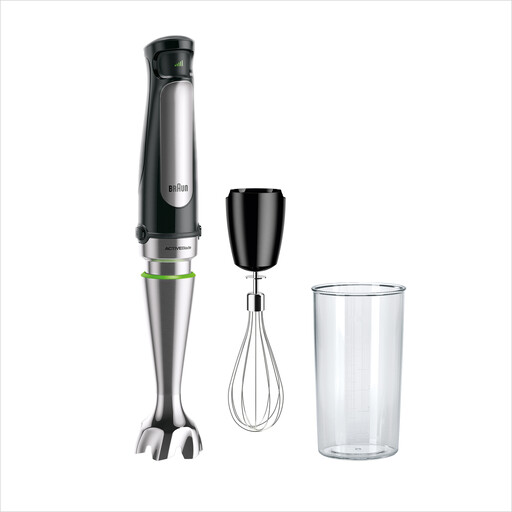
Why this choice suits this profile : It is designed for those who want one appliance for blending, whisking, chopping and mashing, with a speed that adjusts progressively.
The accessories are clearly identified: blending foot, whisk, chopper, masher and measuring beaker. Practical versatility rather than a vague list of functions.
1,000 W motor, SmartSpeed control and EasyClick Plus system for changing accessories according to the preparation.
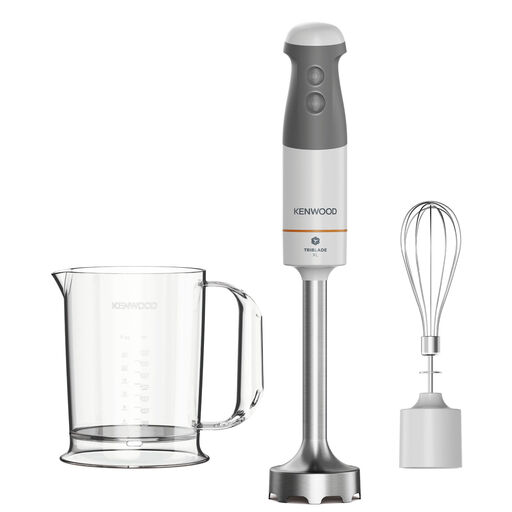
Why this choice suits this profile : Its foot, advertised as 20% longer, is suitable for preparing food in deep stockpots and for large quantities.
The product details specify the foot’s length, its 80 mm diameter and the usage limits. Useful information for checking that it really meets your needs.
850 W power, variable speed with turbo, whisk and 0.5 l measuring beaker, removable parts dishwasher-safe according to the product details.
We have brought together a complete, real-time updated selection of products that meet these strict criteria, as well as European safety requirements.
Yes, some models allow this, but the maximum temperature varies from one appliance to another. The Philips HR2531/00 and HR2534/00 specify a limit of 80 °C, while other product details mention a lower temperature. Always consult the instructions, use a deep container and avoid filling it to the brim.
There is no universal lifespan. It depends on how often it is used, the density of the food, whether recommended cooling times are observed and how well it is maintained. An appliance used for smooth soups is not subjected to the same demands as a model regularly used to chop dense ingredients.
Its energy consumption is generally low, particularly because it operates for short periods. To estimate it, multiply its power in kilowatts by its operating time in hours, then by your electricity tariff. A 600 W appliance used for five minutes consumes around 0.05 kWh. The actual cost will then depend on your electricity tariff.