
Livraison le jour même ou le lendemain

Qualité garantie

Débloquez vos offres de bienvenue: Livraison GRATUITE | Jusqu'à -80 % | 30 jours d'essai gratuits à JoyPlus
Téléchargez l'application
Making soup, purée, compote or a smoothie without pulling out a bulky appliance is incredibly handy in everyday life. However, choosing a hand blender isn't just about comparing the wattage printed on the box. Some models boast high power but come with few accessories or need frequent breaks. Others are versatile but a pain to clean or not well suited to hot preparations.
Here are the criteria to consider to avoid making a poor choice and to compare models based on how you'll actually use them.
A powerful hand blender makes light work of cooked vegetables, fruit and thick mixtures. However, power alone tells you nothing about the shape of the bell, how ingredients circulate, or how long you can use it for.
A model with 600 to 650 W is sufficient for everyday soups, sauces and compotes. For thicker preparations or tougher ingredients, a 1000 W hand blender offers more reserve. It's still essential to follow the manufacturer's instructions on usage time and cooling periods.
A hand blender with accessories can replace several utensils, provided the included items actually match your habits. The whisk is for beating eggs, whipping cream or making certain light batters. The chopper is suitable for herbs, vegetables, nuts and small quantities of food, within the manufacturer's recommendations.
Before choosing a multi-function model, check which accessories are included and their capacity. A hand blender with a 500 ml chopper won't meet the same needs as a large bowl designed for family-sized quantities.
Residue easily builds up around the blades and under the bell. A detachable shaft, dishwasher-safe parts and a simple locking system reduce the hassle after each recipe. The motor unit, however, must never be submerged.
For hot preparations, always consult the manual. Some appliances have a maximum temperature of 60 or 80 °C and recommend letting the contents cool before blending. The bell must be fully submerged before switching on to minimise splashing.
Rated power is a useful starting point, but speed control matters just as much. A variable-speed control lets you start gently with a soup or sauce, then increase the intensity for a finer texture. 'Turbo' or pulse functions are handy for short bursts, but they don't replace the need to follow the timings in the manual.
A stainless steel hand blender typically has a metal shaft that's resistant to heat and repeated use, within the manufacturer's guidelines. The diameter and length of the shaft also matter: a longer model can reach the bottom of a deep saucepan, while a well-designed bell encourages ingredient circulation and reduces splatter.
Plastic accessories should be stated as suitable for food contact. 'BPA-free' is a reassuring marker, but it doesn't replace checking the temperature and care instructions.
For family use, look for at least:
The number of accessories alone doesn't tell you anything about the appliance's performance. It's better to choose a set that matches the recipes you actually make.
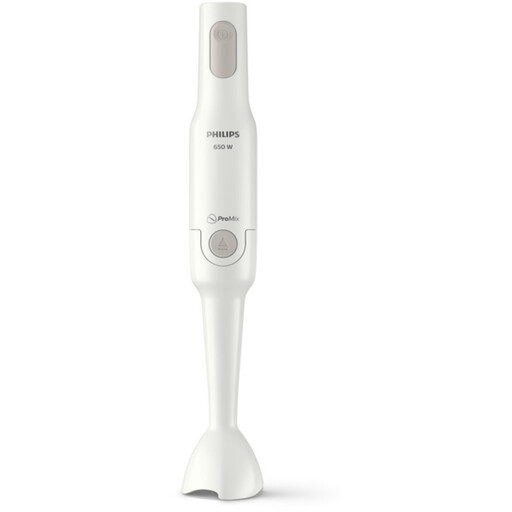
Why this choice suits this profile: Its simple design handles everyday preparations, while its compact size tucks easily into a drawer.
It doesn't rely on excessive power for daily use and includes a jug and a detachable shaft.
650 W motor, ProMix technology, single-speed control and a plastic shaft that's easy to rinse.
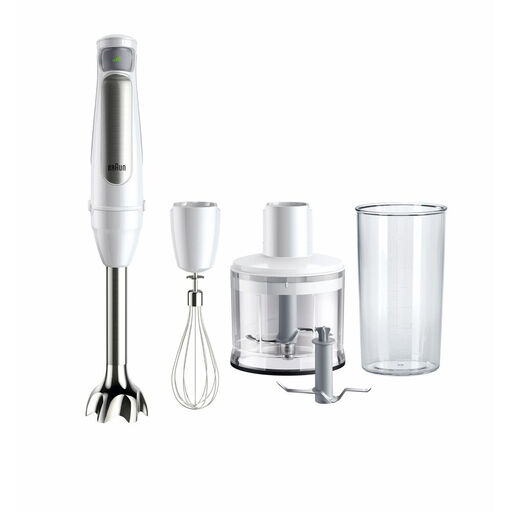
Why this choice suits this profile: Its SmartSpeed control and accessories are aimed at households that want to vary their recipes without cluttering the kitchen with extra gadgets.
The power comes with variable speed control, splash protection and a tool-free accessory change system.
1000 W motor, stainless steel shaft, 500 ml chopper and detachable double whisk.
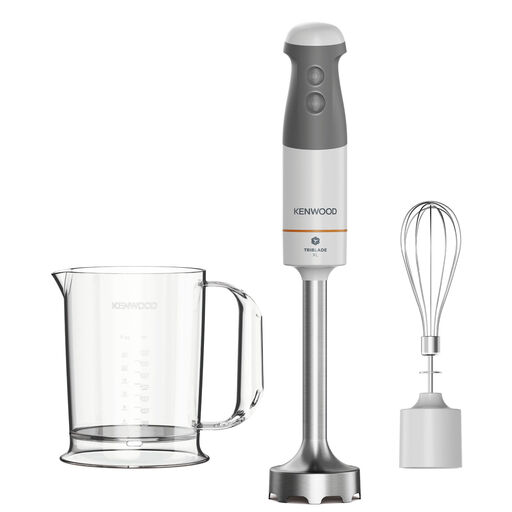
Why this choice suits this profile: Its longer shaft and bell, claimed to be 35 % wider, make blending in a deep saucepan easier.
Its design targets large containers, rather than limiting use to a small measuring jug.
Variable speed with Turbo, EasyTwist whisk and detachable parts claimed to be dishwasher-safe.
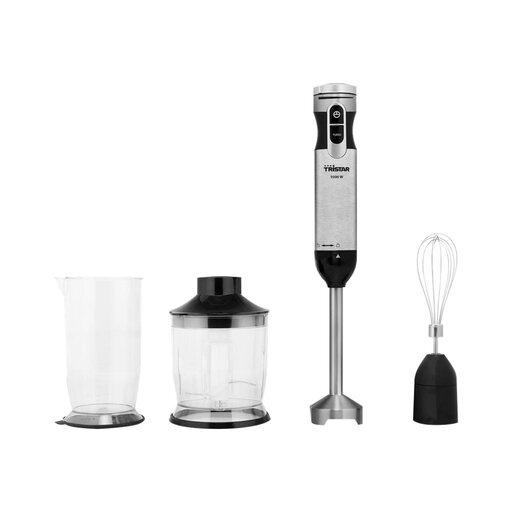
Why this choice suits this profile: It brings together blending, chopping and whisking functions in one set suited to a variety of recipes.
The included accessories are clearly identified, so you can check their usefulness before buying.
800 W motor, two speeds plus Turbo, whisk, chopper and detachable parts claimed to be dishwasher-safe.
We've put together a comprehensive, real-time updated list of products that fully meet these strict selection criteria and European safety regulations.
To keep your appliance in good condition and achieve a smooth texture:
A blender for soup and smoothies can stay practical for a long time, provided you don't use it with foods or temperatures it wasn't designed for.
For blending cooked vegetables and making classic soups, 600 to 800 W is generally sufficient. A 1000 W appliance offers more leeway with thick textures, but the blade design and speed control remain key factors.
Yes, if the manual allows it and the shaft can handle the temperature of the mixture. Avoid fragile containers that could get scratched, and submerge the bell before switching on. For very hot liquids, let them cool according to the limits stated by the manufacturer.
These appliances typically run for only a few minutes per recipe. Their energy consumption depends on the power and usage time, but the impact on your bill is mainly linked to how often and how long you use them. Unplugging the appliance after use also stops it from being left on unnecessarily.