
Livraison le jour même ou le lendemain

Qualité garantie

Débloquez vos offres de bienvenue: Livraison GRATUITE | Jusqu'à -80 % | 30 jours d'essai gratuits à JoyPlus
Téléchargez l'application
A well-organised hallway starts with the right piece of furniture for your home’s layout. Yet some purchases quickly disappoint: dimensions that were poorly judged, capacity that’s too limited, or a structure that doesn’t stand up to daily use. Before you choose a hallway storage unit, a console table, a shoe cabinet or a bench with storage, a few simple checks are all it takes to avoid wasting money.
A piece of furniture can look compact while still significantly narrowing the walkway in a corridor. You need to measure the available space, but also allow enough clearance to open a door, a drawer or a flap.
In a narrow hallway, a depth of around 25 to 35 cm is usually easier to fit. For a bench, the length and seat height must also leave enough room for comfortable movement.
A bulky piece of furniture doesn’t guarantee practical storage. Fixed shelves can limit the space available for boots, boxes or larger shoes. Models with adjustable or removable shelves let you adapt the layout to whatever you need to store.
For a shoe cabinet, also check the number of pairs stated and the internal configuration. High-top or wide shoes take up more room than flat shoes.
In a high-traffic area, a tall or heavily loaded piece of furniture must remain perfectly stable. Adjustable feet make it easier to level on an uneven floor. An anti-tip device is especially valuable for a hallway storage unit or a narrow shoe cabinet.
The maximum load stated should be interpreted according to the intended use: weight distributed across a shelf, static weight supported by a seat, or the capacity of a single shelf. These figures don’t guarantee safe use in a different way.
Measure:
In a small hallway, a shallow console table or a narrow shoe cabinet can hold everyday items without encroaching too much on the walkway. In a living room, the same piece can also serve as decorative storage behind a sofa.
High-density particle board is common in indoor furniture. It offers a smooth surface and is easy to clean, but it’s best to avoid standing water and abrasive products. A thick tabletop can be handy for placing keys, a lamp, books or a few decorative items.
Metal frames usually add an interesting visual contrast and can improve stability when properly assembled. Before ordering, check the type of feet, whether there are glides, and the load ratings on the product page.
Your needs determine the format:
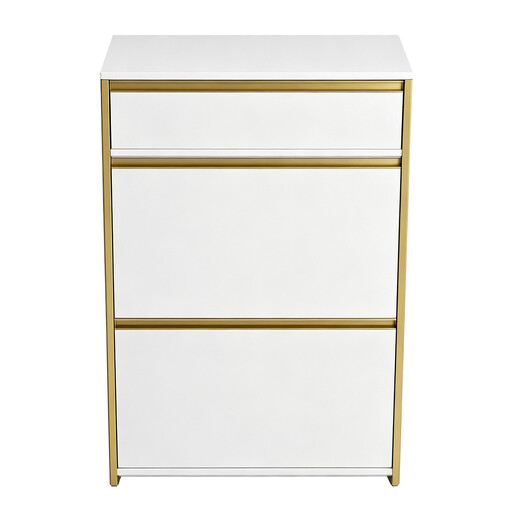
Why this choice suits this profile: At around 60 cm wide and 24 cm deep, this model easily fits into hallways where every centimetre counts. It can also work in a corridor or living room.
The adjustable and removable shelves prevent a layout that’s too rigid. The product page states a capacity of up to 12 pairs, depending on their size.
The drawer, doors and top surface combine closed storage with extra space. An anti-tip device is included.
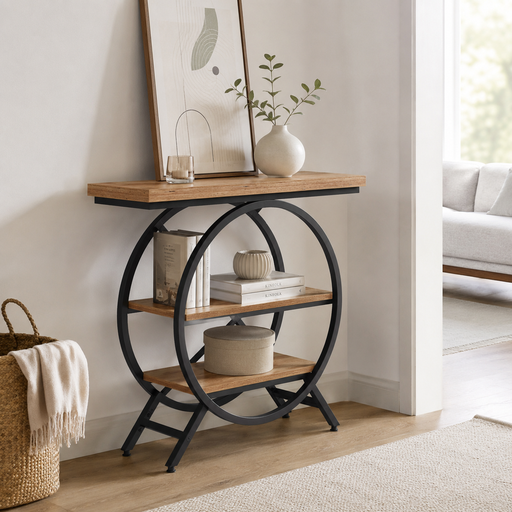
Why this choice suits this profile: Its wood-effect top and geometric metal frame will appeal to those looking for a living room piece or hallway console with strong decorative presence.
The three open shelf levels keep items visible and easy to reach, unlike a unit where storage spaces are hard to access.
The manufacturer states a 4 cm thick top, four adjustable feet and a maximum load of 150 kg.
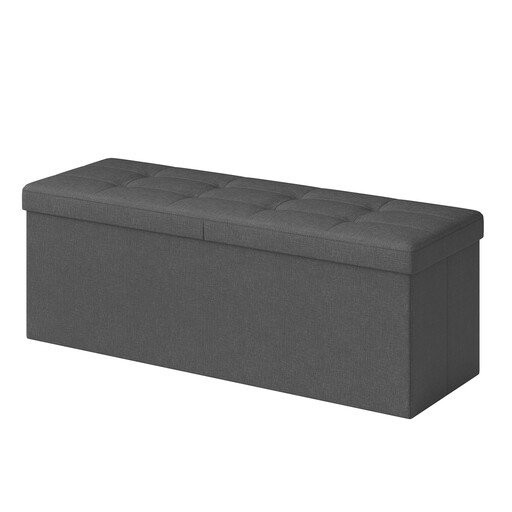
Why this choice suits this profile: This chest is ideal for a family or a home that needs a seat in the hallway, bedroom or living room, while offering generous internal volume.
With dimensions of 110 × 38 × 38 cm, it offers a stated 131 litres of enclosed space, and folds flat for storage when not in use.
Its MDF structure, foam padding and linen-look upholstery give it a neat appearance. The stated maximum static load is 300 kg, subject to following the usage instructions.
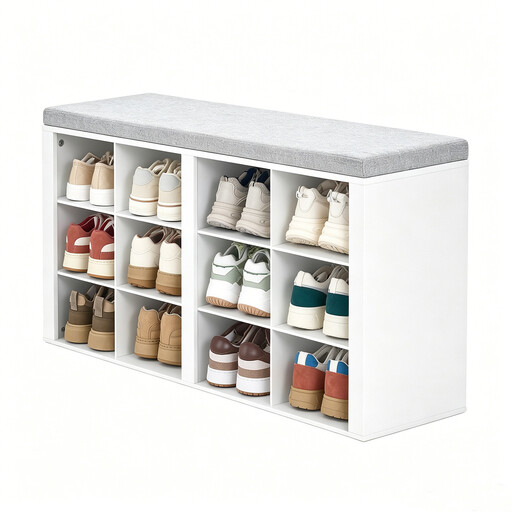
Why this choice suits this profile: It combines a seat and shoe storage at around 104.5 cm wide, making it easy to change shoes in the hallway.
The compartments and adjustable shelves let you separate trainers, high-top shoes and boots. The removable cushion makes cleaning easy.
The stated maximum load is 150 kg. Illustrated instructions and included accessories make assembly straightforward.
We’ve put together a comprehensive, real-time updated selection of products that meet these demanding criteria and European safety regulations.
Before you start assembling, sort the parts and read the instructions carefully. Tighten the fixings gradually to avoid misaligning the panels. For a tall unit, use the supplied anti-tip system and choose a fixing suitable for your wall type.
For everyday cleaning, a slightly damp cloth is usually enough for composite wood and metal surfaces. Avoid overloading the shelves and only sit on models designed for that purpose. With a storage bench chest, the lid must be fully closed before sitting down.
A shallow console table or a narrow shoe cabinet is usually easier to fit. Measure the available depth and check the space needed for doors to open. An open structure can help preserve a sense of space, while a closed unit hides shoes and accessories better.
Sort pairs by how often you wear them and reserve the most accessible levels for everyday shoes. Adjustable shelves make it easier to store boots, trainers and shoes of different sizes. A basket on the top can hold keys, gloves or small accessories.
A shoe bench is suitable if you want to sit down to put on your shoes. A storage chest with a seat offers more volume for blankets, bags or seasonal items. In a small space, check that the bench length doesn’t interfere with opening the door or moving around.