
Livraison le jour même ou le lendemain

Qualité garantie

Débloquez vos offres de bienvenue: Livraison GRATUITE | Jusqu'à -80 % | 30 jours d'essai gratuits à JoyPlus
Téléchargez l'application
A cluttered hallway can quickly become a dumping ground for coats, bags, shoes and umbrellas. Yet choosing a hallway coat rack based on looks alone can lead to a few unpleasant surprises: insufficient stability, too few hooks or fixings that are incompatible with the wall.
Before placing your order, it is worth knowing the most common pitfalls.
A freestanding model may look compact in photos, but its base needs to be wide enough to support the whole family’s clothing. Check its floor dimensions, height and the space needed to move around it.
In a narrow hallway, a wall-mounted coat rack, a wall hook or a few wall hooks will provide more room to pass through. These solutions also fit easily behind a door, in a bedroom or in a home office.
Six hooks do not necessarily mean that the rack can hold six thick coats. Check the stated maximum load, the type of fixing and how the weight is distributed.
A freestanding coat rack must stand on a stable base. A wall-mounted model, meanwhile, must be fixed using plugs suited to the type of wall: concrete, brick, plasterboard or a hollow partition wall. In rented accommodation, adhesive solutions can avoid drilling, provided you follow the manufacturer’s recommendations and use them on a compatible surface.
Storage intended for a family has different requirements from a bedroom coat rack designed for a few items of clothing. In a hallway, shelves, a bench or a shoe compartment may prove more useful than a purely decorative piece of furniture.
In a bathroom, choose materials that can withstand moisture and avoid installing hooks in an area directly exposed to splashes.
Measure the available width, maximum depth and ceiling height. Leave a comfortable passage in front of the door. For an hallway unit with coat rack, also consider the space needed to open the doors, drawers and bench.
A 120 × 30 × 200 cm unit can provide ample storage capacity, but it requires a sufficiently long wall. By contrast, a wall-mounted six-hook rack is better suited to a narrow corridor.
Wood adds a warm touch, while steel and aluminium are often popular for their easy-to-clean surfaces. A varnished or powder-coated finish can help protect the material, but it does not replace suitable care.
To extend the life of your coat rack:
Your needs depend on the size and make-up of your household. A coat rack with shelves can hold bags, accessories or a few decorative items. A coat rack with bench and shoe storage makes it easier to organise a family hallway, while a simple wall hook is generally enough in a spare bedroom.
For heavy coats, spread the weight across several hooks rather than hanging everything in one place.
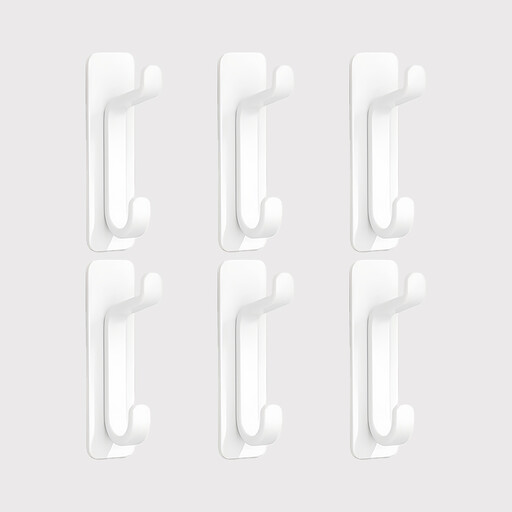
Why this product suits this profile : This pack of six hooks is ideal for anyone who wants to organise a small hallway, bedroom or the back of a door quickly, without taking on drilling work.
Drill-free installation makes life easier for renters. However, check that the surface is compatible and confirm the permitted load before hanging heavy clothing from the hooks.
A pack of six pieces, a stated stainless steel construction and installation on a door.
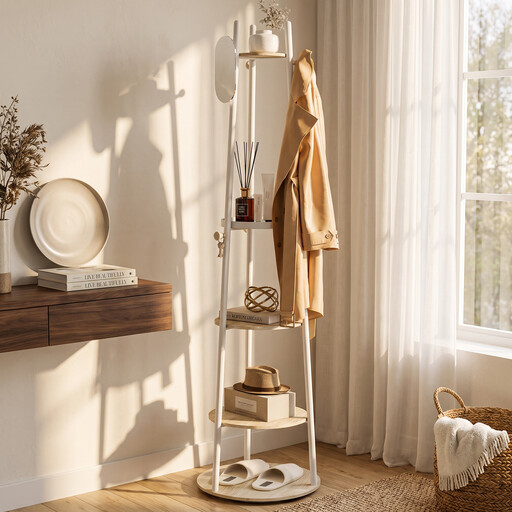
Why this product suits this profile : Its combination of wood and metal, removable mirror and open storage spaces make it a great fit for a hallway or bedroom where storage is also part of the décor.
The five shelves complement the hooks, so everything does not have to rest on a single bar. The rotating base should be installed on a level floor, and the stated total load of 44 lb, or approximately 20 kg, must be respected.
Six hooks, five shelves, an integrated removable mirror and assembly designed to require no tools.
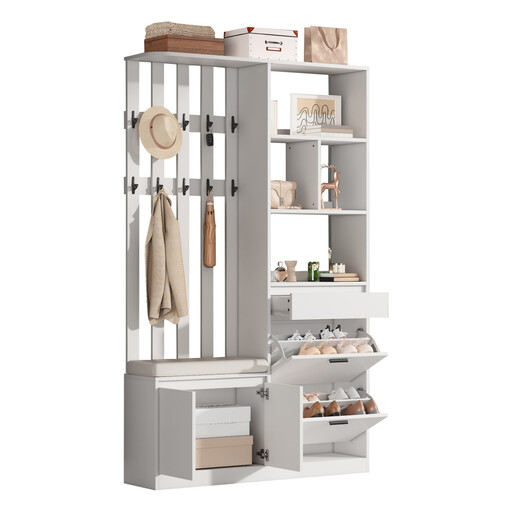
Why this product suits this profile : This unit meets the needs of a family looking to keep clothing, shoes and accessories together in a single hallway piece.
Its clearly stated dimensions make it easier to check whether it will fit your wall. Measure the available space before buying and plan for a secure fixing if the unit needs to be anchored.
Ten metal hooks, a padded bench, two shoe compartments, one drawer and two doors.
We have put together a comprehensive, real-time updated selection of products that meet these exacting criteria as well as European safety standards.
Use plugs designed for plasterboard and check the load supported by each fixing point. For a heavy unit or a very heavily loaded model, locate a stud if possible or reinforce the support. Check the fixing again after a few days of use.
Its lifespan depends on the material, supported load, frequency of use and quality of installation. Gentle cleaning, evenly distributing clothing and regularly tightening the screws all help to reduce wear.
No. The surface must be clean, dry, smooth and compatible with the adhesive. A dusty, porous, damp or uneven wall may reduce adhesion. Follow the manufacturer’s stated application time and load limit before hanging heavy items from the hooks.