For a portion that’s ready to serve
If you want to put a single pain au chocolat on the table or take one with you, look for a ready-to-eat option and check that each pastry is genuinely wrapped individually.


For a no-prep, single-portion treat at a Halloween party, choose a ready-to-eat pain au chocolat with individually wrapped portions confirmed on the packaging. A bake-at-home option is worth considering if you want to serve it warm and can follow the preparation and storage instructions. Then compare the weight per pastry, ingredients, allergens and nutritional information per 100 g.
If you want to put a single pain au chocolat on the table or take one with you, look for a ready-to-eat option and check that each pastry is genuinely wrapped individually.
If sugar, fat or allergens are important to your choice, start with the nutritional information per 100 g, then check the portion details if provided.
If you have an oven and can prepare the pastries before serving, a bake-at-home option is worth considering. Check the storage and baking instructions for the product you choose.
For a single-portion Halloween treat, first decide whether you want something ready to eat or something to bake in the oven. Then use the pack format and label to compare products without confusing the total pack weight with the size of an individual pastry.
| What to check | Look for | Who is it for? |
|---|---|---|
| Individual portions | Confirmation of individual wrapping, number of pastries and weight per pastry. | If I want to serve just one pain au chocolat without opening the others, I need a ready-to-eat pastry that’s separate from the rest of the pack. Around 42% of consumers prioritise individual portions. |
| Ingredients and allergens | Sugar, fat and salt per 100 g; ingredients and allergens for the exact product. | When I’m comparing two recipes or need to take an allergen into account, the information on the pack matters more than how the product looks. Checking the ingredients is the main priority for around 33% of consumers. |
| Preparation | Whether it says “ready to eat” or “bake at home”, the equipment needed and storage instructions. | If I want to serve warm pastries, I can plan for the oven and preparation time rather than choosing a product that’s ready to eat straight away. Serving them warm is the top priority for around 25% of consumers. |
The DGCCRF describes Nutri-Score as a voluntary label. Its absence doesn’t, on its own, tell you what the product contains.
If it is displayed, use it as an additional guide. When comparing two prepacked pain au chocolats, also check the ingredients, allergens and nutritional information per 100 g.
An Auchan product listing mentions 20 individual sachets, while another field on the same listing says otherwise. So the number of pastries in the box alone doesn’t confirm how they’re packed.
If you only plan to open one pastry, check the packaging for the product stocked by your local store.
The 75 g BIO pain au chocolat from Bridor is ready to bake, so it isn’t suitable if you want to serve a pastry straight away without any preparation.
Choose a format to suit when you’ll be serving it, and follow the storage and baking instructions for the product you buy.
Preparation takes time and requires an oven. Also check that you have enough space to store the product as directed on the packaging.
This wording doesn’t tell you the amount of sugar or list all the ingredients and allergens in a particular product.
Check the label on the pack you choose, especially if someone needs to avoid an allergen.
An option for baking pain au chocolat at home, rather than serving an individually wrapped pastry straight away.
A retailer where you can check the packaging of different pain au chocolat products.
Another bakery section to browse for a format that suits how you plan to serve the pastries.
An option for comparing packs containing several pastries.
A way to buy a pain au chocolat baked in store instead of a pack to prepare at home.
A retailer where you can compare multi-packs with products available from the in-store bakery counter.
This selection is for baking pain au chocolat to serve warm from the oven. If you’d rather have a pastry that’s ready to eat straight away, check for the words “ready to eat” and confirm that the option you’re considering is individually wrapped.
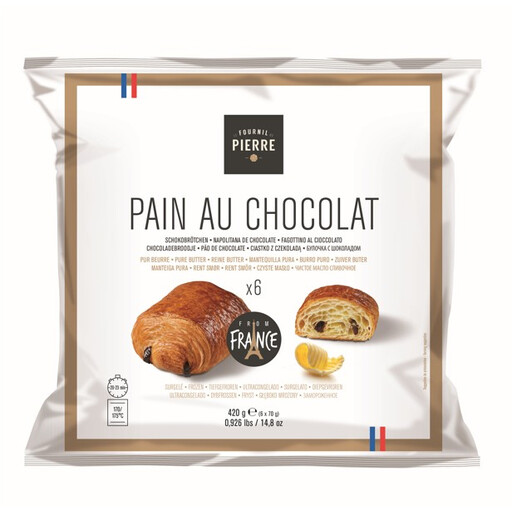 Image unavailable
For baking pastries in the oven before serving, rather than offering one that’s ready to eat. The pack contains 6 pastries, weighing 420 g in total. If you only want to use one, check how the pastries are packed and read the baking and storage instructions on the packaging.
No. The tax on sugary drinks described by the French Ministry of the Economy applies to drinks, not solid pastries such as pain au chocolat. To find out how much sugar a pastry contains, check its nutritional information.
No. The DGCCRF describes Nutri-Score as a voluntary label. For a prepacked product, check the ingredients and allergens, as well as the nutrition declaration where required, subject to any applicable exemptions.
First compare the nutritional information per 100 g, the common basis specified by the DGCCRF. Then check the weight per pastry and the nutrition per portion, if shown on the packs. The total weight of each box doesn’t tell you on its own how much you’ll be serving.
No. It doesn’t replace the ingredients and allergen list for the exact product. Check the label on the product you buy, including any “may contain” warnings if they’re relevant to the person who’ll be eating it.
Choose a bake-at-home option if you want to serve the pastries warm and have the necessary equipment and time. If you want something to put straight on the table, look for a ready-to-eat product instead. Either way, check the packaging and instructions for the product you choose.