Hosts keeping an eye on added sugars
You’re looking for a drink to share, but want to check that no sugar has been added. Check the product name, ingredients list and wording on the packaging, rather than relying on the word ‘diet’ alone.


For a Halloween party, start by deciding which matters most to you: avoiding added sugars or comparing the total sugar content per 100 ml. Pure juice and nectar labelled ‘no added sugar’ still contain naturally occurring sugars; sweetened nectar may show a different figure, but you should also make sure its ingredients and fruit content suit you.
You’re looking for a drink to share, but want to check that no sugar has been added. Check the product name, ingredients list and wording on the packaging, rather than relying on the word ‘diet’ alone.
Your priority is the sugar content shown per 100 ml. You can compare pure juice with sweetened nectar, as long as you bear in mind that their ingredients differ.
You’ll also want to consider how much you need to serve and the storage instructions after opening. Don’t assume that the pack size or a sugar-related claim tells you about the drink’s overall nutritional quality.
To compare drinks for your party, first decide what you mean by ‘less sugar’: no added sugars or a lower sugar figure per 100 ml. Then check the recipe and how much you plan to serve.
| Criterion | What to check | Who it matters to |
|---|---|---|
| No added sugars | Read the product name, ingredients list and ‘of which sugars’ figure per 100 ml: no added sugar does not mean sugar-free. | I want to avoid added sugar in the recipe, while accepting sugars that occur naturally in fruit; around 42% of consumers would prioritise no added sugar. |
| Sugar figures | Compare the sugar content per 100 ml on the same basis, then check the ingredients, including whether a sweetener is used. | If I’m mainly looking for a lower sugar figure on the label, I could consider a sweetened recipe; around 33% of consumers would prioritise comparing the figures. |
| Serving and storage | Choose the volume to suit the portions you plan to serve, and follow the storage instructions for that bottle after opening. | When I’m hosting several people, I want to plan the right amount and know what to do with any leftovers; almost 25% of consumers would prioritise serving needs and pack size. |
Naturally occurring sugars are still included in the nutritional information. For example, Auchan’s product listing for Tropicana Tropical Mixed Fruit Pure Juice shows 10 g of sugars per 100 ml.
Compare the ‘of which sugars’ figure per 100 ml with the portion you plan to serve.
E.Leclerc’s product listing for Eco+ mixed fruit nectar shows 4.9 g of sugars per 100 ml, as well as the sweetener E960a and a minimum fruit content of 50%. The sugar figure alone doesn’t tell you what’s in the recipe.
If the presence of a sweetener matters to you, check the ingredients alongside the nutritional information.
Carrefour Classic’s product listing combines a ‘no added sugars’ claim with a figure showing 0.5256 g of added sugars per 100 g. This contradiction matters if avoiding added sugar is your main criterion.
Before choosing this product, check the bottle label, especially the ingredients and any claims about sugars.
Storage instructions vary by product. For its 1.5 L Tropical Mixed Fruit Pure Juice, Auchan’s product listing says to keep it chilled at no more than 7 °C and consume within 5 days of opening.
Plan how much you’ll serve and follow the instructions on each bottle once opened.
Tropicana’s range, listed by Carrefour and Auchan, includes mixed fruit pure juices.
The range includes a mixed fruit nectar that Carrefour describes as having ‘no added sugars’.
This brand includes a 1 L mixed fruit nectar described as having ‘no added sugars’ on its E.Leclerc listing.
The mixed fruit drink listed by E.Leclerc is a nectar with sweetener, not a pure juice.
Lidl France lists a Solevita product called ‘Mixed Fruit Pure Juice’.
This selection includes nectars and mixed fruit juices for sharing at a party. Some recipes combine two fruits without being described as ‘mixed fruit’: first choose the category and fruits you want, then check the sugar-related claims on the packaging.
 Image unavailable
If you’re serving mixed fruit nectar to a group, compare its ingredients and the sugar-related claim on the bottle. Stated size: 1.5 L.
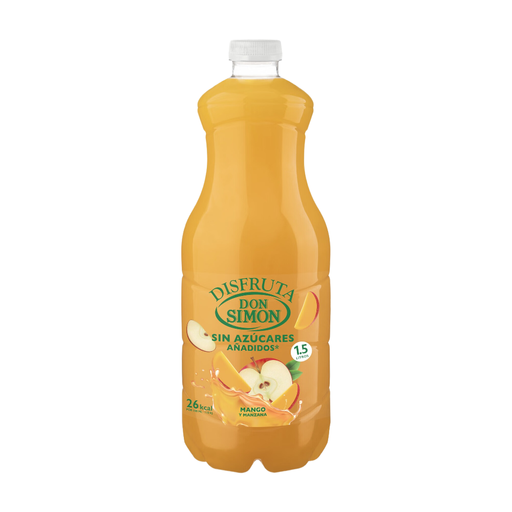 Image unavailable
This mango and apple recipe could suit you if you want these two fruits rather than a drink specifically described as ‘mixed fruit’. Check the ingredients and sugar content per 100 ml; stated size: 1.5 L.
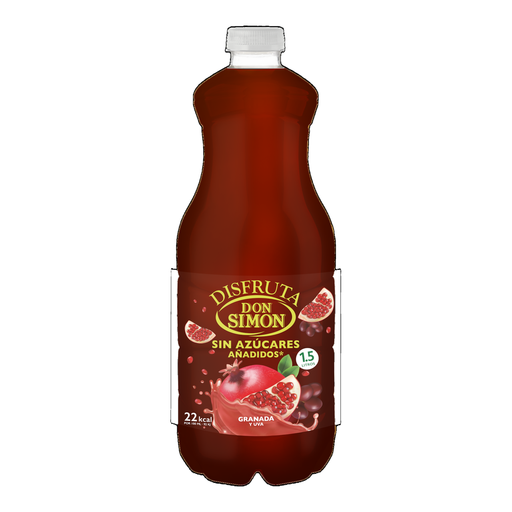 Image unavailable
If you’re interested in a pomegranate recipe, check the fruit content and whether the ingredients include any sweeteners before comparing it with mixed fruit nectars. Stated size: 1.5 L.
 Image unavailable
If you’re choosing a mixed fruit juice to share, check its exact product name and the ‘of which sugars’ figure on the packaging. Stated size: 1.5 L.
 Image unavailable
This 1 L mixed fruit juice can be compared with larger sizes, depending on how many portions you plan to serve. Check the packaging for the ingredients and sugar content per 100 ml.
No: naturally occurring sugars still count. For example, Auchan’s listing for Tropicana Tropical Mixed Fruit Pure Juice, described as having ‘no added sugars’, shows 10 g of sugars per 100 ml. Check the ‘of which sugars’ figure for the product you choose.
No. ‘Fruit juice’ and ‘nectar’ are distinct categories with different compositions. To compare them, check the product name on each pack, then look at the ingredients and fruit content where stated.
According to the DGCCRF, French decree no. 2026-312 applies to products placed on the market from 14 June 2026. Légifrance states that products covered by the previous rules may continue to be sold until stocks run out, so check the claims on the bottle you’re buying.
Follow the instructions for the bottle you’ve bought. For Tropicana Tropical Mixed Fruit Pure Juice 1.5 L, Auchan’s listing says to keep it chilled at no more than 7 °C and consume within 5 days of opening.