
Livraison le jour même ou le lendemain

Qualité garantie

Débloquez vos offres de bienvenue: Livraison GRATUITE | Jusqu'à -80 % | 30 jours d'essai gratuits à JoyPlus
Téléchargez l'application
A hair straightening brush can simplify your morning styling routine, tame thick hair or refresh a hairstyle between washes. But marketing promises alone are not enough to make the right choice. Excessive heat, limited battery life or a device that is poorly suited to your hair type can quickly turn an appealing purchase into an accessory left at the back of a drawer.
Here are the key criteria to consider before choosing a heated straightening brush, steam straightener or blow-dry straightening brush.
An ionic straightening brush helps reduce static and tame strands. It can be useful for hair prone to frizz, but ions cannot replace the right temperature or good styling technique. The result also depends on hair density, humidity and the condition of your hair.
So be wary of claims that present ionic technology as a universal solution. Instead, look at the temperature range, the type of coating and the shape of the teeth or plates.
A high maximum temperature is not necessarily an advantage. Fine, coloured or sensitised hair generally requires a moderate setting, while thick or very curly hair may need more heat. The most important factor is being able to adjust the temperature precisely enough.
A straightening brush for all hair types should therefore offer several clearly identified heat settings. Use it on dry hair unless the manufacturer explicitly provides a mode for damp hair.
A cordless straightener is convenient for touch-ups and travelling, but its battery life depends on battery capacity, the selected temperature and the heat-up time. A corded model avoids recharging, but may be less convenient in a small bathroom or when travelling.
Another often-overlooked point is the build-up of styling product residue. This can accumulate on the plates or heated teeth. A device that is easy to clean will be much simpler to keep in good condition.
Choose a device offering several heat settings. For example, the Sunluxy KD382 offers six settings, from 130 °C to 200 °C, while the Wavytalk Thermal Brush provides five settings, from 150 °C to 215 °C. These values make it possible to adapt use to your hair’s texture and sensitivity.
A PTC heating system can help the device reach the selected temperature quickly. However, it is still essential to glide the device through your hair without holding it on the same section for too long.
A ceramic straightener, or a brush fitted with a ceramic barrel, can help distribute heat more evenly. This does not remove the need to apply a suitable heat protectant or follow the instructions provided.
On thick hair, heated teeth can cover a wider area than a conventional straightener. For short hair or precise finishing, narrow plates and an easy-to-handle device will often be more practical.
A steam straightener uses a water tank and therefore requires a few additional precautions. The SteamSleek, for example, works only with distilled or purified water and offers four temperatures: 160 °C, 180 °C, 210 °C and 230 °C. After each use, empty the tank and never direct steam towards your skin or face.
A blow-dry straightening brush combines airflow with styling. It can reduce the number of steps in your routine, but its motor, weight and noise level are worth considering for everyday use.
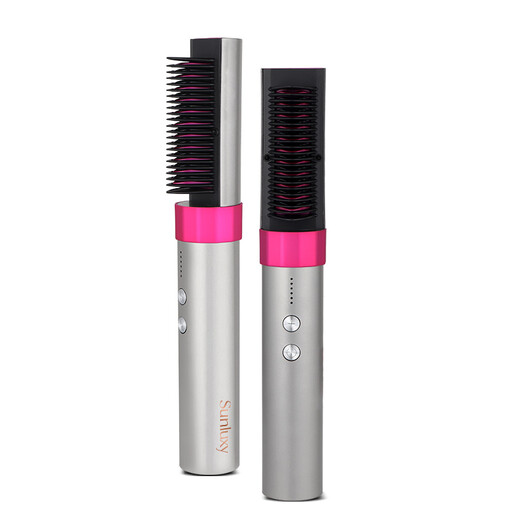
Why it suits this profile : Its cordless design and six settings, from 130 °C to 200 °C, allow you to start gradually without relying on a mains socket for touch-ups.
The different settings mean you do not have to start at the maximum temperature. The anti-scald tooth design limits accidental contact with the hot surface, although it does not replace the usual safety precautions.
PTC heating in approximately one minute, a 4 000 mAh lithium battery according to the specifications and a ceramic coating.
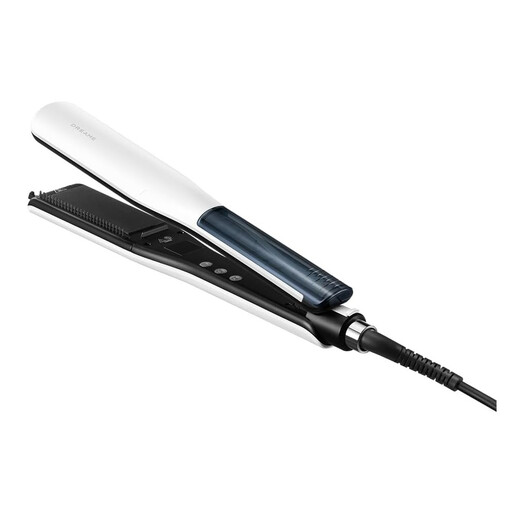
Why it suits this profile : This steam straightener is designed for people looking for precise temperature control and a more complete at-home styling experience.
The four temperature settings are clearly indicated. However, the tank requires distilled or purified water, preventing you from adding unsuitable products such as oils or fragrances.
Plates with a ceramic coating, 100–240 V power supply and a 360-degree swivel cord.
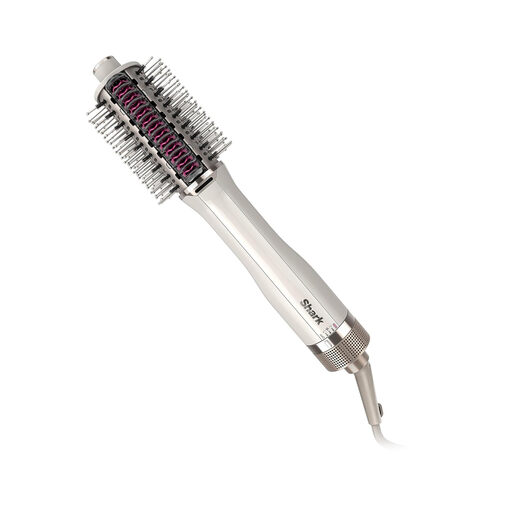
Why it suits this profile : Its wet-hair and dry-hair modes are ideal for routines where drying, adding volume and straightening all need to be done with one device.
It clearly distinguishes between the two usage modes, unlike a device designed solely for dry hair. However, you must follow the instructions and ensure that the air inlets and outlets are not blocked.
900 W motor, three temperatures, three speeds and a stated weight of 730 g.
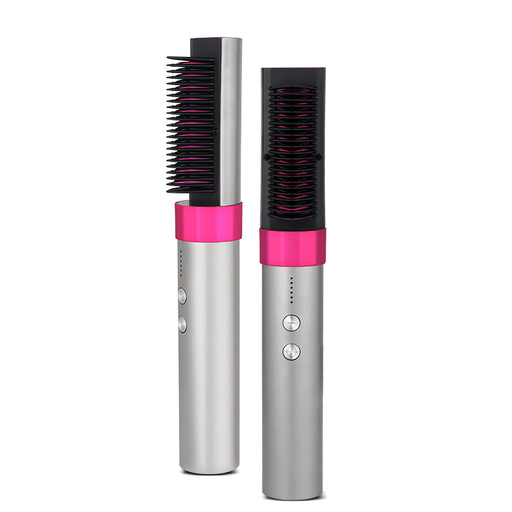
Why it suits this profile : Its cordless design and 3 000 mAh battery are convenient for touch-ups away from home, provided you remember to recharge it regularly.
The six temperature levels mean you do not have to apply the same setting to every hair texture. With a stated battery life of approximately 30 minutes, it is better suited to touch-ups than lengthy styling sessions.
PTC heating, stated ionic technology and comb teeth featuring an anti-scald design.
We have brought together the products that best meet these demanding selection criteria and European safety standards in a complete list updated in real time.
Only if the manufacturer clearly states that it has a damp-hair mode. A conventional heated brush or standard ceramic straightener is generally used on dry hair. The Shark SmoothStyle’s wet-hair mode is specifically designed for drying and styling, while the Wavytalk Thermal Brush states that it should not be used on wet hair.
This depends on how often it is used, the condition of the battery in cordless models, the cord and the maintenance of the heated surfaces. To extend the life of your device, regularly remove product residue, store it away from moisture and do not use it if the cable or casing is damaged.
Consumption varies according to the device’s power and how long it is used. As an indication, the Shark SmoothStyle is rated at 900 W, compared with 68 W for the Wavytalk Thermal Brush. A more powerful device may heat up or dry your hair faster, but its actual cost depends mainly on how long it is used and the tariff charged by your electricity supplier.