
Livraison le jour même ou le lendemain

Qualité garantie

Débloquez vos offres de bienvenue: Livraison GRATUITE | Jusqu'à -80 % | 30 jours d'essai gratuits à JoyPlus
Téléchargez l'application
A hairdryer with a diffuser can make drying curly, wavy or thick hair much easier. But you need to pick the right model. After a few uses, some appliances start to show their flaws: the nozzle comes loose, the heat is hard to control, the weight becomes tiring, or the ionic promises don't really match your needs.
Before comparing different models, it's worth sorting out which features are genuinely useful and which are just marketing. Here are the criteria to consider when looking for an appliance that suits your routine, your hair type and your budget.
High wattage alone doesn't guarantee fast, comfortable drying. Airflow, motor design, heat distribution and precise settings all matter just as much.
A high-speed hairdryer can certainly cut down drying time. But a flow that's too powerful can also push strands around and ruin the shape of your curls. For curly hair, being able to reduce the speed is just as important as having high power.
A small universal nozzle can work in a pinch, provided it stays firmly attached to the air outlet. If it slips during use or its prongs are too short, drying the roots while supporting the curls becomes tricky.
An appliance with an integrated diffuser, like the Bellissima My Pro DF1 3000, avoids this problem. Models that come with several attachments are more versatile for straightening, adding volume or drying a specific area.
An ionic hairdryer can help reduce static electricity and make styling easier. However, this technology doesn't replace precise temperature settings. Fine, dry or colour-treated hair can struggle with excessive heat, regardless of the technology being promoted.
So take claims about ions or reducing frizz as design indicators or manufacturer selling points, not as a guarantee of the same result for everyone.
For curly hair, go for a curly hair diffuser with prongs that are long enough to lift the strands without stretching them. A regularly perforated grille helps distribute the air evenly, while a concave shape lets you place a section of hair without crushing it.
If you like to switch up your hairstyles, a hairdryer with attachments may come with a concentrator, a brush or several diffusers. Do check the fixing system though: magnetic nozzles, clips and standard fittings don't all offer the same level of hold.
Two temperature levels and two speeds can be enough for defining curls. For more versatile use, three temperatures or more let you better adapt the airflow to fine, thick or long hair.
The cool shot hairdryer function is used to finish styling with a cooler flow. It can help set your style, but it won't make up for excessive heat used throughout the drying process. Choose an appliance where the control is easy to reach, so you can switch quickly from hot to cold air.
A lightweight hairdryer reduces wrist fatigue, especially if you have long hair or dry it in sections. Also consider the weight of the cord and attachments – they can noticeably affect how comfortable the dryer feels in practice.
Take the term quiet hairdryer with a pinch of salt. The noise level varies depending on the speed selected and how far the appliance is from your ear. A removable or easily accessible rear filter is a real advantage for removing hair and dust, preserving airflow and reducing the risk of overheating.
For use in the UK, finally check compatibility with the 220–240 V mains supply, the presence of safety warnings and the warranty conditions. Never use the appliance near a sink, bath or wet surface.
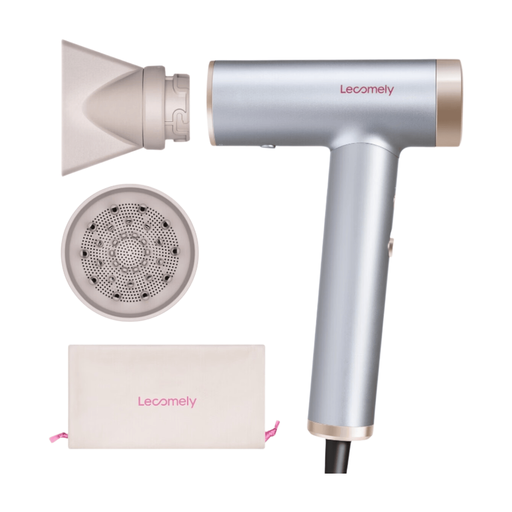
Why this choice suits this profile: with two speeds, four temperatures, a cool shot button, a diffuser and a concentrator, it covers everyday needs without forcing you to buy multiple appliances.
Its separate settings mean you're not stuck with a single airflow, which is often too hot or too powerful when you're starting out.
Two speeds, four temperatures, cool shot button, diffuser and concentrator included.
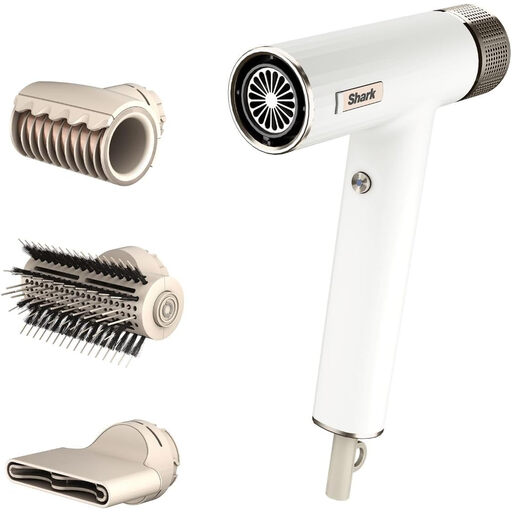
Why this choice suits this profile: this 1,700 W model combines a compact design with three attachments for drying, straightening or directing the airflow on both straight and wavy hair.
The attachments serve different purposes: finishing, straightening and targeted drying. This saves you from buying extra nozzles separately.
1,700 W, stated weight of 750 g, three attachments, temperature control and cool shot function.
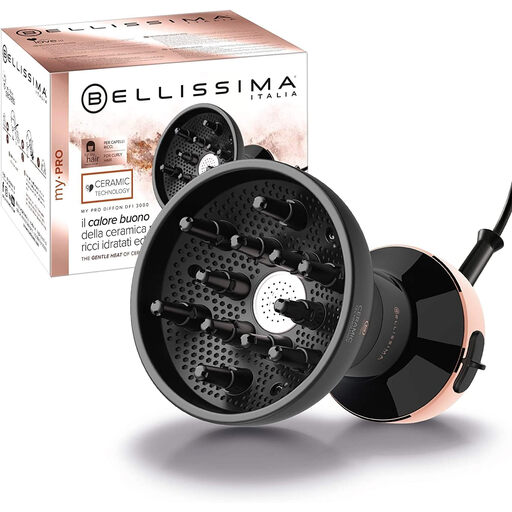
Why this choice suits this profile: designed specifically for curly hair, it's aimed at people who use a diffuser regularly and want to minimise handling during drying.
Its integrated diffuser and 12 long prongs support the strands. The design prevents nozzles that slip or come loose during use.
700 W, 510 g, two speeds, two temperatures, stated ceramic technology and 2.2 m cord.
We've selected a full range, updated in real time, of products that meet these criteria as well as European safety requirements.
After washing, blot excess water with a soft towel, then apply your usual styling product if needed. Your hair should be damp, but not dripping.
Yes, but the benefit is different. It allows you to dry your hair with a more evenly distributed airflow and can add volume at the roots. For straightening, a concentrator or brush will generally be more effective.
The lifespan depends on how often you use it, how well you maintain the filter, the motor and whether you follow the safety instructions. Avoid blocking the air intakes, let the appliance cool down before storing it and unplug it after each use. Also remember to check the warranty conditions for the model you choose.
The power consumption mainly depends on the wattage and how long you use it. A 1,700 W appliance used for ten minutes theoretically consumes less than a 2,400 W model used for the same amount of time. However, the actual drying time varies depending on the airflow, hair length and thickness.