
Livraison le jour même ou le lendemain

Qualité garantie

Débloquez vos offres de bienvenue: Livraison GRATUITE | Jusqu'à -80 % | 30 jours d'essai gratuits à JoyPlus
Téléchargez l'application
Who hasn't had a bathroom shelf cluttered with half-used hair care bottles? Each one promised the world, but the results were often disappointing. Choosing the right hair care product shouldn't be a lottery. As the Head of Product Recommendations at Joybuy, my mission is to help you decode labels and finally find the formula that delivers on its promises.
Before we get to the recommendations, it's essential to avoid the common pitfalls that clutter our bathrooms and empty our wallets:
The first step to successful hair care is making the right diagnosis. Does your problem concern your scalp or your hair fibre?
The case of oily roots and dry ends is the perfect example of a combination need that requires a rebalancing formula, capable of purifying at the root without stripping the lengths.
Instead of relying on slogans, learn to spot the ingredients that target your specific problem.
An effective anti-dandruff shampoo usually contains agents that help regulate cell turnover and combat the proliferation of microorganisms (like the Malassezia yeast). Look for ingredients such as:
If your hair gets greasy too quickly, a purifying shampoo must cleanse deeply without stripping, which can cause a rebound effect. The best active ingredients to look for are:
A shampoo for colour-treated hair is designed to protect pigments and prevent colour from fading or becoming dull. A purple shampoo (or toner) is specifically formulated to neutralise unwanted yellow tones in blonde, white, or grey hair.
A certified organic shampoo (by Ecocert or Cosmébio, for example) guarantees a formula with a high percentage of natural and organically farmed ingredients. It's an excellent choice for frequent use and for those seeking gentle formulas. However, for severe dermatological issues, dermo-cosmetic formulas (so-called conventional ones) often include patented active ingredients or concentrations not permitted in organic products, which are frequently more effective in the short term.
Instead of a random laundry list, here are products that meet specific needs and avoid the marketing traps mentioned earlier.
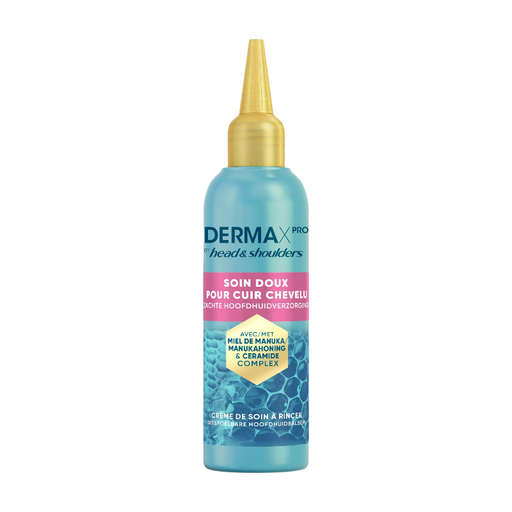
Why this product stands out: This balm is for scalps that are not only prone to dandruff but also highly reactive. Its strength? It combines a treating active with soothing and hydrating ingredients like Manuka honey and a ceramide complex.
It's not just another anti-dandruff product. It specifically targets sensitivity by boosting the skin's hydration, thus avoiding the stripping effect of some treatments that can worsen irritation.
It contains Piroctone Olamine, an active with proven efficacy, in a silicone-free formula designed to soothe and provide lasting hydration to the scalp.
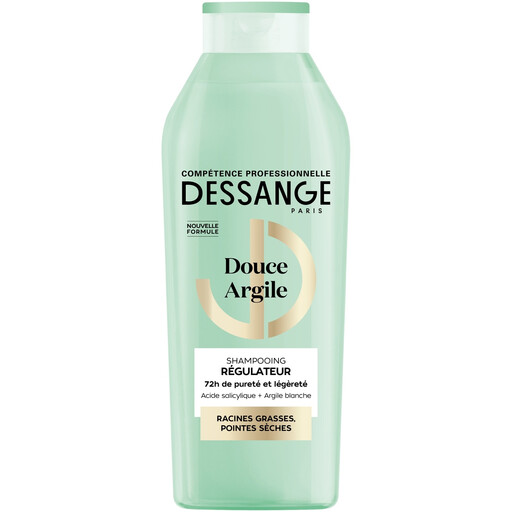
Why this product stands out: It is specifically formulated for the conundrum of combination hair. It purifies the roots without drying out the lengths—a balance few products manage to achieve.
It rejects the "one-size-fits-all" approach by relying on dual-action ingredients: soft clay and a salicylic acid derivative to purify the roots, and softening agents to maintain the suppleness of the ends.
A targeted rebalancing formula that leaves hair feeling purified and light. The manufacturer promises an effect that can last up to 72 hours.
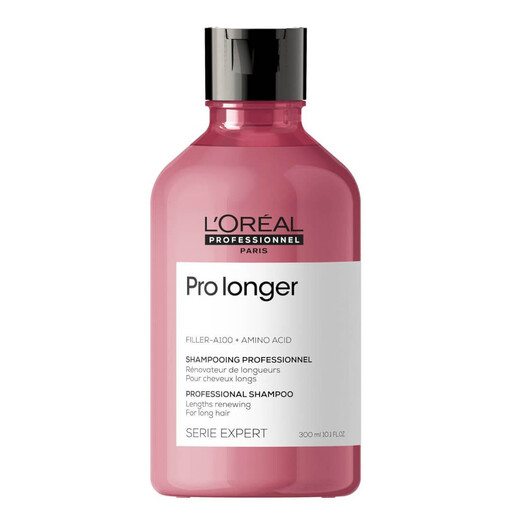
Why this product stands out: By definition, long hair is "older" and therefore more prone to thinning and breakage at the ends. This shampoo is designed to strengthen the hair fibre along its entire length, with special attention paid to the health of the ends.
It goes beyond vague promises of "repair." It relies on a L'Oréal-patented technology (Filler-A100) and amino acids for targeted action on the very structure of long hair, providing a technical solution to a mechanical problem.
It helps strengthen the lengths and visibly redensify the ends, for long hair that looks healthier and stronger.
We have compiled a complete and up-to-date selection of products that meet these demanding selection criteria and current regulations.
How often should I use an anti-dandruff shampoo? It is generally recommended to use it as an intensive treatment, 2 to 3 times a week, following the product's instructions. Once your scalp's condition improves, you can reduce the frequency and alternate with a milder shampoo to maintain balance. The most important thing is to listen to your scalp.
Is a sulfate-free shampoo always better? Not necessarily. Sulfates are very effective cleansing agents (surfactants) for removing sebum and styling product residue. For very oily hair, they can be perfectly suitable. However, for a sensitive scalp or very dry, colour-treated hair, milder surfactants are often preferable. The choice should be based on your hair type and personal tolerance, not on a trend.
Can I use dry shampoo every day?Dry shampoo is an excellent quick fix for refreshing your hair and extending the time between washes. However, daily use is not recommended. The powders can build up, clog hair follicles, and eventually cause irritation. It's best to limit its use to once or twice between regular shampoos.