
Livraison le jour même ou le lendemain

Qualité garantie

Débloquez vos offres de bienvenue: Livraison GRATUITE | Jusqu'à -80 % | 30 jours d'essai gratuits à JoyPlus
Téléchargez l'application
A hairbrush and a hair comb are not designed for the same purposes. A detangling brush is ideal for long, wet hair, while a wide-toothed comb is better suited to thick or curly hair. For blow-drying and styling, the round shape matters most, much more than the number of bristles. As for a head-lice and nit comb, it should be reserved exclusively for that specific purpose.
When shopping, it is easy to be swayed by the design or by overly broad promises. Here are the main pitfalls to avoid when choosing an accessory that is genuinely suited to your needs.
A paddle brush covers a large area and is practical for everyday use. However, it does not replace a blow-drying brush or a round brush, designed to be used with a hairdryer to add movement and shape to your hair.
A wide-toothed comb is generally better suited to curly and voluminous hair than a fine-toothed comb. An accessory with teeth that are too close together may catch on knots and make brushing uncomfortable.
Disney designs can help children accept hair-brushing time more easily, but appearance is not everything. Also check the flexibility of the bristles, whether the tips are rounded, how comfortable the handle is to hold and the conditions of use.
For a child, also check the recommended age, whether there are any small parts and the condition of the bristles. A brush is a hair-styling accessory, not a toy.
Hair can easily become trapped between the bristles. Without regular cleaning, a brush collects dust, sebum and styling-product residue. A self-cleaning pet brush makes this step easier thanks to its retractable bristles, but it is not designed for human hair.
An accessory that is damaged, cracked or has loose bristles should also be replaced. The information on the packaging and the manufacturer's warnings should always take priority.
Plastic, nylon, silicone, wood and stainless steel do not offer the same feel or the same care requirements. Wood should be protected from prolonged exposure to moisture. Silicone rinses easily, which can be practical in the shower. The stainless-steel bristles on a pet brush should be used with moderate pressure, following the direction of the coat.
For products intended for children, check the composition shown on the packaging. For hair-styling accessories, make sure in particular that the bristles are securely attached and that the parts in contact with the scalp have no sharp edges.
Whatever the accessory, start with the lengths and ends before working upwards towards the roots. Holding the section of hair above the knot reduces the pulling sensation. On curly hair, a wide-toothed comb is often used on damp hair, with slow, even movements to preserve the curls' natural shape.
When using a head-lice and nit comb, divide the hair into small sections and move the accessory from the root towards the tip. Clean it after each pass, following the manufacturer's instructions. This mechanical accessory does not replace medical advice or a diagnosis.
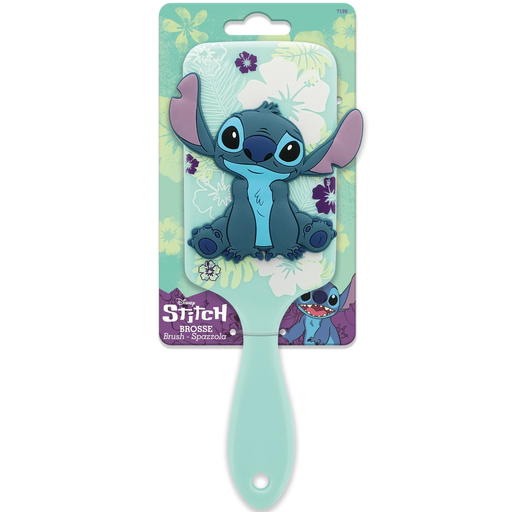
Why this choice suits this profile : Its silicone structure rinses easily and can be used on dry or wet hair, particularly in the bathroom. Its compact size is also suitable for small hands and travelling.
The flexible material and open structure help prevent hair from becoming tightly trapped between the bristles. However, this brush should not be exposed to high heat.
Flexible silicone, rinses with water, suitable for dry or wet hair and Disney Stitch design.
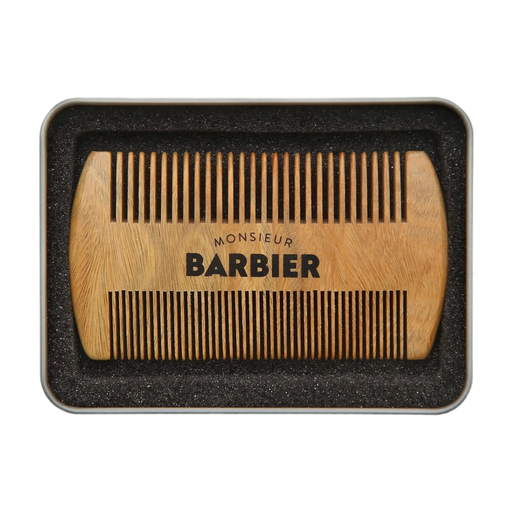
Why this choice suits this profile : This natural sandalwood comb has two tooth spacings, allowing you to switch from detangling to styling your hair or beard.
It does not claim to replace every styling tool: its appeal lies in its two sides, one wide and one fine, designed for different techniques.
Natural sandalwood, two rows of teeth and designed for use on both hair and beards.
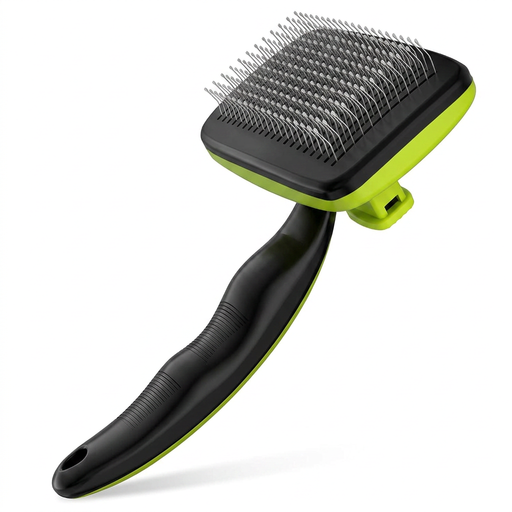
Why this choice suits this profile : Designed for dogs, cats, rabbits and small animals, this brush makes it easier to remove accumulated fur after grooming thanks to its retractable mechanism.
The self-cleaning function reduces the need to handle loose fur. However, this brush should not be used on extremely long, very curly or delicate coats.
Stainless-steel bristles, non-slip handle, stated weight of 89 g and button-activated cleaning.
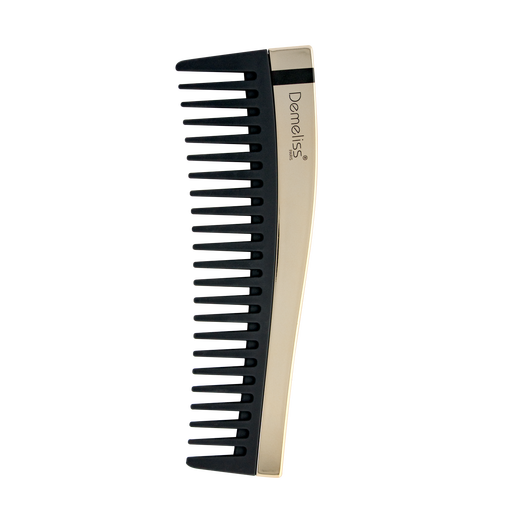
Why this choice suits this profile : Its widely spaced teeth are designed for thick, voluminous and curly hair, whether dry or wet. It is easy to store in a hair-styling kit.
Its spacing is clearly specified: this is neither a fine-toothed comb for removing nits nor a tool designed to separate sections precisely.
Wide teeth, stated weight of 40 g, suitable for dry or wet hair and practical size.
We have put together a complete, real-time updated list of products that fully meet these strict selection criteria and European safety regulations.
A detangling brush with flexible bristles or a paddle brush with a wide surface may be suitable. Work in small sections, starting at the ends. For very curly or thick hair, a wide-toothed comb often allows for more gradual detangling.
There is no universal lifespan. Replace it when the bristles are broken, misshapen, loose or become irritating. Regular cleaning extends its lifespan, but cannot compensate for worn materials.
First remove the hair, then clean the accessory with water and mild soap if the material allows. Leave it to dry completely in the open air. For a head-lice and nit comb, follow the specific cleaning and disinfection instructions supplied with the product.