
Livraison le jour même ou le lendemain

Qualité garantie

Débloquez vos offres de bienvenue: Livraison GRATUITE | Jusqu'à -80 % | 30 jours d'essai gratuits à JoyPlus
Téléchargez l'application
Detangling thick hair, styling a fringe, grooming a beard or brushing an animal’s coat all require different accessories. Yet many product listings group brushes and combs with very different functions under similar names. The result? You could end up buying a model that looks appealing on paper but proves impractical for everyday use.
A detangling brush with flexible bristles is designed to work through the lengths of your hair and gradually loosen knots. A blow-dry brush, often round, is mainly used to shape the hair with a hairdryer. A paddle brush covers a larger area, while a fine-tooth comb is particularly useful for separating sections and creating a neat finish.
Running a round brush through very tangled hair can quickly become hard work. Conversely, a wide-tooth comb will not style a fringe or create precise volume with the same effectiveness.
How a brush feels on the scalp depends on several factors: bristle flexibility, rounded tips, spacing between the bristles and the pressure applied. A densely packed brush is not necessarily the most suitable choice for curly or fragile hair. If it is too dense, it may catch on knots rather than gradually loosening them.
Claims such as “pain-free” or “anti-breakage” are therefore marketing statements, not guarantees that apply to every hair type. The way you brush matters just as much: it is better to start at the ends and gradually work your way up towards the roots.
Hair, dust, flakes and product residue quickly build up between the bristles. A brush that is difficult to clean soon becomes less pleasant to use. Also check that the bristles are sturdy, there are no sharp edges and the accessory can dry easily.
When children are involved, do not leave the brush within reach as though it were a toy. For an animal, brush gently in the direction of the coat and check its condition before every grooming session.
Nylon, silicone and flexible plastic bristles do not all offer quite the same feel. Silicone is washable, which can make it practical for use in the shower. Wood offers a different grip, but should be stored away from prolonged exposure to moisture.
Dimensions are also important. A compact brush fits easily into a bag, while a large paddle brush will be more effective on abundant hair. For a round brush, the diameter of the barrel is a useful measurement to compare.
A beard comb should keep facial hair neat without pulling unnecessarily. Double-sided models generally combine widely spaced teeth for detangling with more closely spaced teeth for finishing touches. A lice comb has a very small gap between its teeth and is used section by section, often on wet hair with a product that helps it glide through.
For dogs, cats and small animals, choose a stable handle, bristles suited to the coat and clear instructions explaining the limits of use. A pet brush is not a substitute for an accessory designed for human hair.
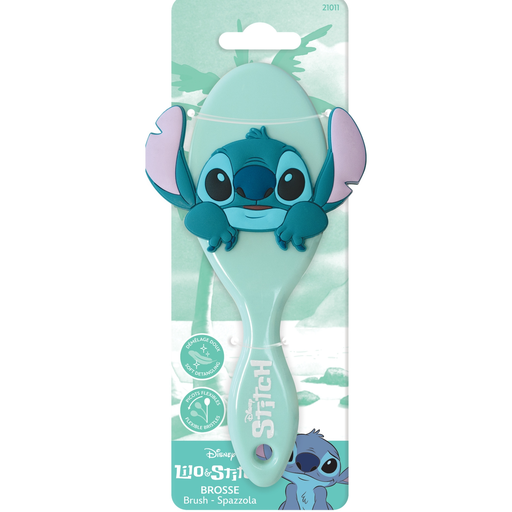
Why this choice suits this profile : This paddle brush combines flexible bristles with rounded tips. It can be used on dry or damp hair, making it suitable for a family haircare routine.
Its flexible bristles mean you do not need to rely on a very densely packed brush to loosen knots. You should still brush from the ends towards the roots.
A Disney Stitch design, flexible tips and cleaning with water and mild soap, in accordance with the supplied instructions.
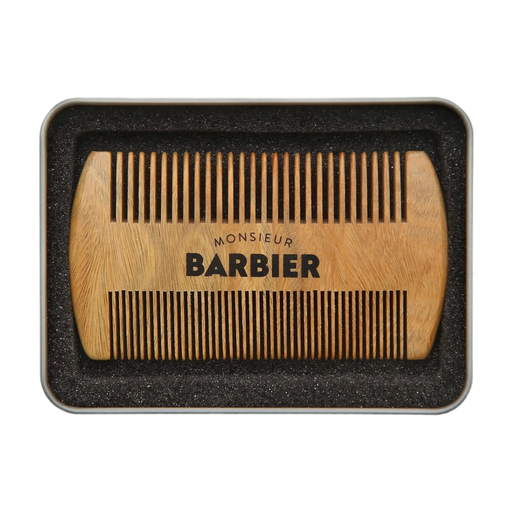
Why this choice suits this profile : Made from natural sandalwood, it has two sides to meet the styling needs of both hair and beards, providing one accessory for finishing touches.
Its two tooth spacings mean you do not need to use a fine-tooth comb to detangle a long beard or curly hair.
Two sides for detangling and then shaping your style, in a natural sandalwood design.
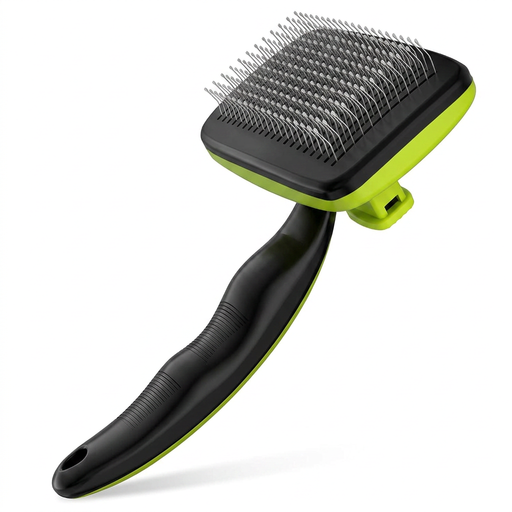
Why this choice suits this profile : This brush is suitable for dogs, cats, rabbits and small animals. Its retractable mechanism makes it easier to remove hair after grooming.
The retract button limits direct contact with the removed hair. However, the instructions advise against using it on very long, very curly or fragile coats.
A stated weight of 89 g, a non-slip handle and stainless steel bristles with massage tips.
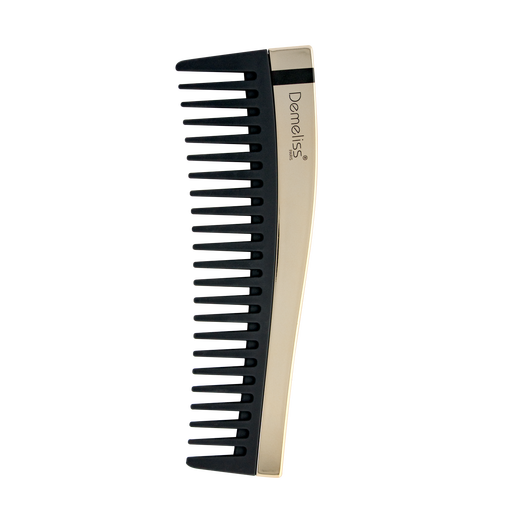
Why this choice suits this profile : Its wide teeth are designed for thick, voluminous and curly hair, whether dry or wet. The spacing allows sections of hair to pass through without excessive compression.
Its spacing is better suited to dense hair than a fine-tooth comb. However, there is no need to force it through a compact knot.
A plastic comb weighing a stated 40 g, suitable for dry or damp hair and designed to help preserve the natural shape of curls.
We have put together a complete, real-time updated selection of products that meet these demanding criteria and European safety standards.
Start with a wide-tooth comb or a detangling brush with flexible bristles. Work in small sections, moving from the ends towards the roots, without pulling on a stubborn knot. On wet hair, conditioner can make it easier to comb through, but always check the recommendations for your haircare routine.
There is no universal lifespan. Replace it when the bristles become brittle, sharp or misshapen, or when they start to come loose. Regularly removing hair and washing the accessory with a mild product can extend its use, but this does not remove the need for regular checks.
A lice comb with very closely spaced teeth should be used section by section, generally on wet hair coated with conditioner. The MARIE ROSE Anti-Lice & Nits Comb is presented as a reusable mechanical accessory. Clean it after each pass and follow the recommendations of the health authorities or a healthcare professional for guidance on what to do.