
Livraison le jour même ou le lendemain

Qualité garantie

Débloquez vos offres de bienvenue: Livraison GRATUITE | Jusqu'à -80 % | 30 jours d'essai gratuits à JoyPlus
Téléchargez l'application
Choosing a hairbrush seems simple… until the day it snags on your lengths, damages your ends or fails to deliver the promised result. Between styling tools, heated appliances and so-called ionic technologies, the shape, materials and design directly affect comfort and longevity.
Before you place an order, it’s best to avoid three common mistakes:
Start by defining what you want from your brush:
Soft bristles with rounded tips are generally more comfortable for detangling. Also consider their spacing: wide teeth are better for curly or very thick hair, while a fine comb is more suited to structuring a short cut.
Diameter is also crucial for blow-drying:
The composition should be clearly stated. Wood, nylon, plastic, silicone, ceramic and aluminium each offer a different feel and maintenance requirements. For a heated brush, also check that the temperature range and power are clearly specified.
For a heated brush or hot air brush, check for the CE mark, compatibility with the UK mains supply 220-240 V, the cable length and whether it has a swivel cord. Multiple heat settings help avoid excessively high temperatures.
A cordless model can be handy for touch-ups, but carefully consider the stated battery life and charging time. Hot surfaces must never come into contact with skin or the scalp. Unplug the appliance after each use and let it cool completely before changing an attachment or storing it away.
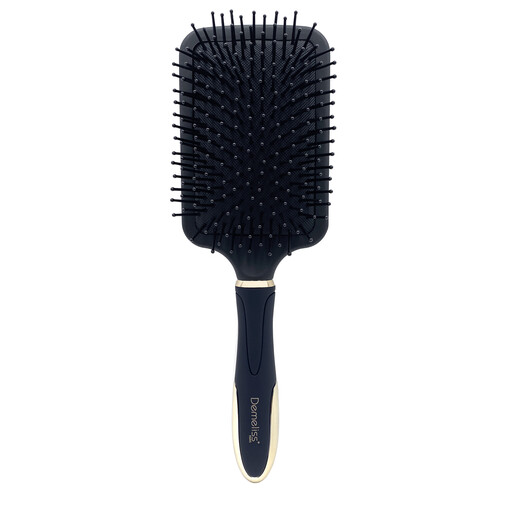
Why this choice suits this profile: its oval shape and soft bristles are ideal for daily detangling on both dry and slightly damp hair.
Its soft bristles prevent you from choosing a model that’s too rigid for daily detangling. Still, start at the ends and work your way up gradually towards the roots.
An oval shape that covers a wide section of hair, a wooden handle and a stated weight of 172 g.
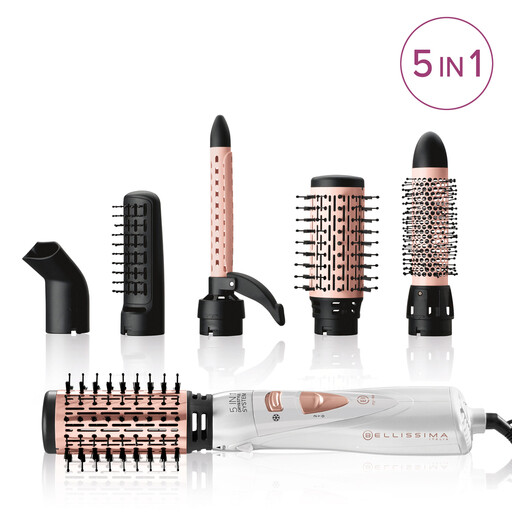
Why this choice suits this profile: this multi-function appliance is designed for those who want to dry, straighten, add volume or create curls using a single set of attachments.
The functions are detailed attachment by attachment. This lets you distinguish between targeted drying, straightening, volume and curls, rather than relying on a blanket promise.
A power output of 1,000 W, five attachments, two speeds, two temperatures, a cool shot function and a 1.8 m swivel cord.
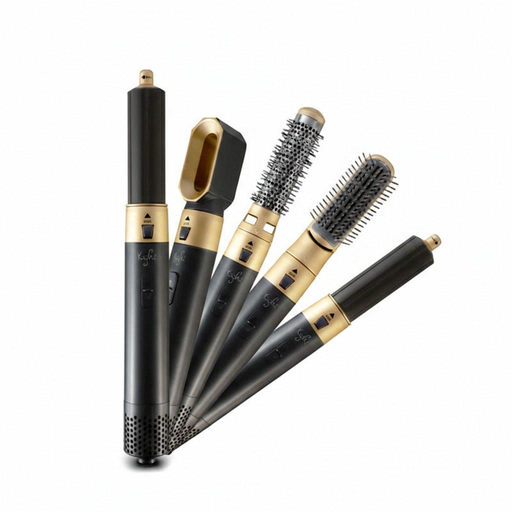
Why this choice suits this profile: its five interchangeable heads adapt to routines that alternate between drying, straightening, volume and curls.
The three airflow levels let you choose between ambient air, warm air and very hot air. Work gradually and avoid holding the appliance on one section for too long.
A power output of 1,000 W, a 1.8 m swivel cord, a stated weight of 0.615 kg and a travel pouch included.
We’ve curated a complete, real-time updated list of products that meet these exacting criteria and European safety standards.
Always start by detangling the ends before working your way up to the roots. On curly hair, prefer a wide-tooth comb and work in small sections. With a heated appliance, dry or towel-dry your hair according to the manufacturer’s instructions and choose a moderate temperature whenever possible.
Regularly remove any hair caught between the bristles. If the model is washable, rinse it and then let it dry completely. For an electrical appliance, unplug it before cleaning and use only a slightly damp cloth. Replace your brush as soon as the bristles become sharp, start to come loose or show cracks.
A wide-tooth comb or a detangling brush with widely spaced bristles is usually the most practical choice. Use it gently, from ends to roots, to reduce pulling and preserve the shape of your curls.
Not necessarily. A heated brush is often used on dry hair, whereas a hot air brush is designed to dry and style using airflow. Always check the instructions: some models, like the Wavytalk Thermal Brush, should not be used on wet hair.
There’s no universal lifespan. Frequency of use, cleaning and the condition of the bristles make all the difference. A manual brush should be replaced as soon as it pulls on your hair, irritates your scalp or loses bristles. For an electrical appliance, also keep an eye on the condition of the cable, plug, heating system and attachments.