
Livraison le jour même ou le lendemain

Qualité garantie

Débloquez vos offres de bienvenue: Livraison GRATUITE | Jusqu'à -80 % | 30 jours d'essai gratuits à JoyPlus
Téléchargez l'application
Straightening, curling, taming frizz or adding volume at home becomes much easier when your tool and styling product are suited to your hair type. The trouble is, product descriptions often highlight claims that are hard to verify, while genuinely useful information takes a back seat.
Here are the criteria to consider before choosing your hair styling products and tools, with a selection tailored to different user profiles in the UK.
A straightener that can reach very high temperatures isn't necessarily the best choice for your hair. Excessive heat can make styling uncomfortable and worsen dryness in fine, sensitised or bleached hair. Multiple heat settings, used with a heat protectant, generally offer more flexibility than a single temperature.
Negative ions, ceramic coatings and certain ingredients can help smooth the hair fibre or reduce static electricity. However, the result depends on many factors: hair porosity, ambient humidity, styling technique and the amount of product used. These promises are no substitute for checking the actual specifications.
A lightweight styling mousse doesn't serve the same purpose as a strong-hold gel. Similarly, a curl cream provides softness and definition, but may not be enough to maintain a style exposed to humidity. Check the texture, application method, any fragrance content and compatibility with your usual routine.
For a straightener or hot brush, look for an adjustable temperature range. Fine or fragile hair generally copes better with a moderate temperature. Thick hair may need more heat, but without exceeding the manufacturer's recommendations.
Where required by UK regulations, the appliance must carry the CE marking. This means the manufacturer declares compliance with applicable requirements. Still, read the instructions, inspect the cable regularly and unplug the appliance after each use.
Ceramic plates promote smooth gliding. Floating plates adapt more easily to the thickness of each section, which can reduce pressure on the hair. For a hot brush, the barrel diameter directly influences the result: a 38 mm model is better suited to soft waves, volume and loose curls than to tight ringlets.
Plate width is also worth considering. Narrow models are more practical near the roots and on short hair, while wide plates cover more length in each pass.
For curl definition, apply the cream, mousse or gel to damp hair, following the manufacturer's instructions. Start with a small amount to avoid a heavy or stiff feel. On curly or wavy hair, gently scrunching the lengths then using a diffuser can help preserve the shape.
If you're sensitive to fragrances or certain preservatives, take the time to read the ingredients list. Aerosols, particularly mousses, are flammable: keep them away from heat sources and follow the instructions on the packaging.
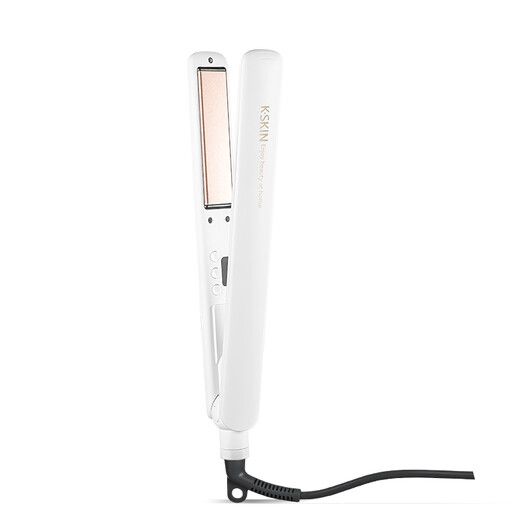
Why this suits this profile: Its straightforward design is ideal for first-time home use. It lets you straighten hair or create a few waves without needing extra accessories.
Its nine settings, from 120 °C to 200 °C, avoid a one-temperature-fits-all approach. The manufacturer states a heat-up time of around 30 seconds.
Dual use: straightening and curling. Negative ions are claimed to reduce static electricity. Dimensions: 31 × 3.1 × 3.5 cm.
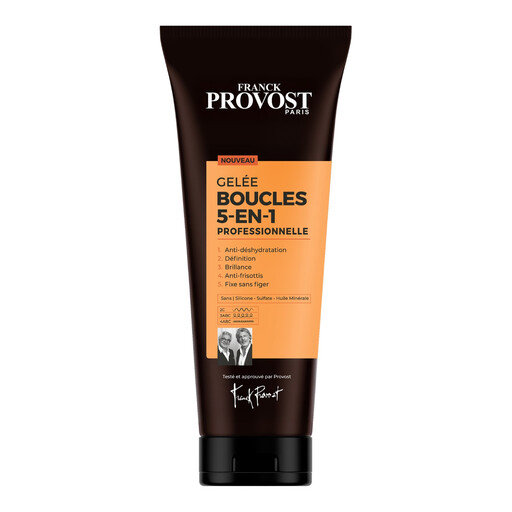
Why this suits this profile: Its leave-in texture is applied to damp or wet hair to structure curls as part of a quick routine.
The formula is claimed to be silicone-free, sulphate-free and mineral oil-free. However, check the ingredients list on the packaging before use.
250 ml size, leave-in application and suitability for curly hair types 2C to 4C.
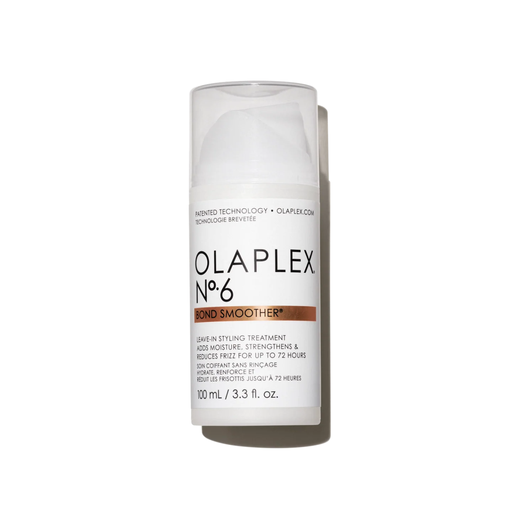
Why this suits this profile: This leave-in cream fits easily into a more elaborate routine, applied before drying or styling, particularly for taming the lengths.
The manufacturer states heat protection up to 232 °C. This doesn't replace the need to adjust your tool's temperature or follow the instructions.
Apply to clean, towel-dried hair. Lightweight formula claimed for all hair types, 100 ml size.
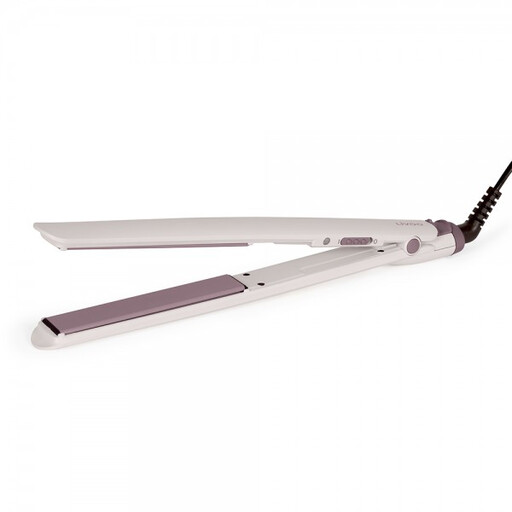
Why this suits this profile: Its swivel cord and plate lock make regular sessions and storage between uses much easier.
Its floating ceramic-coated plates and detailed specifications provide concrete information to base your choice on, beyond a simple promise of speed.
Maximum temperature stated at 210 °C, heats up in around 45 seconds, 1.85 m swivel cord and suitable for straightening or curling.
We've put together a comprehensive, real-time updated selection of products that meet these criteria as well as UK safety requirements.
Start with a moderate temperature, then increase gradually if needed. Fine, coloured or sensitised hair generally requires more care than thick hair. Heat protectant and the manufacturer's recommendations should always come first.
It can be used to loosen the texture, add volume or create waves. To preserve curl definition, opt for a curl cream or mousse applied to damp hair, then dry with a diffuser if the product allows.
The lifespan depends on the product's condition, storage conditions and any instructions on the packaging. Respect the period after opening when stated. For a tool, pay particular attention to the cable, plug, plates and any signs of unusual overheating.