
Livraison le jour même ou le lendemain

Qualité garantie

Débloquez vos offres de bienvenue: Livraison GRATUITE | Jusqu'à -80 % | 30 jours d'essai gratuits à JoyPlus
Téléchargez l'application
Thick hair, curly hair, long hair or hair prone to frizz: choosing a hair straightener isn’t simply about spotting the highest temperature on the box. From the classic straightening iron to the heated straightening brush, the hot air brush and the 7-in-1 multi-styler, each format meets very different needs.
The trap? Buying a device that looks impressive on paper but isn’t pleasant to use day in, day out. Here are the criteria to consider before you order, along with a selection of models suited to different profiles.
A maximum temperature of 210 or 240 °C doesn’t guarantee faster styling or a more even result. Excessive heat can even make using the device uncomfortable, especially on fine, coloured or already sensitised hair. It’s better to choose a device with several heat settings so you can adapt the temperature to your hair type.
An ionic straightener or an ionic heated brush can help reduce static electricity, depending on the device’s design. However, the number of millions of ions quoted isn’t enough to judge its quality. You also need to look at temperature control, the type of plates, ergonomics and usage recommendations.
A heavy device or one with a cord that’s too short can quickly become annoying to use. A cordless straightener offers more freedom, but its battery life is inevitably limited and it needs regular recharging. For travel, also remember to check compatibility with different mains voltages, the plate lock and whether a storage pouch is included.
For a versatile device, go for several temperature levels rather than a single setting. As a guide, fine hair generally copes well with moderate heat, while thick or very curly hair may need a higher setting. In any case, start at the lowest temperature and increase gradually if the result isn’t sufficient, always on dry hair.
The Angenil model offers nine levels from 160 to 240 °C, with a digital display and a claimed heat-up time of 15 seconds. The K·SKIN KD382 starts at 130 °C and offers six settings up to 200 °C: a gentler range for regular touch-ups.
A ceramic straightener is often appreciated for its even heat distribution. Floating plates adapt better to the thickness of the section and reduce tugging. The titanium straightener, usually associated with rapid heat-up and wider plates, can be particularly interesting for long or thick hair. However, it requires a suitable setting to avoid damaging the hair fibre.
With their 4.5 cm width, the Angenil’s plates cover a large section of hair with each pass. In contrast, the Livoo DOS214 features floating ceramic plates measuring 120 × 25 mm, which are easier to handle on short hair, for working on a fringe or creating waves.
A heated straightening brush detangles and tames hair in one go, while a straightening iron offers more precision for creating curls or waves. A steam straightening brush adds a water mist, but its tank needs regular filling and maintenance.
If you like to change your style, an air-based device like the Okaydeer multi-styler or the MOVA Master 10 can combine drying, volume, straightening and curling. These devices are generally used on damp or towel-dried hair, unlike most irons and heated brushes, which are designed for dry hair.
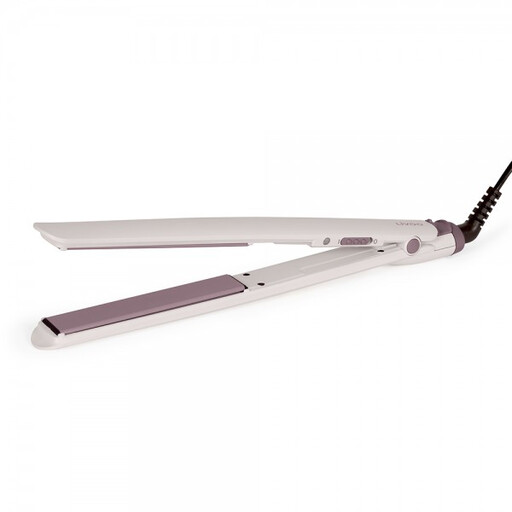
Why this choice suits this profile: Its straightforward operation is perfect for getting started, whether you want to straighten your hair or create a few waves without being weighed down by accessories.
It doesn’t rely on a single temperature presented as universal: its floating plates and heat-up time of around 45 seconds are clearly stated.
Ceramic coating, temperature up to 210 °C, swivel cord of 1.85 m and plate locking system.
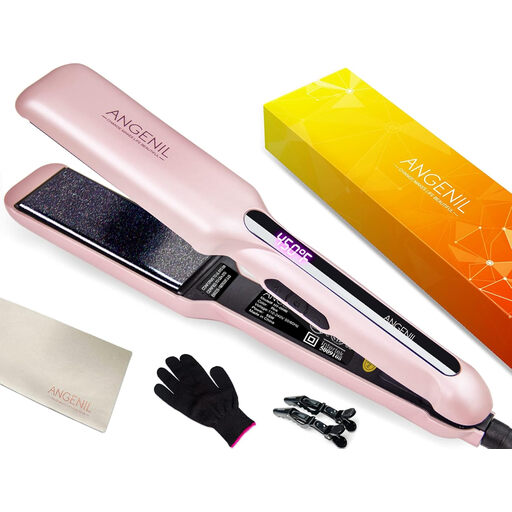
Why this choice suits this profile: Its wide plates and precise settings are aimed at those who regularly style long or thick hair.
Its 4.5 cm width and nine levels allow you to separate section coverage from heat control.
Floating titanium plates, LCD screen, claimed heat-up in 15 seconds, dual voltage 100–240 V and automatic shut-off after 60 minutes.
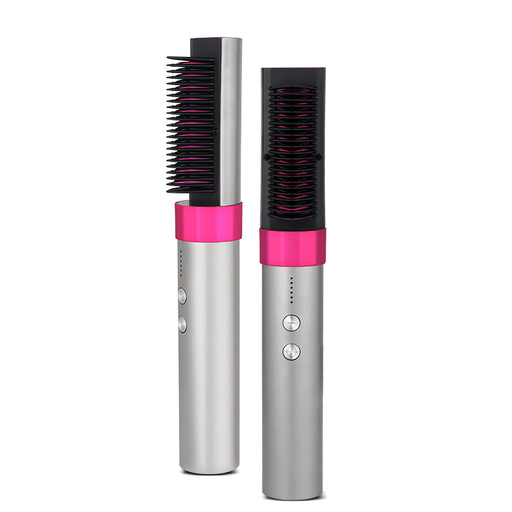
Why this choice suits this profile: Its rechargeable design makes quick touch-ups, travel and use in a bathroom where a cord would be awkward much simpler.
The claimed battery life is unambiguous: around 30 minutes thanks to its 3,000 mAh battery. So it’s best reserved for touch-ups and short sessions.
Six temperatures from 130 to 200 °C, PTC heating in around one minute and teeth designed to limit direct contact with hot surfaces.
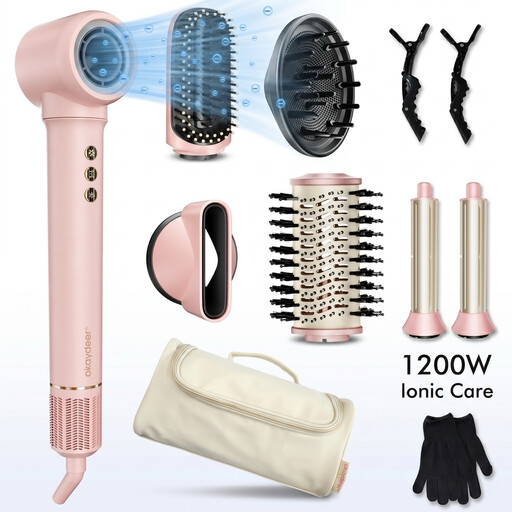
Why this choice suits this profile: This set is aimed at those who want to dry, straighten, add volume or curl their hair with a single device.
The contents of the box are detailed: two automatic curling attachments, a volume brush, a straightening brush, a diffuser, a concentrator and a hairdryer.
Two speeds, three temperature levels, motor claimed at 130,000 rpm and a storage case included.
We’ve put together a complete, real-time updated selection of products that meet these demanding selection criteria and European safety standards.
Start at the lowest setting that achieves the desired result. Fine or sensitised hair generally needs more care than thick hair. Always consult the instructions for your model: temperature ranges can vary significantly from one device to another.
It depends on how often you use it, how well you maintain it, the condition of the cord or battery, and the wear on the coating. A device with a chipped plate, a damaged cord, an unusual smell or uneven heating should be taken out of service.
It doesn’t use electricity while you’re using it, but its battery needs regular recharging. The running cost therefore mainly depends on how often you recharge and any eventual battery replacement. If you have long or thick hair, first check that the battery life actually covers the duration of your routine.