
Livraison le jour même ou le lendemain

Qualité garantie

Débloquez vos offres de bienvenue: Livraison GRATUITE | Jusqu'à -80 % | 30 jours d'essai gratuits à JoyPlus
Téléchargez l'application
A hair straightener can make everyday styling much easier, provided you choose a model suited to your hair type and habits. Fine, thick, curly, coloured or frizz-prone hair does not all respond to heat in the same way. Classic straighteners, straightening brushes, 2-in-1 straighteners and cordless models each have their own advantages, so it is worth understanding the differences before you buy.
A temperature of 230 °C will not necessarily suit every hair type. For fine or damaged hair, a gentler setting is often preferable. Conversely, thick or very curly hair may need more heat, but also — and above all — careful work on small sections.
An appliance without precise temperature control may therefore prove less practical than a slightly less powerful model that is easier to adjust.
An ionic straightener, like an ionic hairdryer, can help reduce static electricity during styling. However, it is not a substitute for heat-protective products or a routine suited to your hair. Claims such as ‘anti-frizz’ describe a feature or an expected result in use, not a guarantee that applies to every hair type.
Ionic technology should instead be viewed as a comfort feature, just like the plate coating or the shape of the bristles on a brush.
A cord that is too short, an uncomfortable handle or a battery with limited run time can quickly make an appliance frustrating to use. A cordless straightener is handy for touch-ups, travelling or places without a nearby socket, but you should check its actual battery life and charging time.
For regular use at home, a corded model with a swivel cord is often the simplest solution.
To adapt styling to your hair type, choose an appliance with several temperature settings. Some models cover a range of 120 to 200 °C, while others can reach 230 °C. The right setting also depends on the thickness of the sections and the look you want: perfectly straight hair, curls or waves.
PTC heating is generally associated with rapid heat-up and even heat distribution. However, you should still glide the appliance through your hair without holding it in the same place for too long.
Ceramic plates are popular for their smooth glide and advertised even heat distribution. Floating plates, meanwhile, can adapt more effectively to the thickness of each section. Some models use keratin-infused plates or an enriched coating. This is a design choice, not a promise that the appliance will repair your hair.
A straightening brush heats the bristles or internal areas while preserving more volume than a traditional straightener. It may suit people who want to relax their hair without creating a completely flat finish.
A 2-in-1 straightener with a rounded body makes it easier to create curls and waves. The steam function can make styling more comfortable on certain hair textures, but it requires you to follow the filling and maintenance instructions carefully.
Also check for an automatic switch-off function, a swivel cord and a clear temperature display. Unless the manufacturer states otherwise, heated appliances should be used on dry hair. Keep them away from water and place them on a heat-resistant surface after use.
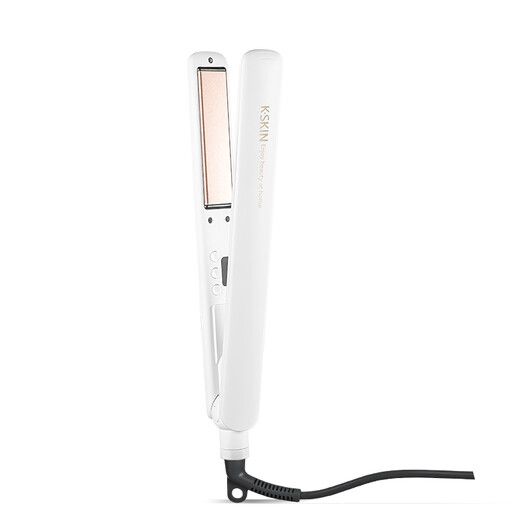
Why this choice suits this profile : this straightener offers nine settings, from 120 °C to 200 °C, and an advertised heat-up time of around 30 seconds. Its format is well suited to everyday styling.
Its temperature range means you do not have to rely on a single high heat setting. Its versatile design may also save you from buying a second appliance for creating curls.
Advertised 20 million negative ions, nine temperature settings and several functions for straightening or curling the ends inwards or outwards.
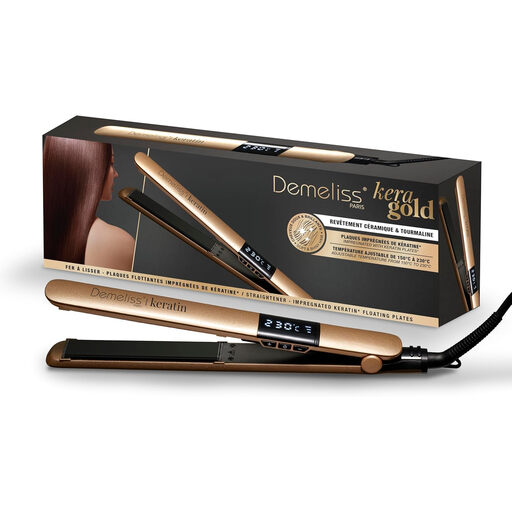
Why this choice suits this profile : its rounded body and keratin-infused plates let you alternate between straightening and curling with a single appliance.
The digital display and 150 °C to 230 °C range let you choose a clearly displayed temperature instead of styling by guesswork.
Floating plates, a 360° swivel cord and an advertised automatic switch-off after 60 minutes.
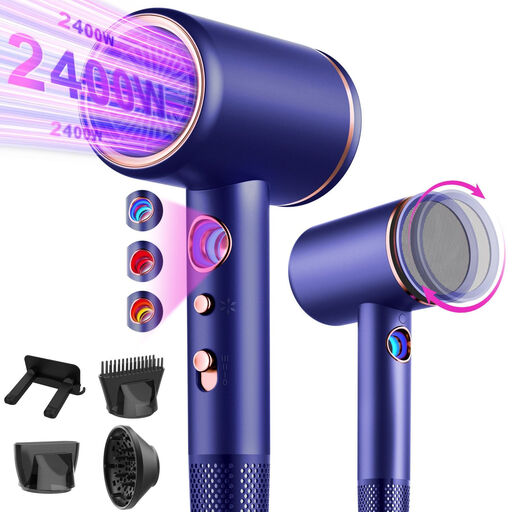
Why this choice suits this profile : for curly or thick hair, a hairdryer with a diffuser may be more suitable than using a straightener on wet hair.
Its three temperature settings and included accessories let you adapt drying to the volume and shape you want.
AC motor, 2,400 W power, diffuser and three nozzles, according to the product listing.
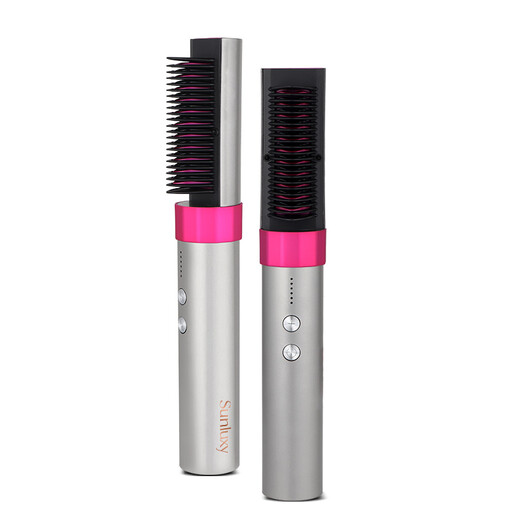
Why this choice suits this profile : its cordless design and advertised 4,000 mAh lithium battery make it suitable for touch-ups at home or on the go.
Its six settings, from 130 °C to 200 °C, mean you do not always have to work at a high temperature. The advertised battery life is around 30 minutes.
PTC ceramic heating plate, advertised ionic function and teeth designed to limit direct contact with the skin.
A steam straightener may also appeal to those looking for a styling tool that adds moisture. The K·SKIN KD880 combines a heated comb, steam distribution and 25 teeth. However, always follow the manufacturer’s instructions and never use an electrical appliance near water.
We have put together a complete, real-time updated list of products that meet these demanding selection criteria and European safety standards.
Unless the manufacturer explicitly says otherwise, no. A classic hair straightener should generally be used on dry hair. First dry your hair with a towel, then with a hairdryer, before applying a suitable heat-protective product.
Start with the lowest setting that gives you the result you want. Work on small sections and avoid going over the same area several times. A high temperature does not necessarily guarantee faster styling.
This depends on how often you use it, the condition of the cord, the heated surfaces and how well the appliance is maintained. Once the straightener has cooled, clean the plates or teeth with a soft cloth. Replace it if the cable is cracked, if the heat becomes uneven or if any of its components develops a fault.