
Livraison le jour même ou le lendemain

Qualité garantie

Débloquez vos offres de bienvenue: Livraison GRATUITE | Jusqu'à -80 % | 30 jours d'essai gratuits à JoyPlus
Téléchargez l'application
A hair straightener can quickly earn a place in your bathroom, helping to tame wavy hair, reduce frizz or create soft waves. However, it is important to choose a device that suits your needs. Excessive heat, plates that are unsuitable for fine hair or limited battery life can turn a promising idea into a disappointing purchase.
Before comparing models, it is therefore worth separating genuinely useful features from claims that are mainly marketing.
A temperature of 210 or 230 °C may seem useful for thick hair, but it is not necessary for fine, bleached or weakened hair. Without sufficiently precise temperature control, the device may be too hot for everyday use.
Choose a model with several temperature settings. Start with the lowest setting that delivers the result you want, then increase it gradually if necessary.
An ionic hair straightener may help to reduce static electricity, depending on how the device is designed. However, it cannot replace suitable preparation, careful drying or properly controlled heat.
The same applies to a steam hair straightener, which requires a few precautions: filling the tank, using compatible water, cleaning it regularly and avoiding burns from hot steam. Read the instructions carefully before opting for this technology.
A rechargeable cordless hair straightener is particularly convenient for touch-ups while travelling, in a hotel room or before an appointment. However, a stated battery life of around 30 minutes may not be enough for long or very thick hair. Also check the charging time, the type of cable supplied and whether the device can be used while plugged into the mains.
For versatile use, look for at least three temperature settings and, if possible, an easy-to-read display. Fast heating is useful in the morning, but it should not make you overlook safety features such as automatic shut-off, a temperature lock or a plate-locking system.
At home, always place the device on a heat-resistant surface, unplug it after use and keep it out of children’s reach. The compliance stated by the manufacturer, including the CE marking, does not remove the need to follow these precautions.
Ceramic plates, or plates with a ceramic coating, are common on consumer devices. Floating plates may follow the strand more closely as you move through the hair, while a narrow design makes it easier to work close to the roots and create curls.
A width of between 25 and 28 mm is suitable for many uses. For very long or thick hair, wider plates can reduce the number of passes. Conversely, a straightening brush or heated brush generally separates the strands and is used with a brushing motion, often giving a softer result than a traditional straightener.
Not all devices are designed to be used on damp hair. A styling device for dry and damp hair should clearly state its operating modes and the limitations to observe. Never use a conventional hair straightener on wet hair unless the instructions explicitly allow it.
For curly, thick or particularly frizz-prone hair, the aim may be to relax the hair fibre rather than achieve a perfectly straight finish. The speed of movement, section size and temperature are then just as important as the type of coating.
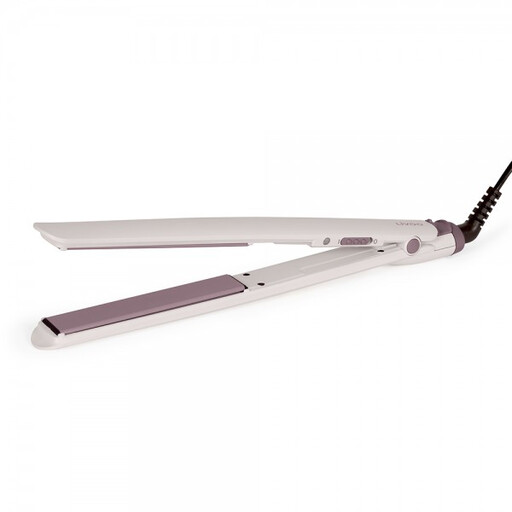
Why this choice suits this profile: this corded model is easy to handle for a first purchase and is well suited to styling routines at home.
Its specifications are clearly stated: it heats up in 45 seconds, has floating ceramic-coated plates and a maximum temperature of 210 °C. It does not claim to suit every hair type without specific adjustments.
120 × 25 mm plates, a 1.85 m swivel cord, a locking system, and straightening or waving functions.
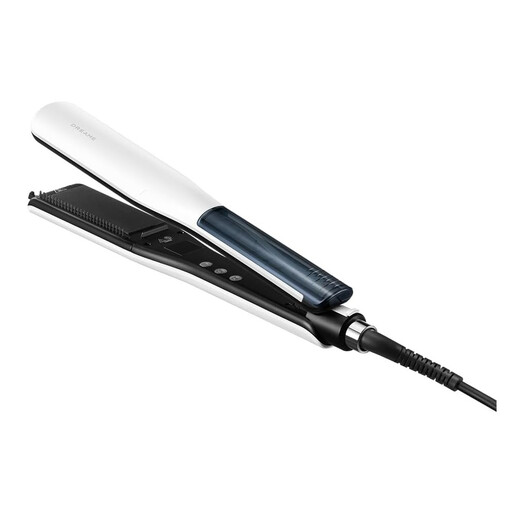
Why this choice suits this profile: its steam system, digital display and Bluetooth connectivity are designed for people who want to personalise their routine further.
Steam is not presented as a feature without practical requirements: the tank must be filled only with distilled or purified water, then emptied after use.
Four settings from 160 °C to 230 °C, ceramic-coated plates, 100–240 V power supply and a 360° swivel cord.
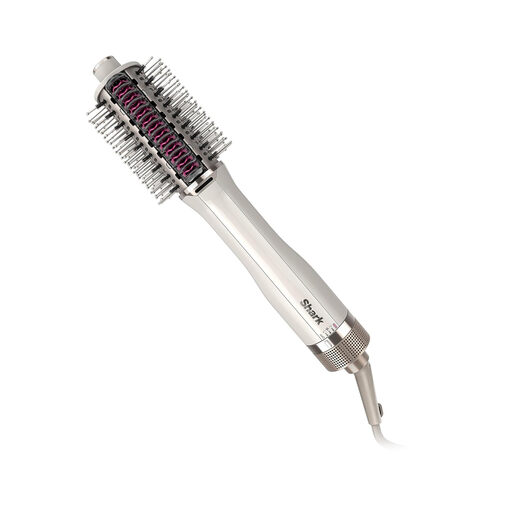
Why this choice suits this profile: this device is designed for those who want to combine drying, brushing, volumising and straightening in a single tool.
The two modes are clearly separated: damp hair or dry hair. This welcome clarification prevents you from assuming that a conventional straightener can be used on wet hair.
900 W power, three temperatures, three speeds, a straightening comb and a stated weight of 730 g.
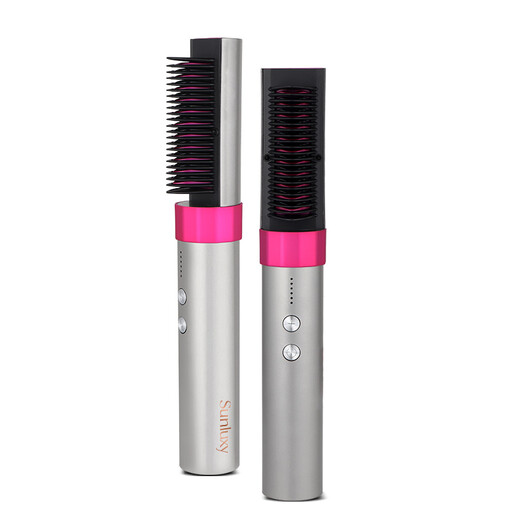
Why this choice suits this profile: its cordless design can make touch-ups easier while travelling or in places without a nearby socket.
The product information states a battery life of around 30 minutes and six settings, from 130 °C to 200 °C. This makes it easier to check whether the device will last long enough for your styling session.
Built-in 4,000 mAh battery, six temperature levels, PTC ceramic heating plates and teeth designed to limit direct contact with hot surfaces.
We have put together a complete, real-time updated selection of products that meet these demanding criteria, as well as European safety requirements.
This depends on your hair type and the selected temperature, but frequent use increases exposure to heat. A moderate setting, quick passes and the application of a heat-protective treatment are sensible precautions. Fine or sensitised hair will generally require a lower temperature.
For fine hair, start with a low temperature, around 130 to 170 °C depending on the device. Normal hair can often be styled with a medium setting. For thick, curly or difficult-to-tame hair, a higher temperature may be useful, but never exceed the limits recommended by the manufacturer.
A straightening brush is primarily suited to quickly relaxing, detangling and taming the hair. It generally preserves more volume. A plate straightener offers more direct contact with the strand and allows you to work more precisely on the ends, roots or waves. The right choice therefore depends on the result you want and your styling habits.