
Livraison le jour même ou le lendemain

Qualité garantie

Débloquez vos offres de bienvenue: Livraison GRATUITE | Jusqu'à -80 % | 30 jours d'essai gratuits à JoyPlus
Téléchargez l'application
A hair straightener can smooth, wave or curl your hair, but not all models meet the same needs. Thick, curly, natural, fine or frizz-prone hair: the temperature, plates and format directly affect ease of use and the final result.
Before you buy, it's worth knowing the most common pitfalls.
A temperature advertised at 230 °C or 240 °C isn't necessarily suitable for all hair types. Excessive heat can make styling uncomfortable and weaken the hair fibre over repeated use. A straightener with adjustable temperature lets you adapt the heat to your hair's texture and thickness.
An ionic straightener can help reduce static electricity and the appearance of frizz during styling. However, the result depends on many factors: ambient humidity, hair preparation, the technique used and the condition of the hair fibre. Manufacturers' numerical claims should therefore be seen as stated features, not as a guarantee that works for everyone.
A heavy device with a cord that's too short or plates that snag can quickly become tiresome to use every day. On long, thick hair, sufficiently long plates make it easier to work with wider sections. For travel, a mini travel straightener or cordless straightener will be simpler to carry, provided you check its battery life and power.
A ceramic hair straightener generally distributes heat more evenly across the styling surface. Floating plates can also better follow the hair section as pressure varies, for a smoother, more consistent glide. The dimensions should above all match your needs:
A device marketed as a straightener and curler should be easy to pivot and glide. The shape of the plates and edges often matters more than the product name alone.
For versatile use, choose several heat levels and a clear display. Fine hair may need a lower setting, while thick or very curly hair may require a higher temperature, without ever exceeding the instructions in the manual.
Heat-up time also matters when you're styling quickly in the morning. Some models reach their temperature in around 30 to 45 seconds, while cordless devices can sometimes take longer.
The ionic function often features in models designed to limit static electricity. A steam straightener adds moisture diffusion during styling. You must then follow the filling, cleaning and use instructions for dry hair scrupulously.
Also remember to check for practical features and safety elements:
Always use the straightener on dry hair, away from any water source, and apply a heat protectant suited to your routine.
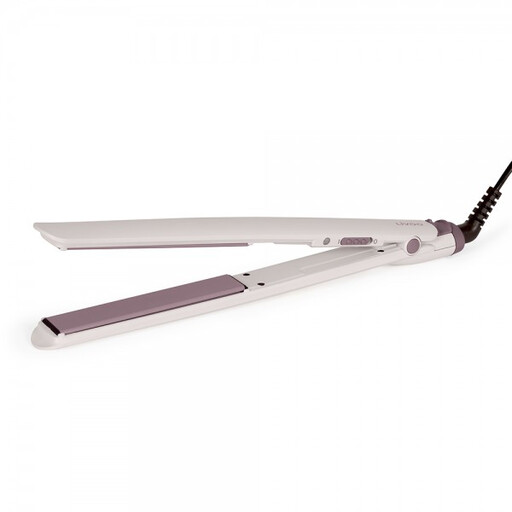
Why this choice suits this profile: Its simple operation works for daily routines, with no complex settings, and a heat-up time advertised at 45 seconds.
The floating plates and ceramic coating minimise problems with uneven gliding and inconsistent heating.
Plates 120 × 25 mm, temperature up to 210 °C, 1.85 m swivel cord and plate lock.
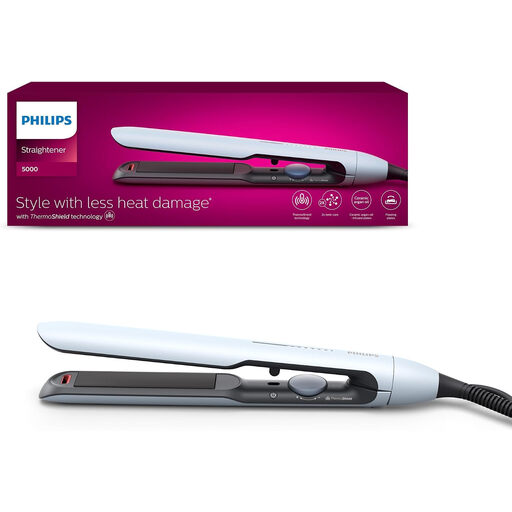
Why this choice suits this profile: It's aimed at those who want more settings and versatile use, from straightening to waves.
The 12 levels, from 120 °C to 230 °C, mean you don't have to use a single temperature on all textures.
105 mm floating plates, ionic function, heat-up advertised in 30 seconds, automatic shut-off and universal voltage.
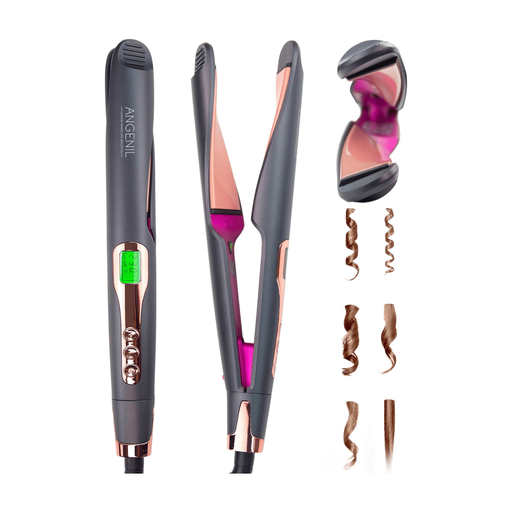
Why this choice suits this profile: Its 2-in-1 format and numerous settings suit long, thick, curly or natural hair when you want to vary your styles.
The 11 temperature levels and LCD display mean you don't have to rely on a fixed setting that's hard to adapt.
Advertised range from 130 °C to 230 °C, ionic function, 2 m swivel cord, automatic shut-off after 60 minutes and dual voltage 100–220 V.
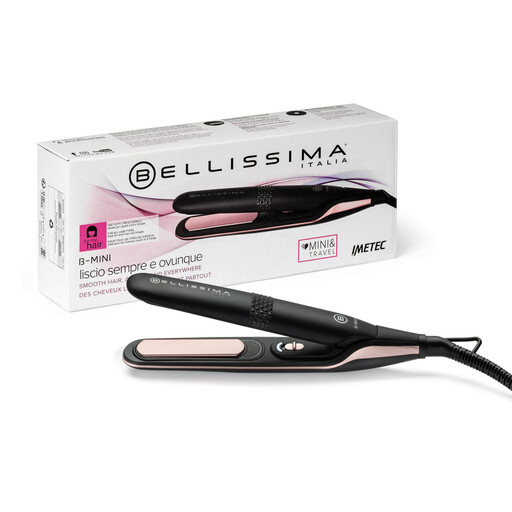
Why this choice suits this profile: Its compact size, lock and multi-voltage compatibility make travel and small touch-ups simple.
Its design is made for transport, with a 1.8 m swivel cord and a storage case included.
Ceramic coating, rounded plates, fixed temperature of 200 °C, rapid cool-down and automatic multi-voltage.
We've put together a comprehensive, real-time updated selection of products that meet these strict selection criteria and European safety regulations.
Detangle your hair and separate it into small sections before you start. Glide the device smoothly, without leaving it in one place for too long. To create a curl or wave, choose a model with rounded edges and do a few test runs on a small section.
After each use, unplug the straightener, let it cool on a heat-resistant surface, then clean the plates with a slightly damp soft cloth. Never immerse the device in water and do not use it near a sink, bath or shower.
Start with the lowest setting that achieves the desired result. Fine or damaged hair generally needs more care, while thick hair may require a higher temperature. An adjustable model offers far more flexibility than a device limited to a single temperature.
The two devices don't quite meet the same need. A straightening brush detangles and tames several sections of hair at once, often with a softer result. A plate straightener allows more precise styling and is better suited to very smooth finishes, short sections or creating curls.
The lifespan depends on how often you use it, the condition of the cord, the plate coating and how well you maintain it. Avoid knocks, only store the device once it's completely cool, and regularly check that the cord and plug show no signs of wear. Depending on the manufacturer's terms, some models come with a two-year warranty; always check the product page before buying.