
Livraison le jour même ou le lendemain

Qualité garantie

Débloquez vos offres de bienvenue: Livraison GRATUITE | Jusqu'à -80 % | 30 jours d'essai gratuits à JoyPlus
Téléchargez l'application
A hair straightener can tame unruly hair, create soft curls or shape beautiful waves. Yet the differences between two devices go far beyond design or price. Excessive heat, poorly suited plates, an awkward cable or hard-to-verify claims can turn an appealing purchase into a tool that ends up gathering dust in a drawer.
Before choosing a straightening iron, take the time to look at the features that will genuinely make a difference in your daily routine.
Heating up in seconds is a welcome feature, especially on mornings when every minute counts. But that speed is of little use if the device doesn't allow you to adjust the temperature precisely. High heat isn't necessary for all hair types and can make styling less comfortable.
Opt for a straightener with adjustable temperature. You can start with a moderate heat on fine or sensitised hair, then increase gradually depending on thickness and the result you're after. The manufacturer's recommendations are still your best guide – the maximum setting is by no means a requirement.
An ionic hair straightener is often presented as a solution for static and frizz. In practice, the result also depends on how you prepare your hair, its moisture level, your technique and the condition of the plates. Ionic technology doesn't replace a skilled hand or proper heat protection.
Think of this feature as an added bonus, not a guarantee of the same result on every head of hair.
Plates that are too short can slow down styling on long hair. Conversely, a very wide device will be less manoeuvrable for forming curls or working on a fringe. A stiff cable, no lock mechanism or an uncomfortable handle are all flaws that often become apparent after several uses.
A styling tool should adapt to your technique, the length of your hair and the space available in your bathroom or suitcase.
The temperature range is a key indicator. A model with multiple levels offers far finer control than a device that operates at a single temperature. The K·SKIN KD280, for example, offers nine settings from 120 to 200 °C and claims to heat up in around 30 seconds. The Livoo DOS214 reaches up to 210 °C and claims a heat-up time of 45 seconds.
These figures describe the device's specifications, but they don't guarantee a universal result. For regular use, start at the lowest temperature that achieves the style you want.
A ceramic hair straightener distributes heat across its surface, depending on the quality of its construction and coating. Floating plates can better follow the thickness of a section and reduce tugging as you glide through. The Livoo DOS214 features floating plates with a ceramic coating measuring 120 × 25 mm.
Also remember to check:
If you're looking for a hair straightener for curls, choose a model with sufficiently rounded edges so you can rotate it without snagging sections. Some devices are designed to straighten hair but also to create inward or outward movements.
For well-defined waves, a dedicated curling iron or barrel tool may be more suitable. A compact format is handy for travel, but its smaller dimensions may mean you need to work in more sections on long hair.
The CE and RoHS markings, when shown on the product page, indicate declared compliance with applicable European requirements and the restriction of certain hazardous substances respectively. They don't replace reading the instructions or following the safety precautions.
The models below are suited to different uses. Compare their features, format and functions before checking the product page.
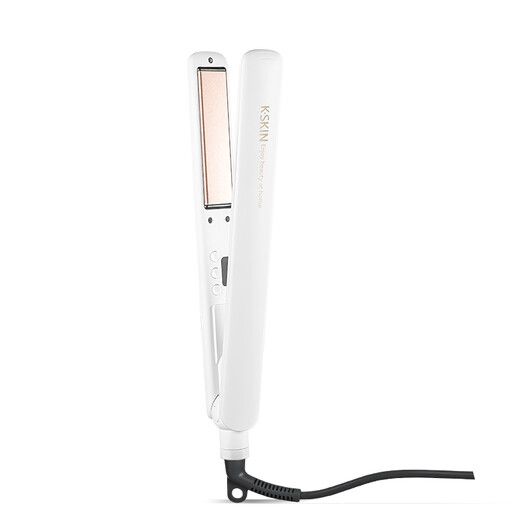
Why this choice suits this profile: Its dimensions of 31 × 3.1 × 3.5 cm and nine temperature levels make it easy to handle, even for first-time home use. It can straighten hair, create inward or outward movements and form simple curls.
The adjustable range from 120 to 200 °C means you're not stuck with a single temperature. The claimed heat-up time of around 30 seconds reduces waiting before you start styling.
Claimed 20 million negative ions technology, nine settings and two-in-one design for straightening and curls.
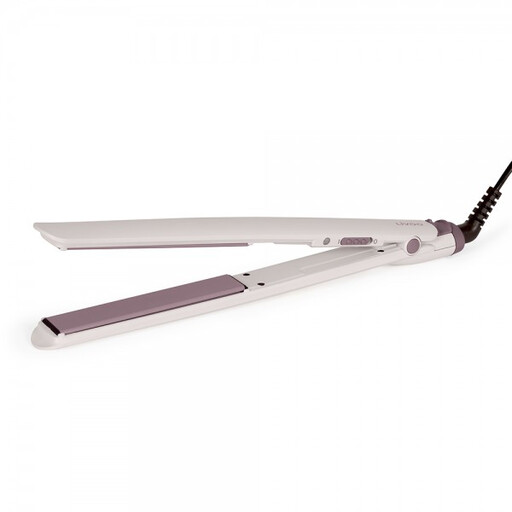
Why this choice suits this profile: Its floating ceramic plates, 1.85 m swivel cable and ability to both straighten and curl make it ideal for a regular, demanding styling routine.
The floating plates measuring 120 × 25 mm and the swivel cable reduce the risk of snagging and give you more freedom of movement while styling.
Ceramic coating, claimed maximum temperature of 210 °C, plate lock and stated weight of 0.34 kg.
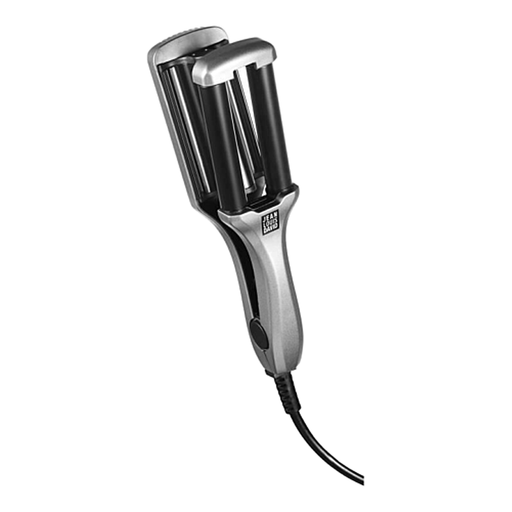
Why this choice suits this profile: This mini travel straightener is aimed mainly at those looking for waves, both at home and on the go. Its dual-voltage 110-240 V power supply is suitable for international travel with the appropriate adapter.
Its design is clearly dedicated to waves thanks to its three barrels. Its dimensions of 185 × 45 × 35 mm mean you don't have to carry a bulky device for this specific purpose.
Three ceramic-coated barrels, 45 W power and claimed maximum temperature of up to 200 °C.
We've put together a comprehensive, real-time updated list of products that meet these demanding selection criteria and European safety requirements.
To avoid repeated passes, prepare your hair dry and detangled, then separate it into sections of a reasonable size. Avoid holding the plates in one spot for too long. After use, unplug the device and let it cool on a heat-resistant surface.
Always clean the straightener when it is cold and unplugged. Never immerse it in water. Regularly check the condition of the cable, plug and plate coating. At the first sign of damage, stop using the device and refer to the manufacturer's recommendations.
Start at the lowest setting that achieves the result you want, then increase gradually if needed. Fine hair will generally require a lower temperature than thick hair. The maximum temperature stated on the product page is not a recommendation to be applied every time.
The models compared claim around 30 seconds for the K·SKIN KD280 and 45 seconds for the Livoo DOS214. The actual time observed may vary depending on usage conditions and the temperature selected. Fast heating is convenient, but temperature stability matters just as much.
Yes, provided the shape of the plates and the instructions allow it. A straightener with rounded edges can create curls or movements by rotating the device. For regular waves, a hair waving iron with three barrels, like the LITTLE WAVER, will be better suited to this specific purpose.