
Livraison le jour même ou le lendemain

Qualité garantie

Débloquez vos offres de bienvenue: Livraison GRATUITE | Jusqu'à -80 % | 30 jours d'essai gratuits à JoyPlus
Téléchargez l'application
A hair straightener can quickly disappoint if you focus only on claims of “professional results” or an impressive maximum temperature. Whether you’re choosing traditional straightening plates, a straightening brush, a steam straightener or a cordless model, the real differences come down to precise temperature control, ease of use and the hair types each device is designed for.
Here are the features to look out for before you buy, along with a selection of models to suit different needs.
230 °C isn’t suitable for every hair type. Fine or fragile hair can be damaged by high heat, while thick, curly or unruly hair may need more time and precision. A device with several temperature settings lets you adjust the heat to suit your hair, rather than using it at full power every time.
The word “ceramic” isn’t enough to judge the quality of a straightener. You should also look at whether it has floating plates, how wide they are, how evenly they heat up and whether you can set the temperature precisely. A good coating helps the straightener glide smoothly, but it doesn’t replace using it on completely dry hair, choosing a suitable temperature or applying a heat-protection product if needed.
A cordless straightener is especially handy for touch-ups, but its battery life, charging time and whether it can be used while charging should all be clearly stated. For corded models, look for an automatic shut-off and a swivel cord. If you travel abroad, check that the voltage is compatible with your destination. In all cases, never use a heated appliance near water or leave it plugged in unattended.
For versatile styling, choose a device with at least three temperature settings. A range of around 140 to 200 °C suits many everyday needs, while some models offer a wider range of 100 to 230 °C to accommodate different hair textures.
An LCD screen or digital display makes it easy to check your chosen setting. The advertised heat-up time is only a guide, however: it can vary depending on the temperature selected and the conditions of use.
Floating plates adapt more easily to sections of hair and can reduce the need to go over the same area several times. Wide plates are better suited to long or thick hair, while a slimmer device is easier to handle on short hair, when styling a fringe or creating curls.
A heated brush works a little differently from straightening plates. It detangles and smooths your hair at the same time, generally giving you a softer, more natural-looking result. So it may not replace traditional plates if you want a perfectly sleek finish.
A 2-in-1 straightener can straighten, wave or curl your hair, thanks to its rounded plates. Check whether it has a swivel cord, a locking mechanism for storage, a storage pouch or dual voltage if you plan to take it abroad.
For a travel straightener, weight and size matter just as much as the maximum temperature. A compact model is easy to slip into a bag, but may need more passes on thick hair. USB-C rechargeable devices are easy to take with you, as long as you charge them fully before you leave.
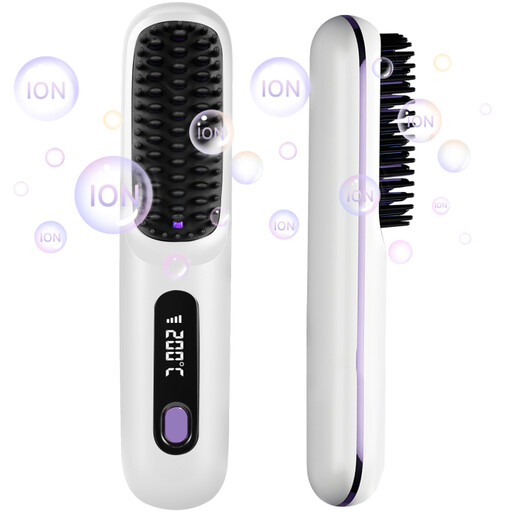
Why it’s a good fit for this group : Rechargeable via USB-C, this brush smooths and tames your hair without a cord. Its three heat settings and LCD screen also make touch-ups easy.
The choice of settings means you’re not stuck with a single temperature, while the cordless design is more convenient for touch-ups than a bulky appliance.
USB-C charging, three temperature settings, an LCD display and advertised ceramic heating technology.
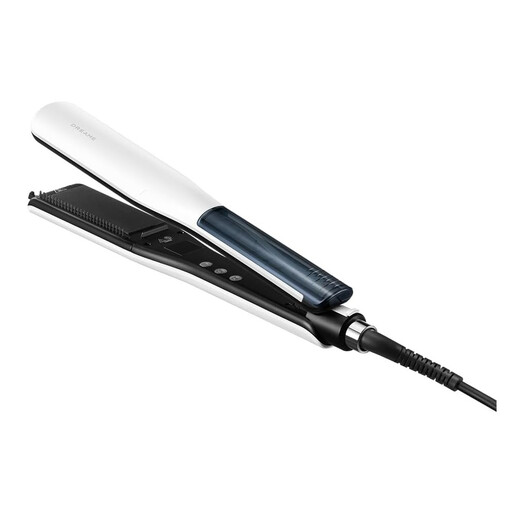
Why it’s a good fit for this group : This steam straightener offers several temperature settings and a built-in water tank. Bluetooth connectivity also lets you adjust certain settings using the accompanying app, as advertised.
Its four temperature settings mean you don’t have to rely on the maximum setting every time. However, the steam function requires you to follow the instructions on using purified water and take the recommended safety precautions.
Temperatures from 160 to 230 °C, ceramic-coated plates, a swivel cord and 100-240 V power supply.
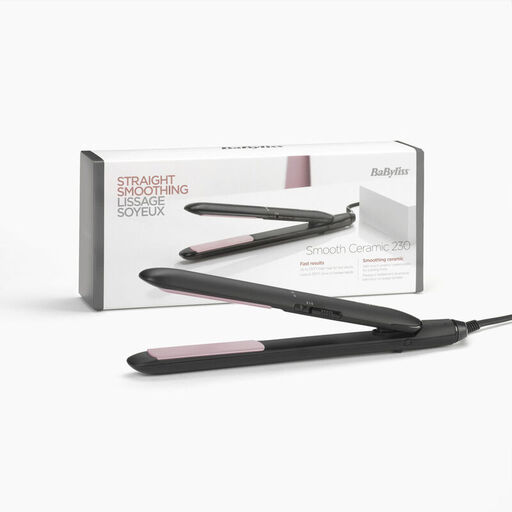
Why it’s a good fit for this group : Its corded design suits regular styling sessions at home, while its dual voltage means you can use it in several countries.
The automatic shut-off, heat-resistant mat and swivel cord help guard against forgetfulness and make frequent use more convenient.
24 × 95 mm floating plates, two settings of 200 and 230 °C, a claimed 30-second heat-up time and a three-year manufacturer’s warranty.
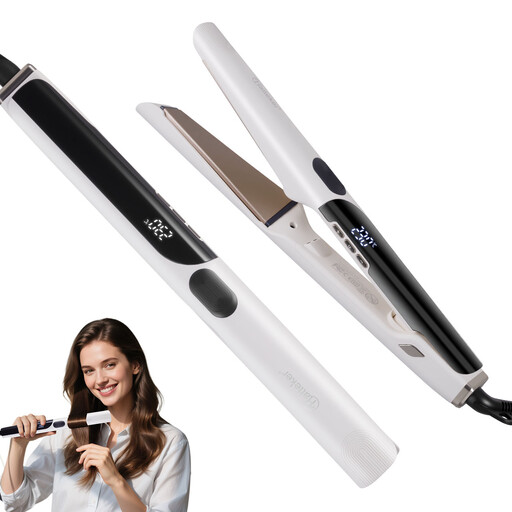
Why it’s a good fit for this group : Its curved plates and temperature range of 100 to 230 °C let you switch from straight styles to waves with a single device.
Adjustable temperature means you don’t have to rely on maximum heat, while the 2-in-1 design saves you from buying two separate appliances.
Eleven heat settings, a digital display, automatic shut-off, a swivel cord and advertised dual voltage.
We’ve put together a full selection, updated in real time, of products that meet these exacting criteria as well as European safety requirements.
Unless the manufacturer says otherwise, traditional straightening plates should only be used on completely dry hair. Some hot-air appliances have a setting for damp hair, but they work very differently from a conventional straightener. Always read the instructions before using your device for the first time.
Start with the lowest setting, usually around 140 to 160 °C, and increase it gradually if needed. Work with small sections of dry hair and avoid going over the same area several times. Even with the right temperature, you should still take the usual precautions to protect your hair from heat.
It depends on how often you use it, the condition of the coating, how well you maintain it and how you store it. Clean the plates only once the appliance has cooled completely, avoid abrasive products and don’t wrap the cord around the straightener while it’s still hot. Replace the appliance if the cable is damaged, it no longer heats evenly or the coating starts to deteriorate.