
Livraison le jour même ou le lendemain

Qualité garantie

Débloquez vos offres de bienvenue: Livraison GRATUITE | Jusqu'à -80 % | 30 jours d'essai gratuits à JoyPlus
Téléchargez l'application
Choosing a hair dryer is about far more than checking its wattage or the number of attachments included. Airflow, settings, noise, weight and ease of maintenance often have a much greater impact on everyday use.
Long, curly or frizz-prone hair has different requirements. Young children rarely tolerate very hot, noisy airflow. Pets, meanwhile, are often more comfortable with a device that distributes air around the entire body than with a conventional handheld hair dryer.
Here are the key points to review before buying, along with a selection of models available on Joybuy.
Specifications such as “110,000 rpm” or “high speed” primarily describe the motor. On their own, they do not indicate how quickly or effectively the hair will dry. Airflow, measured in m/s or L/s, the shape of the air outlet and temperature regulation are equally important.
A high-speed hair dryer can genuinely reduce drying time. However, an excessively concentrated or hot airflow may make the experience uncomfortable and can even put unnecessary stress on the hair. Look for multiple temperature settings, a cool-shot button and a thermal control system.
An ionic hair dryer is generally marketed as a way to reduce static electricity and leave hair looking smoother. However, this is a technical feature—not a promise of identical results for everyone. Hair porosity, haircut, styling products and drying technique also influence the final finish.
For curly hair, the diffuser often matters more than the number of ions advertised. It spreads the airflow over a wider area and helps preserve curl definition, provided you use a moderate temperature.
A model advertised as quiet should be assessed using its decibel rating under comparable conditions. Even a difference of a few decibels can noticeably change the perceived noise level. Sound output also varies according to the selected speed and the acoustics of the room.
Weight becomes especially important when drying long hair. A lightweight, travel-friendly model will be more comfortable to use, particularly when you are away from home. A stand or hands-free function can also prevent you from having to hold your arm up throughout the entire session.
Maintenance also deserves careful consideration. A removable, easily accessible rear grille makes it simpler to clear away hair and dust. If the air intake becomes blocked, airflow is reduced and the appliance may run hotter.
Electrical power, generally between 1,400 and 1,900 W for the domestic models featured here, refers to the appliance’s maximum power consumption. It is not enough to predict drying speed. For regular use, look for:
In France, check the voltage shown on the product page. Appliances designed for 220–240 V are generally compatible with French electrical systems. However, a model fitted with a British plug may require a suitable adapter. An adapter does not convert voltage and must be rated to handle the appliance’s power consumption.
A concentrator nozzle directs airflow to a specific area, making it useful for blow-drying and styling. A diffuser is better suited to curly or wavy hair: it spreads air over a wider surface and helps minimise curl disruption.
For long hair, powerful airflow can save time. Nevertheless, keep the appliance away from the scalp and move it regularly so that the same area is not exposed to excessive heat.
Ionic functions and temperature control can complement these attachments. They do not replace a sensible operating distance or settings suited to your hair type.
Never use a hair dryer near a bathtub, a filled sink or a shower. Unplug it after every use, particularly in the bathroom. Do not block the air-intake or air-outlet grilles.
For a baby hair dryer, adult supervision is essential at all times. Use the appliance according to its instructions and keep it away from the face, ears and skin. Lower noise levels may make the experience more comfortable for a child, but they never replace the usual safety precautions.
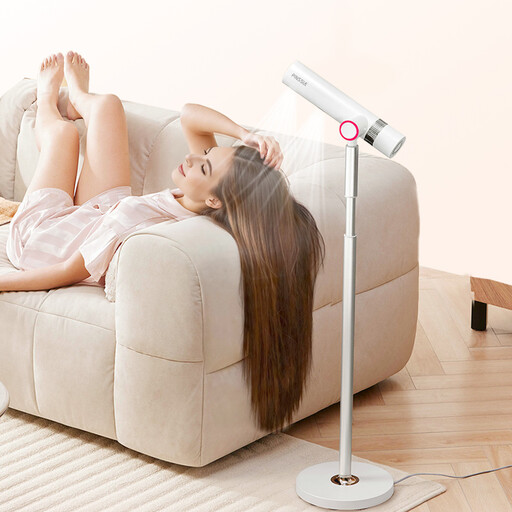
Why this model may suit you: its freestanding design and oscillating airflow may appeal to families, people with long hair or anyone who wants to keep both hands free. The product listing states that it features a 100,000-rpm motor, 16 m/s airflow and a child mode.
Independent temperature and speed controls mean you do not have to rely on an airflow that is simply very hot. The description also mentions overheat protection.
5 temperatures, 3 speeds, display and magnetic remote control, 30° oscillation according to the listing, and 220–240 V power supply.
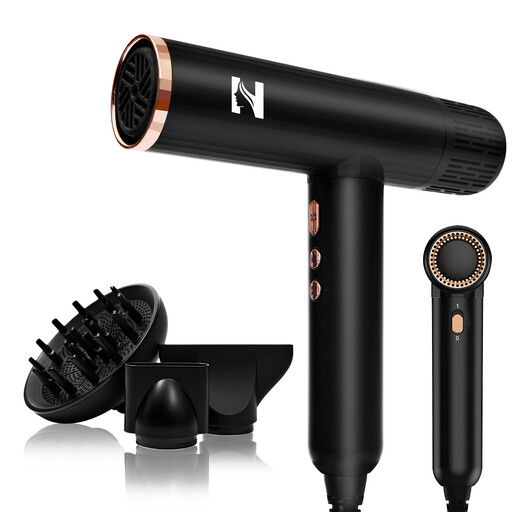
Why this model may suit you: with its diffuser, two concentrator nozzles, 4 temperature settings and 3 speeds, this hair dryer for curly hair offers impressive versatility. Its stated weight of 0.57 kg makes it easy to take on the go.
The diffuser means you do not have to choose an appliance based solely on power. The brand advertises negative ions, but their visible effect may vary from one head of hair to another.
Brushless motor rated at 110,000 rpm, 23 m/s airflow, 2 m cord and noise level below 65 dB according to the listing.
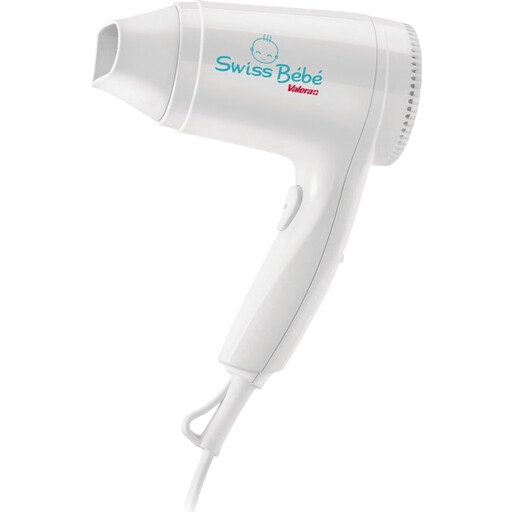
Why this model may suit you: this baby hair dryer is presented as compact and lightweight, with a 500 W motor. Its two temperature settings are intended for use under adult supervision.
Its more moderate power and limited settings support controlled use. The instructions recommend not using it continuously for more than 10 minutes.
500 W, lightweight and compact design, two temperature settings and diffuser attachment included according to the product listing.
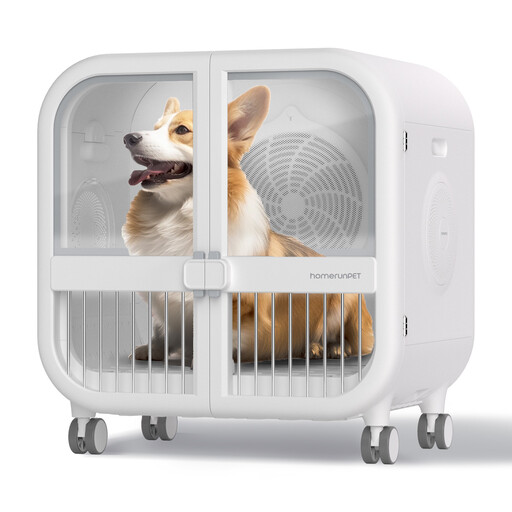
Why this model may suit you: this pet dryer features a 135 L chamber designed for small to medium-sized dogs. Air circulation is advertised as 360°, and the appliance can also be used as a sleeping area.
This is not an oversized human hair dryer: it is designed for hands-free drying. Nevertheless, the animal must remain under supervision at all times.
Gentle air temperature rated at 40 °C, noise level rated at 34 dB, built-in hair-collection compartment and intended for use with dogs.
We have brought together an up-to-date selection of products that meet these criteria and the applicable usage precautions in France.
Its lifespan depends on how often it is used, filter maintenance, motor quality and the condition of the power cord. Clean the air-intake grille regularly, allow the appliance to cool down after prolonged use, and stop using it if the plug or cable is damaged. The instructions and warranty terms specify the applicable service and repair conditions.
Noise level and power consumption are two separate considerations. A quiet hair dryer may consume 1,600 or 1,900 W, while a less powerful model may need to run for longer. To estimate running costs, multiply the power in kilowatts by the operating time in hours, then by your electricity tariff.
A dressing table with a hair dryer holder can make storage easier, provided it is stable, correctly assembled and kept away from any water splashes. The GTIMEX model featured on Joybuy includes a holder, two 220–250 V sockets and two USB ports, according to its product listing. Make sure the electrical installation and assembly are suitable for your home, then unplug the hair dryer after every use.