
Livraison le jour même ou le lendemain

Qualité garantie

Débloquez vos offres de bienvenue: Livraison GRATUITE | Jusqu'à -80 % | 30 jours d'essai gratuits à JoyPlus
Téléchargez l'application
Changing your colour, covering grey hairs or simply stretching the time between salon visits doesn't always call for the same solution. Yet packaging often lines up the same promises: 'long-lasting', 'full coverage' or 'professional results'. These claims need to be put into context, because a permanent colour, a root touch-up spray and a concealer powder don't meet the same needs.
A root touch-up spray or concealer powder deposits colour onto the surface of the hair. The result usually disappears with the first shampoo. These formats are handy for disguising regrowth between colourings, but they don't replace a permanent dye.
On the other hand, a permanent colour permanently alters the visible colour of the hair fibre. It requires more preparation, a precise development time and an allergy test before each application.
An ammonia-free colour may feel more pleasant to apply, particularly because its scent is often different. That doesn't mean it's suitable for all scalps or that it carries no risk of a reaction. Its formula may contain other colouring agents or oxidisers.
Read the ingredient list, warnings and instructions carefully. The recommended allergy test 48 hours before application remains essential, even if you've used a similar colour before.
A blonde, chestnut or copper colour won't necessarily give the same result on a light, dark or already coloured base. A shade can lighten a natural base to a certain extent, but it can't always correct a previous colour.
To limit unpleasant surprises, compare the advertised shade to your current colour. Also take into account the presence of grey hairs, highlights or recent chemical treatments.
A ready-to-use kit usually contains the colour cream, developer, gloves and a post-colour treatment. This is the simplest format for colouring your hair at home. A 60 ml or 100 ml cream intended for professionals offers more flexibility, but requires you to follow the mixing ratio and buy a suitable oxidant.
Format also matters for frequent touch-ups. A pack of two 75 ml sprays can be more practical than a single bottle if you regularly maintain your roots.
Before any colouring:
Touch-up aerosols require an extra precaution: they are flammable. Use them in a well-ventilated area, away from any flame, heat source or car exposed to the sun.
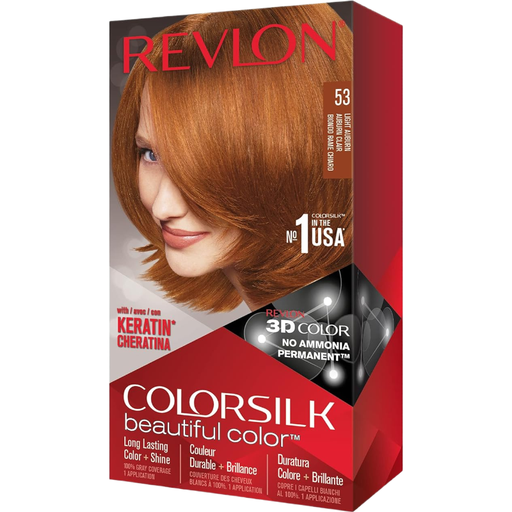
Why this choice suits this profile: Its ready-to-use kit makes a first copper colour at home simple. The brand claims an ammonia-free formula and a post-colour treatment is included.
The kit includes colour, developer, gloves and instructions. This saves you from separate purchases and dosing errors.
Shade Light Auburn 53, claimed non-drip texture and a development time of 25 minutes, extended to 35 minutes on resistant grey hair.
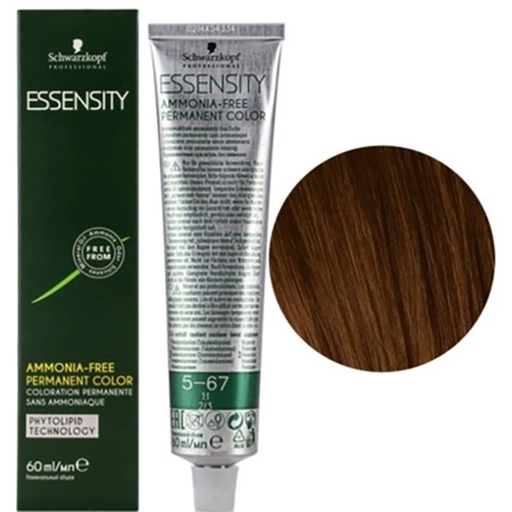
Why this choice suits this profile: This professional colour is aimed at those who care about ingredients and the precision of a light chestnut shade with woody undertones.
The product page specifies a 1:1.5 mix ratio with the developer. You can therefore control the dosage rather than guessing.
60 ml tube, claimed ammonia-free, paraben-free and silicone-free formula, with possible lift of up to four levels depending on the protocol.
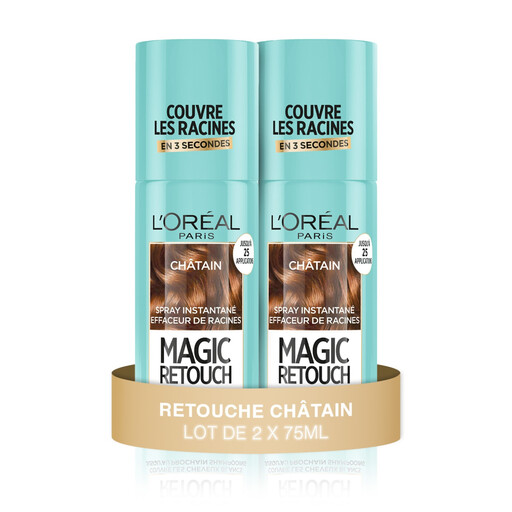
Why this choice suits this profile: This pack of two bottles is ideal for those who want to regularly touch up their chestnut roots between permanent colourings.
The product is clearly presented as temporary and washes out with shampoo. It doesn't pretend to be a permanent dye.
Two 75 ml sprays, apply from around 15 cm onto dry hair and dries in a claimed one minute.
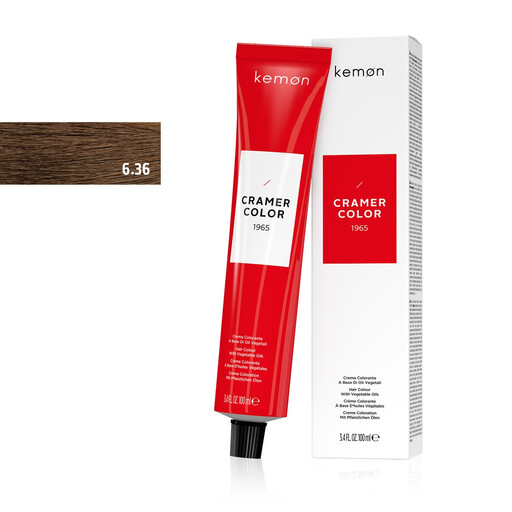
Why this choice suits this profile: Its 100 ml tube is suitable for salons and for users looking for a golden dark blonde colour with a customised dosage.
The product page states that the developer is not included. So there's no risk of mistaking it for a ready-to-apply kit.
100 ml capacity, shade 6.36 and 'disc' technology, claimed to limit premature oxidation of the mixture.
We've compiled a comprehensive, real-time selection of products that meet these demanding criteria, while complying with European safety regulations.
The longevity depends on the formula, how often you shampoo, your hair's porosity and the speed of regrowth. A permanent colour remains visible on the lengths, but the roots usually need touching up when your natural colour reappears. Always refer to the instructions for the recommended application schedule.
Some formulas claim to cover grey hair, but the result depends on the percentage of greys, their resistance and the shade you choose. Follow the stated development time and select a shade suited to your base colour. If in doubt or if you've had a reaction before, seek advice from a hairdressing professional.
A root touch-up spray spreads quickly over a relatively wide area. Concealer powder allows for more precise application, particularly on the parting or temples. In both cases, these are temporary solutions that usually wash out with shampoo, not a long-lasting colour.