
Livraison le jour même ou le lendemain

Qualité garantie

Débloquez vos offres de bienvenue: Livraison GRATUITE | Jusqu'à -80 % | 30 jours d'essai gratuits à JoyPlus
Téléchargez l'application
Dry hair, split ends, curls that are hard to define, or styling that lacks hold: choosing the right hair care isn’t just about glancing at the packaging. Promises of “repair”, instant shine, or professional results can hide significant differences in formula, temperature, and how the product is used.
Before you buy a shampoo, mask, hair oil, or styling tool, here are the criteria to check so you can avoid purchases that don’t suit your routine.
A shampoo for damaged hair or a repairing mask can improve softness, make detangling easier, and give the hair fibre a smoother appearance. However, no cosmetic product can actually mend a fibre that is already broken. The term “repair” usually refers to a surface effect, such as coating or conditioning.
To assess a formula, look at:
An ionic hairdryer can reduce static electricity and frizz, depending on your hair type and how you use it. That doesn’t mean you can skip setting the temperature correctly or keeping the tool moving. Heat that is too high or applied too often can make dryness worse.
The same goes for a heated brush: use it on dry, detangled hair, separated into small sections. A model with adjustable temperature will always be more versatile than one that runs at a single level.
A 450 ml or 550 ml bottle can be handy for daily use, but it quickly becomes bulky when you’re travelling. On the other hand, a 70 ml oil allows you to dose the product more easily, as long as you keep it light on fine hair.
For tools, also check the power, plug type, compatible voltage, and included accessories. A model with a British plug, for example, will need an adapter suitable for French installations.
Care for dry and curly hair typically combines hydrating agents with light fats. Glycerin, certain humectants, plant oils, and butters can improve the feel. However, a formula that is too rich may weigh fine hair down.
For curly hair, aim for a routine that includes:
For a hairdryer, a power rating of 1,800 W can speed up drying, but it isn’t enough to judge how comfortable it is to use. Also look at the airflow settings, temperature levels, whether it comes with a concentrator nozzle, and overheat protection.
For a heated brush, several temperature levels let you adapt the tool to your hair type: a moderate temperature for fine or sensitised hair, and a higher one for thick hair. The Wavytalk brush shown below offers five settings, from 150 °C to 215 °C. These values should serve as a guide, not a rule to follow every time: always start at the lowest level that still gives you the result you want.
Read the ingredient list if you are sensitive to fragrance, certain preservatives, or regulated allergens. A product that is sulphate-free or paraben-free isn’t automatically right for every head of hair – it’s the overall balance of the formula that matters.
Also follow the usage instructions: avoid contact with the eyes, rinse thoroughly when advised, and stop using the product if irritation occurs. For electrical tools, keep them away from water, clean the air intake grilles regularly, and unplug them after each use.
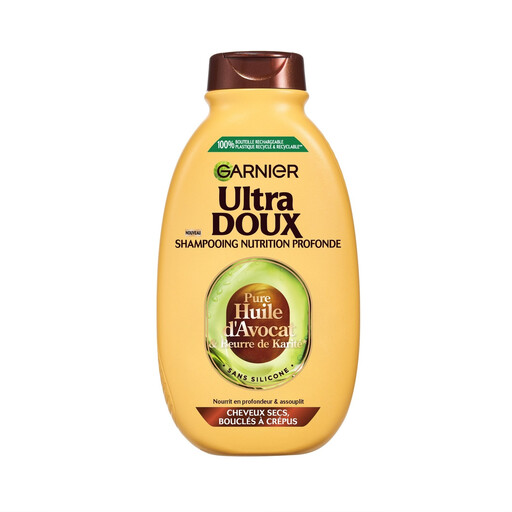
Why this choice suits this profile: This 300 ml shampoo is designed for dry, curly, and frizzy hair. Its creamy texture and straightforward use make it a great starting point for a nourishing routine.
The product page clearly highlights avocado oil and shea butter, rather than relying solely on a vague promise of shine.
300 ml format, apply to wet hair, and a formula designed for dry, curly, or frizzy hair.
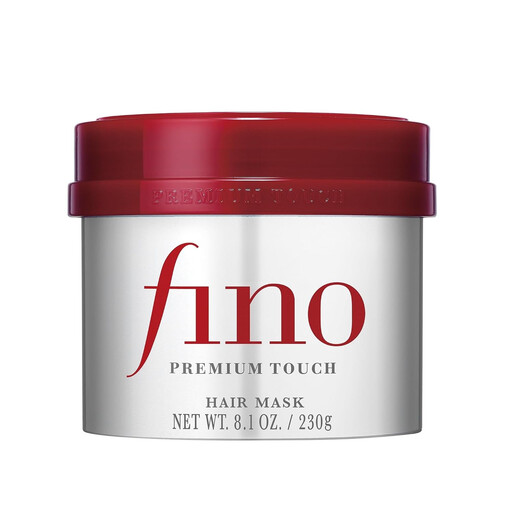
Why this choice suits this profile: This mask is for those who want to add a deep treatment once or twice a week, especially after colouring or repeated use of heat styling tools.
The stated leave-on time of 5 to 10 minutes makes it easy to fit the treatment into a realistic routine, rather than applying it multiple times every day.
Contains glycerin, dimethicone, hydrolysed silk, and squalane, in a 230 g format.
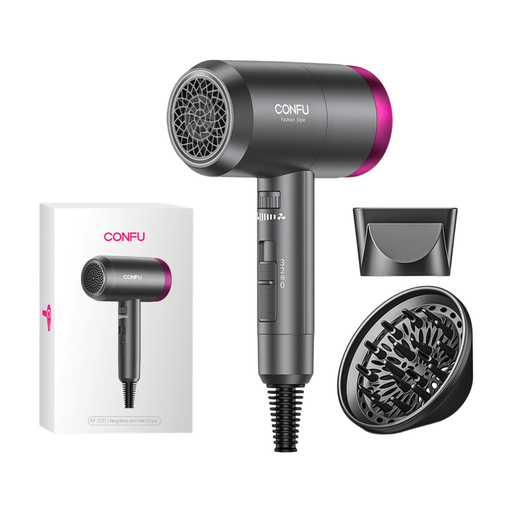
Why this choice suits this profile: With its 1,800 W, concentrator nozzle, and progressive airflow adjustment, it’s ideal for people who regularly dry thick hair or do several styles at home.
The product page mentions a temperature sensor and automatic shut-off in case of overheating. These features don’t replace the need to clean the air intake grille regularly.
1,800 W power, stated speed of 20,000 rpm, negative ions, and removable accessories for easy maintenance.
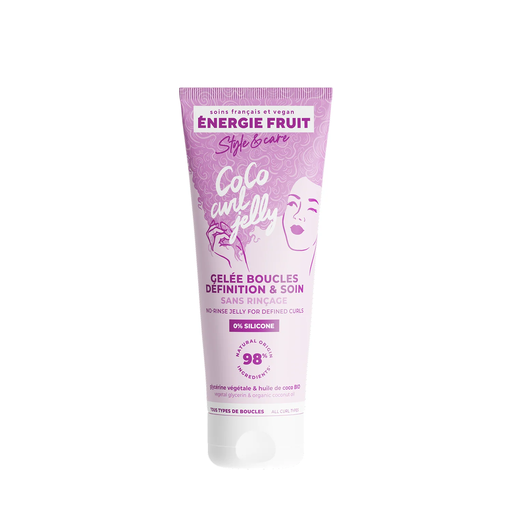
Why this choice suits this profile: Alcohol-free, this gel is applied to damp or wet hair and fits easily into a routine for wavy to curly hair.
The product page states that it doesn’t need rinsing, is applied to the lengths, and leaves no white residue, making it easy to dose.
200 ml format, organic coconut oil mentioned in the formula, and applied by scrunching the curls.
We’ve put together a comprehensive, real-time selection of products that meet these exacting criteria, while also complying with European safety regulations.
Start with a shampoo suited to your scalp, then apply a nourishing conditioner to the lengths. Add a mask once or twice a week, and a small amount of hair oil on the ends if they still feel dry. Limit high temperatures and apply a heat protectant before styling.
It depends on the porosity, thickness, and condition of your hair. One to two applications per week is a good benchmark for a rich mask. If your hair starts to feel heavy or dull, space out the uses and switch to a lighter treatment.
Clean the air intake grille regularly, gently squeeze excess water from your hair with a towel, and use a suitable nozzle to focus the airflow. A progressive setting helps you avoid running the tool at full power all the time. Dry the roots first, then finish the lengths at a moderate temperature.