
Livraison le jour même ou le lendemain

Qualité garantie

Débloquez vos offres de bienvenue: Livraison GRATUITE | Jusqu'à -80 % | 30 jours d'essai gratuits à JoyPlus
Téléchargez l'application
Choosing a hair and beard brush or comb isn’t just about looks or price. The texture of your hair or beard, its length, how you plan to use it, and the quality of the materials all have a direct impact on your daily comfort. Whether you need to detangle curly hair, tame a medium-length beard, or achieve a blow-dry, one single tool isn’t always enough.
Very soft bristles can feel pleasant on a sensitive scalp, but they may lack the grip needed for thick hair or a dense beard. On the other hand, teeth that are too rigid or too close together can snag on knots and make styling uncomfortable.
The right balance depends on your hair or beard texture. A detangling hairbrush with flexible bristles is generally fine for daily use, while a wide-tooth comb will be more comfortable on thick, curly, or wet hair.
This claim doesn’t guarantee the same result on fine, afro-textured, curly, or very long hair. It’s better to check:
A small-diameter round hairbrush, for example, is better suited to fringes, short hair, and finishing touches than to drying long hair.
Hair, styling product residue, oils, and dust quickly build up between the teeth and bristles. A tool that’s difficult to clean soon loses its comfort and hygiene. Choose a simple design, inspect the bristles regularly, and replace the brush as soon as any part becomes sharp, broken, or unstable.
Plastic teeth should be smooth, without any burrs or cracks. Nylon bristles can be soft or firmer depending on their height and density. A wooden handle, such as sandalwood, offers a different feel and should be stored away from excessive moisture.
For a beard brush, synthetic bristles provide a more consistent feel and avoid animal-derived materials. Their firmness should, however, match your beard length: a medium to long beard needs enough control to tame the hairs without pulling unnecessarily.
A lightweight travel brush slips easily into a bag or wash bag, but a short handle can be less comfortable during prolonged use. At home, a wide surface and a stable handle make detangling easier. The stated dimensions allow you to compare tools more objectively, as do the weight and diameter of a round brush.
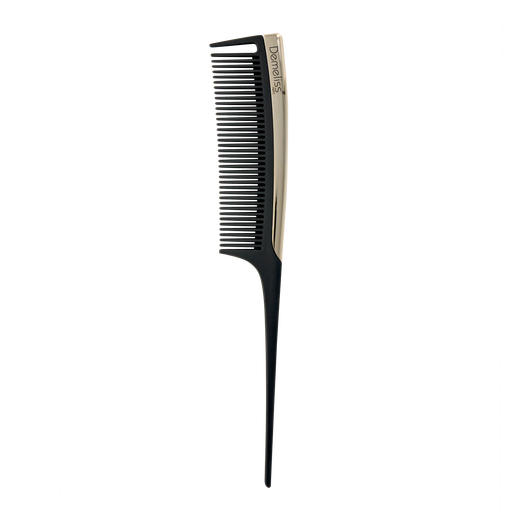
Why this choice suits this profile: this 15 cm styling comb is compact and works well for partings, touch-ups, and styling at home or on the go.
Its evenly spaced teeth let you accurately judge its feel in your hand, without relying on a one-size-fits-all promise.
Lightweight plastic construction, fine tail for sectioning hair, and a compact size that’s easy to store.
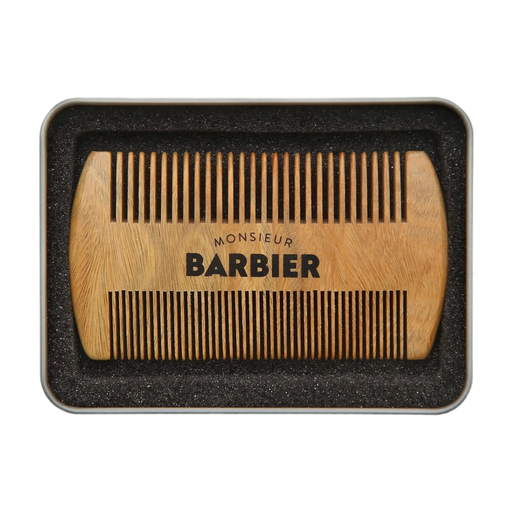
Why this choice suits this profile: this natural sandalwood comb combines detangling and finishing in one tool, for both hair and beard.
The two sides each have their own role: wide teeth for detangling, fine teeth for sculpting shorter areas.
Natural sandalwood, double-sided design, and even distribution of oils or balms.
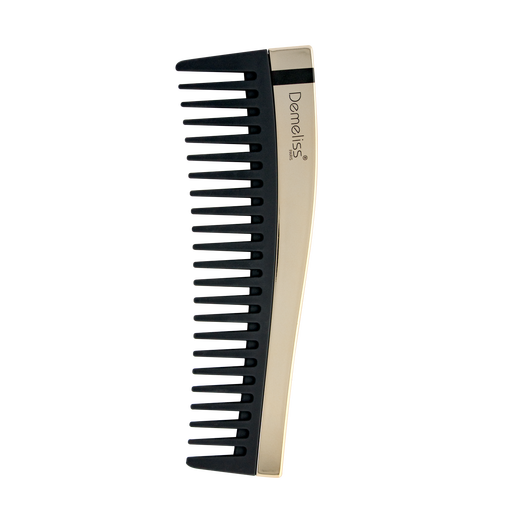
Why this choice suits this profile: its wide teeth meet the needs of thick, voluminous, or curly hair, whether dry or wet.
The generous spacing prevents you from forcing through knots, provided you detangle from ends to roots.
Lightweight plastic, suitable for dry or wet hair, and a 27 cm format ideal for large sections.
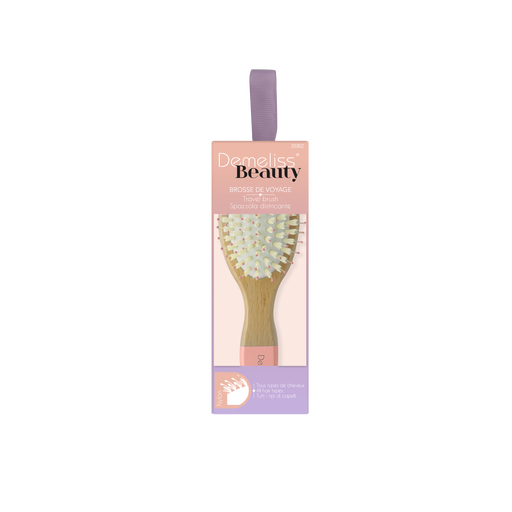
Why this choice suits this profile: at a stated 75 g and with its compact size, this travel brush slips easily into a bag or wash bag.
Its dimensions and weight are stated, so you can check it will fit in your luggage before you buy.
Wooden base and handle, nylon bristles in two heights, and suitable for dry or slightly damp hair.
Remove any trapped hair after each use, or every two or three uses depending on how often you brush. Clean the tool using a method suited to its material, then let it dry completely. Wooden combs should be kept away from prolonged moisture.
To minimise pulling, separate your hair into sections and start at the ends. A long beard can first be worked with a beard brush, then tamed with a comb. For a blow-dry, use a round hairbrush on a moderate heat setting and avoid holding the hairdryer too close to the fibres.
We’ve put together a comprehensive list, updated in real time, of products that meet these demanding selection criteria as well as European safety regulations.
A wide-tooth comb or a detangling brush with flexible bristles is generally the best option. Work in small sections, from ends to roots, without forcing through knots. Also check that the teeth are smooth and free of burrs.
It depends on its design. A beard brush with synthetic bristles, like the Monsieur Barbier Beard & Hair Brush Final Touch, is designed for medium to long beards and can also work on certain areas of the hair. For long or thick hair, a flat brush covering a larger surface area will often be more practical.
Replace the tool when the teeth crack or the bristles become sharp, start to fall out, or lose their flexibility. Its lifespan depends on how often you use it, how you clean it, and where you store it. A regular visual check will help you avoid scalp or skin irritation.