
Livraison le jour même ou le lendemain

Qualité garantie

Débloquez vos offres de bienvenue: Livraison GRATUITE | Jusqu'à -80 % | 30 jours d'essai gratuits à JoyPlus
Téléchargez l'application
Are you looking for a Haier 7 kg top load washing machine for a flat, a couple or a small family? Top loading frees up space at the front, but certain details can turn a practical purchase into a daily hassle.
Before comparing programmes and smart features, make sure you check the actual dimensions, the stated energy consumption and how useful the options really are. Here are the criteria to consider when choosing a 7 kg washing machine suited to a UK home.
A top load washing machine can measure around 40 to 41 cm wide. However, you also need to allow enough depth and clearance above to open the lid fully. The Haier THASN276TM6-S measures 405 mm wide, 600 mm deep and 860 mm high.
So, measure:
A narrow width does not necessarily mean the appliance can fit inside a closed cabinet or under a worktop.
Energy class A is a good starting point, but it is not enough to estimate running costs. Also look at the energy consumption in kWh per 100 cycles, the water usage and the duration of the Eco 40–60 programme.
On its product page, the Haier THASN276TM6-S states 40 kWh per 100 cycles, 42 litres per cycle and an Eco 40–60 programme lasting 3 h 28. These figures let you compare appliances more concretely than a simple promise of savings. In practice, consumption will also depend on the temperature selected, the load weight, the programme used and your electricity tariff.
Depending on the programme used, the steam function can relax fibres and help reduce creasing. However, it does not replace sorting your laundry, using the right amount of detergent or following care labels.
The same goes for a Wi-Fi connected washing machine: it is only useful if you actually use the app. The hOn solution can offer remote control, notifications, additional cycles and care advice. Still, check compatibility with your network, the activation requirements and whether the appliance needs to stay connected.
A 7 kg capacity is generally suitable for the everyday laundry of a couple or a small family. If you regularly wash bulky duvets or do back-to-back loads, a larger model may be more appropriate.
With a maximum spin speed of 1,200 rpm, the Haier extracts water from clothes effectively. Its spin efficiency class B provides an extra indicator: garments may come out slightly wetter than with a faster-spinning model. This is worth considering if you dry laundry in a room with poor ventilation.
Noise levels also deserve your attention. The Haier states 77 dB(A) during spinning, with a noise emission class C. If the machine will be installed near a bedroom or in an open-plan kitchen, compare this value with your household's tolerance.
The Inverter BPM motor adjusts its operation based on the load and cycle. This technology is generally associated with controlled energy use and smoother running, but it does not replace checking the figures on the energy label.
Automatic weight detection can also simplify use: the machine adapts certain parameters according to the amount of laundry and the water absorbed by the fabrics. However, this does not mean every cycle will automatically use the minimum possible.
The Haier THASN276TM6-S offers 16 programmes, a drum cleaning function, a delay start of up to 24 hours and a quick steam option. The Instant Mix system is presented as a way to improve the mixing of water, detergent and laundry.
Also consider the less obvious aspects:
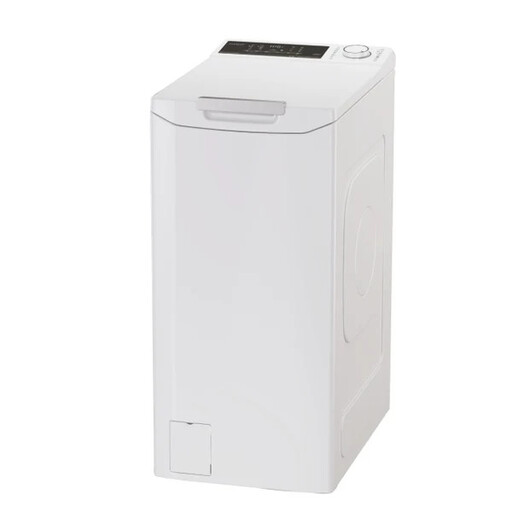
Why this choice suits this profile: This 6 kg top load model is aimed at households looking for a compact, connected machine with quick cycles, even if it means accepting a slightly smaller capacity than 7 kg.
The product page clearly states the lack of steam and the energy class B: you choose with full knowledge, based on verifiable data rather than a vaguely suggested feature.
6 kg, 1,400 rpm, Inverter BPM motor, 17 programmes, Wi-Fi and hOn app.
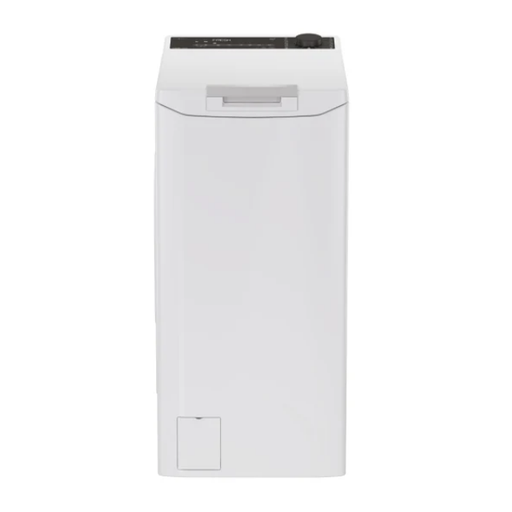
Why this choice suits this profile: It ticks all the boxes: 7 kg capacity, class A, steam function, inverter motor and remote control, all in a 40.5 cm wide top load format.
The energy consumption, noise level and Eco 40–60 programme duration are all stated: you can compare them against your priorities before ordering.
7 kg, class A, 40 kWh/100 cycles, steam, Wi-Fi, Bluetooth, hOn app and 16 programmes.
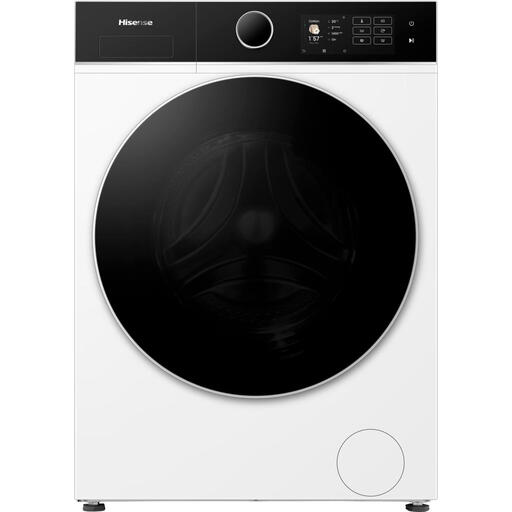
Why this choice suits this profile: This front-loading model is aimed at households willing to accept a width of 595 mm in exchange for an 8 kg capacity, 1,400 rpm spin and specialist programmes.
Its depth of 470 mm is listed separately from its width: still check that the front footprint and door opening suit your room.
8 kg, class A, 33 kWh/100 cycles, 38 litres per cycle, 72 dB(A), steam, Wi-Fi and ConnectLife app.
We have selected a comprehensive, real-time updated list of products that meet these demanding criteria as well as European safety standards.
With its stated width of 405 mm, it can fit into a narrow space. However, you need to allow for 600 mm depth, full lid opening and easily accessible connections. Measure your space carefully before ordering.
It depends entirely on your electricity tariff, the number of cycles you run and the actual consumption. As a guide, the 40 kWh per 100 cycles stated on the Haier's product page works out at 0.4 kWh per Eco 40–60 cycle. Multiply this figure by your electricity rate, then add the cost of water and wastewater treatment.
No. It can be handy for receiving a notification when a cycle finishes, accessing extra programmes or starting certain functions remotely. If you prefer simple controls and a machine you can use without an app, a non-connected model will probably meet your needs without adding a feature you will never use.