
Livraison le jour même ou le lendemain

Qualité garantie

Débloquez vos offres de bienvenue: Livraison GRATUITE | Jusqu'à -80 % | 30 jours d'essai gratuits à JoyPlus
Téléchargez l'application
Sichuan cuisine, with its bold and complex flavours, is gaining popularity worldwide. At the heart of many iconic recipes lies a foundational condiment: spicy soybean paste. For enthusiasts of authentic flavours, finding a product that combines tradition and quality without a long list of ingredients can be a challenge. As discerning consumers, we look for transparency and good value for money.
This guide aims to shed light on Haday Spicy Soybean Paste, a benchmark in its category, providing you with the keys to making a choice tailored to your culinary needs.
Navigating the world of Asian condiments can be daunting. Here are a few objective criteria to help you select a product that meets today's standards for quality and transparency.
A short ingredient list is often a good indicator. For an authentic spicy soybean paste, the main components should be soybeans (ideally non-GMO), chilli peppers, water, salt, and wheat flour for fermentation. The "0 Additives" label or the term additive-free soybean paste indicates the manufacturer's commitment to developing flavours through natural fermentation, rather than relying on flavour enhancers or artificial colourings. This is an increasingly sought-after criterion for European consumers.
A brand with an established heritage, like Haday, whose origins are said to date back over 300 years, typically relies on traditional brewing methods. This expertise translates into a depth of flavour (umami) that mass-produced products struggle to replicate. Learning about the brand's history helps to better understand the philosophy behind the product.
Spicy soybean paste is a powerful and highly concentrated condiment. A small jar may be sufficient for occasional use or for trying the product for the first time. For Sichuan cuisine enthusiasts or families who regularly cook dishes like Mapo Tofu or stir-fried pork, a larger size will be more economical and practical.
Taking the above criteria into account, here are two options from Haday that cater to different needs.
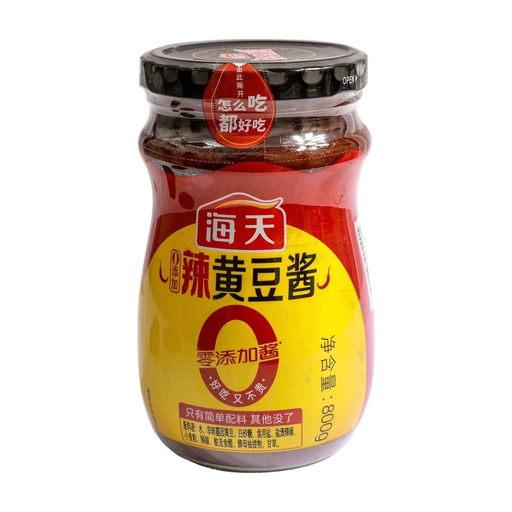
This 800g jar is a prime option for regular home cooks. The "0% Additive" claim highlighted by Haday on this product meets the growing demand for cleaner ingredient lists. It is made from non-GMO soybeans and undergoes a fermentation process that gives it a rich flavour and a distinct heat. Its texture, in which soybean particles are still visible, is a testament to its careful production. It is a highly versatile spicy Chinese condiment, useful for stir-fries, braised dishes, and marinades alike.
This size is particularly suitable for families, Asian cuisine enthusiasts who use this type of condiment regularly, or those who prepare dishes in large quantities. If mapo tofu sauce is a staple in your repertoire, this jar will quickly find its place in your pantry.
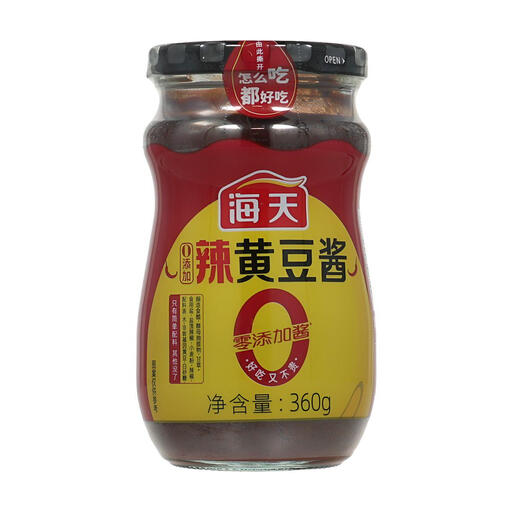
This 360g jar is an excellent entry point into the world of spicy Haday sauce. It shares the same "zero additive" philosophy as its larger counterpart, with a simple and authentic recipe: soybeans, water, chilli peppers, salt, and wheat flour. It's a practical option for those who want to try the product without committing to a large quantity, or for those with limited storage space. The flavour is just as robust, offering a balance of salty, umami, and spicy notes.
This product is ideal for individuals, couples, or those who cook Asian dishes more occasionally. It is also a smart choice if you simply want to add a touch of heat and depth to your dishes without specialising solely in Sichuan cuisine.
Haday Spicy Soybean Paste is a benchmark for its flavour and quality. However, the world of Asian condiments is vast and full of discoveries. For those who wish to compare different textures, heat levels, or flavour profiles, our selection of spicy soy sauce offers a broader range of products that could also enrich your cooking.
The term Doubanjiang (豆瓣酱) specifically refers to a fermented bean paste, often made from broad beans rather than soybeans, which is a pillar of Sichuan cuisine. The most famous version comes from the Pixian district. "Spicy soybean paste" is a more general term that can include soy-based products, such as those from Haday. Although the flavour profiles are similar (salty, spicy, umami), there can be nuances in taste and texture. Haday products are an excellent alternative, widely used in China for everyday cooking.
As with most fermented products, it is best to store it in the refrigerator after opening. Ensure the lid is tightly sealed to preserve its freshness and aromas. A clean spoon should be used for each serving to prevent contamination. Stored this way, the product will keep for several months.
Absolutely. Haday Spicy Soybean Paste is an excellent base for preparing Mapo Tofu. It provides the umami depth from the fermented soybeans and the necessary heat that characterise this signature dish of Sichuan cuisine. For an even more complex result, some cooks like to combine it with a small amount of fermented black bean paste (douchi).