
Livraison le jour même ou le lendemain

Qualité garantie

Débloquez vos offres de bienvenue: Livraison GRATUITE | Jusqu'à -80 % | 30 jours d'essai gratuits à JoyPlus
Téléchargez l'application
Replacing H7 halogen bulbs with LED models can modernise your headlights and provide 6,000 K white light. However, you still need to choose a product that is genuinely compatible with your vehicle. The type of headlamp, beam pattern, cooling system and regulations are all important points to check before placing your order.
Figures such as 10,000, 20,000 or 30,000 lumens may look impressive on a product page, but they do not tell you everything about the useful light output on the road. The beam pattern, position of the LED chips and quality of the vehicle’s optics are just as important.
The stated value should therefore be treated as information supplied by the manufacturer, not as a guarantee of visibility in all conditions. A very powerful bulb that is poorly positioned can create dark areas or dazzle other drivers.
The H7 marking indicates the fitting format, but it does not guarantee that the bulb will install easily in the headlamp. Check the vehicle handbook, measure the available space beneath the sealed cover and look for any electronic monitoring system.
Some products are described as CANbus LED bulbs or as being “CANbus ready”. This technology can reduce error messages or flickering, but it does not guarantee perfect compatibility with every vehicle. Volkswagen, Mercedes-Benz and BMW models in particular may require an additional decoder, depending on their configuration.
An LED bulb produces less heat at the front than a halogen bulb, but its electronic components still need to dissipate heat. The presence of a fan, aluminium heat sink or hybrid cooling system therefore deserves your full attention.
The IP65 or IP68 rating describes resistance to dust and water under specific conditions. It does not mean that the bulb will withstand every type of water ingress if the headlamp cover is not properly closed. After replacing the bulb, always check that the headlamp unit is properly sealed.
For LED high and dipped beam bulbs, geometry matters just as much as the stated power. A model whose chips are positioned like the filament of a halogen bulb may reproduce the original cut-off more accurately.
Products featuring a 1:1 format, compact design or a beam pattern that replicates the original bulb should be prioritised when space is limited. After installation, check the cut-off line and have the headlights adjusted if necessary.
6000K H7 LED bulbs produce a cool white light. This shade is popular for its modern appearance, but it is not necessarily ideal in every situation. In rain, fog or on wet roads, a warmer light may provide a different level of contrast.
For H7 LED fog light bulbs, first check the function intended by the vehicle and the shape of the beam. A bulb designed for an off-road vehicle, motorbike or quad may not meet the requirements of a car headlamp intended for use on public roads.
“Plug and play” LED bulbs generally connect to the original connector. Installation can nevertheless become more complicated if the fan, control unit or heat sink takes up space beneath the rear cover.
Before carrying out any work:
Models with fan cooling dissipate heat quickly, but the fan adds a moving part that may produce a slight noise. Fanless models are often simpler, but their heat dissipation depends more heavily on the aluminium body and the available space.
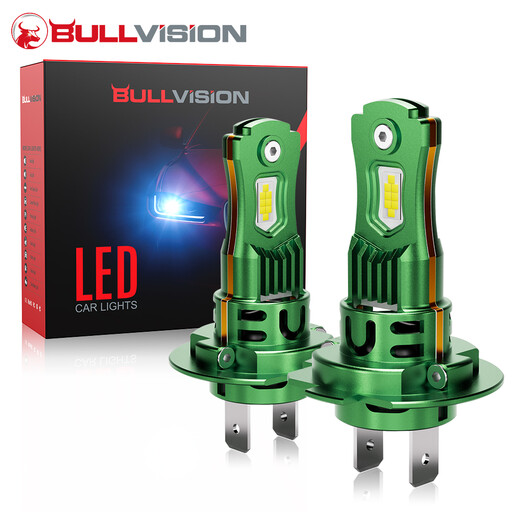
Why this product suits this profile : its 1:1 format and plug-and-play connection can simplify a first conversion, provided you check compatibility with your vehicle.
The product details mention a body the same size as the original bulb and a CANbus system, while also stating that a decoder may be required for certain vehicles.
Stated 6,000 K light, fan cooling and an IP68 rating listed on the product page.
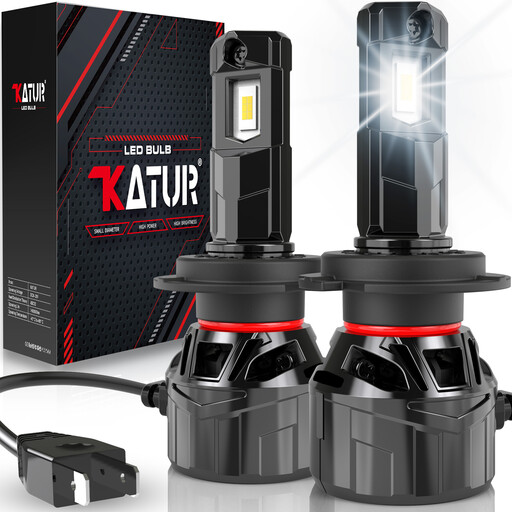
Why this product suits this profile : this model is aimed at drivers looking for a compact setup, high stated power and enhanced thermal management.
Its 1:1 design limits the need for mechanical adaptations, while the manufacturer points out that some sensitive vehicles may still display an error.
Fan speed stated at 16,000 rpm, operating voltage from 9 to 32 V and a claimed service life of up to 60,000 hours.
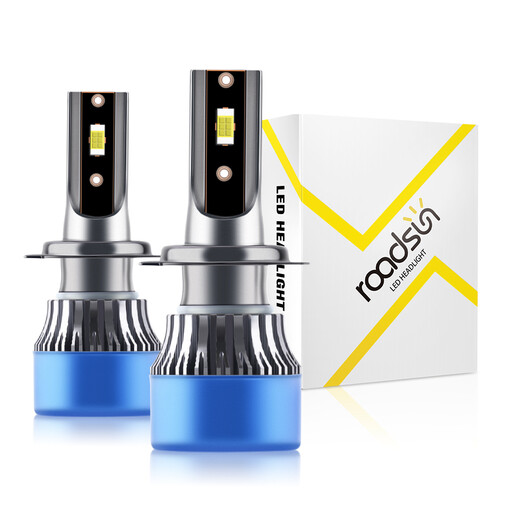
Why this product suits this profile : its design is intended for motorbikes, quads, UTVs, ATVs and off-road vehicles exposed to dust, vibration and bad weather.
The product details mention resistance to water, dust and vibration. However, its use on public roads must comply with the regulations applicable to the vehicle.
H7 plug-and-play format, stated colour temperature of 6,000 K and an operating range of −40 °C to 85 °C.
We have put together a complete, real-time updated list of products that meet these demanding selection criteria and European safety regulations.
Replacing an H7 bulb is generally within the capabilities of a private individual, even though the headlamp housing can be very narrow. Follow these steps in order:
In France, technical compatibility does not remove the need to check the rules applicable to vehicle lighting and type approval. The handbook, manufacturer or automotive professional can confirm whether this replacement is permitted for your vehicle configuration.
No. The H7 fitting is only a starting point. Available space, the CANbus system, headlamp type and rear cover shape can vary from one vehicle to another. Check the vehicle handbook and the information provided on the product page.
Product pages often claim 50,000 hours, or even more. This is an estimate provided under specific conditions. Under-bonnet temperature, vibration, daily use and the quality of the cooling system can significantly reduce the actual service life.
Power consumption depends on the bulb’s actual electrical rating. Compare the wattage stated for each bulb and for the pair, rather than relying solely on the advertised lumen figures. Also check that this power remains suitable for your vehicle’s electrical system.