
Livraison le jour même ou le lendemain

Qualité garantie

Débloquez vos offres de bienvenue: Livraison GRATUITE | Jusqu'à -80 % | 30 jours d'essai gratuits à JoyPlus
Téléchargez l'application
Switching to LED headlights promises better visibility and a modernised look. The problem? The H7 LED bulb market is a jungle of marketing promises that too often lead to disappointment. As a product expert for this publication, my mission is to arm you with the knowledge to decode spec sheets and make the right choice. Here are the pitfalls to avoid and the criteria that truly matter.
Before you commit, be wary of these three common issues that can turn an excellent idea into a real headache.
To successfully replace your H7 halogen bulbs with LEDs, focus on these three parameters that make all the difference.
Forget the lumen race. The true quality of an H7 LED headlight is judged by the precision of its light beam. A good LED bulb must perfectly mimic the position and shape of a halogen filament. This is the only way to ensure the light illuminates the road, not the sky or the eyes of oncoming drivers. A clean beam with a sharp cut-off is not only a guarantee of safety but also a decisive factor for passing vehicle inspections. For aesthetics, most drivers opt for a colour temperature of 6000K to 6500K for a very modern, pure white look.
Good cooling isn't an option; it's a requirement. Two technologies dominate the market:
In all cases, the bulb's body must be made of aluminium to ensure optimal heat dissipation.
To save yourself the headaches, the solution is simple: choose a CANbus H7 LED kit, also known as an error-free H7 LED. These kits integrate an electronic module that tricks the on-board computer by simulating the power consumption of a classic halogen bulb. It's the surest way to guarantee a "plug-and-play" installation with no OBC warnings or interference with your car radio.
Here are a few options that cater to distinct user profiles, taking into account our criteria for performance and reliability.
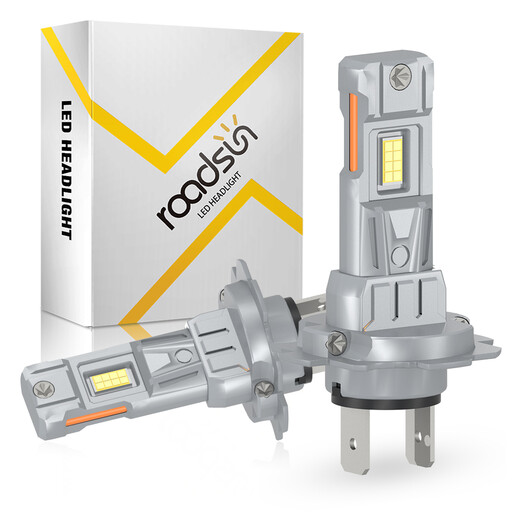
Why it's the right fit: For those who want better lighting without the hassle. This model matches the exact dimensions of a halogen bulb, ensuring an ultra-simple installation, even in the tightest headlight housings.
Its 1:1 design avoids the trap of oversized bulbs that don't fit in the housing or prevent the dust cover from being reinstalled. The installation is clean and straightforward.
A true "plug-and-play" solution that requires no adapters. Its 6000K cool white light modernises the look and significantly improves visibility.
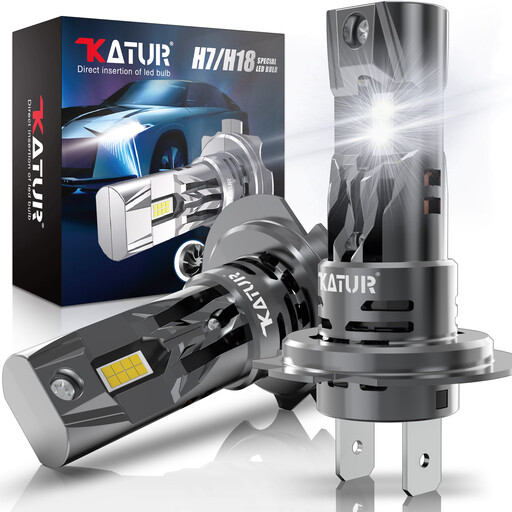
Why it's the right fit: For drivers who won't compromise on power, ideal for maximum visibility on country roads or in bad weather. This kit is all about raw performance and quality components.
Rather than just advertising numbers, this kit backs them up with high-performance active cooling (a 16,000 RPM turbo fan) and an aviation-grade aluminium body. This prevents the power drop-off that plagues low-end models.
Impressive light output to see farther and wider. Its active cooling is calibrated to maintain this level of performance over time, without fading.
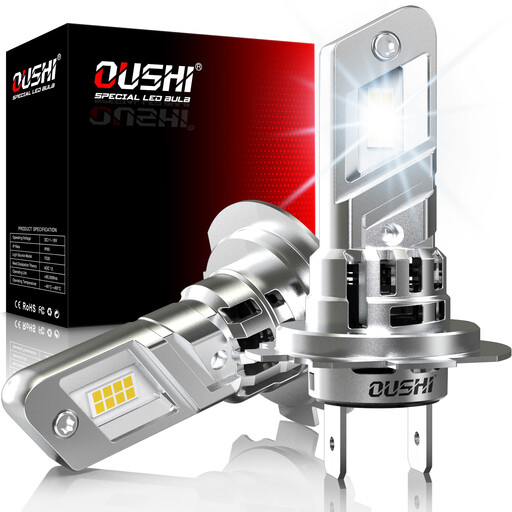
Why it's the right fit: The peace-of-mind solution for owners of modern European cars, which often have finicky electronics. The number one goal: zero dashboard errors.
This model tackles the false compatibility trap head-on. It includes a latest-generation CANbus decoder specifically designed to communicate smoothly with European car electronics and eliminate the risk of errors.
Enhanced CANbus compatibility for a worry-free installation. Its 1:1 "plug-and-play" format simplifies fitting, even on vehicles where headlight access is a real puzzle.
Discover other models that meet our demanding specifications for performance, reliability, and compatibility.
Let's be clear: regulations are strict. To be 100% legal on the road, an aftermarket LED replacement kit must have an ECE R37 approval, which is still rare for these kits. Most are therefore officially intended for off-road use only. However, a quality model that perfectly respects the original light beam geometry maximises your chances of passing a vehicle inspection without a hitch, as it doesn't cause glare and improves safety.
This is the main risk, especially on European cars made after 2010. To avoid it, the solution is simple: choose a CANbus H7 LED kit (or error-free kit). It integrates a small module that makes the on-board computer think everything is normal, preventing any warning messages from appearing.
This value in Kelvins (K) indicates the colour of the light. A 6000K H7 LED bulb provides a pure white light that is both modern and highly effective. At 6500K, the white has a very slight blue tint for an even cooler effect. The choice is mostly a matter of taste, as in both cases, the visibility is light-years ahead of the yellow glow of a halogen bulb (around 3200K).