
Livraison le jour même ou le lendemain

Qualité garantie

Débloquez vos offres de bienvenue: Livraison GRATUITE | Jusqu'à -80 % | 30 jours d'essai gratuits à JoyPlus
Téléchargez l'application
Driving safely at night is all about visibility. Do your original halogen headlights lack punch on dark country roads or in the rain?? You're probably thinking about upgrading to LED technology. The problem is, the market is a real jungle?: with a proliferation of part numbers, dazzling power claims, and technical jargon, it's hard to know where to start.
As the Head of Product Recommendations at Joybuy, my mission is to cut through the noise for you. This guide gives you all the keys to choosing the right kit and presents a selection of the best models to make replacing your H7 halogen bulbs with LEDs easier.
Before taking the plunge, focus on three essential criteria for a successful purchase: performance, compatibility, and ease of installation.
The performance of a powerful H7 LED bulb isn't just about lumens (lm), which measure the total amount of light emitted. The quality of the beam pattern is just as, if not more, important. A good H7 LED headlight must produce a sharp, precise beam that effectively illuminates the road without blinding oncoming drivers.
Opt for models with a colour temperature between 6000K and 6500K. This cool white light, close to daylight, provides a highly sought-after xenon effect. It improves contrast and the perception of details on the road surface.
The biggest advantage of modern kits?? Their simple installation. So-called "Plug and Play" models are installed directly in place of your old bulbs, without any modifications. Ideally, choose a bulb with dimensions identical to an original H7 halogen bulb (1:1 design). This guarantees it will fit perfectly into your headlight housing, without needing an adapter or altering the dust cover. An installation that takes just a few minutes provides complete peace of mind.
Modern vehicles, especially European ones, are equipped with a multiplexing system called CANBUS. This system monitors the proper functioning of electrical components, including the bulbs. Since an LED bulb consumes far less power than a halogen one, the onboard computer might interpret this as a failure. The result: an error message appears on your dashboard, or worse, your headlights start to flicker.
To avoid these issues, it's essential to choose a CANBUS H7 LED bulb, also known as "error-free." These models integrate a resistor or a smart driver that tricks the onboard computer by simulating the power consumption of a standard bulb. This ensures compatibility with 98% to 99% of vehicles on the road.
Here is our selection of models that stand out from the crowd, designed for different types of drivers.
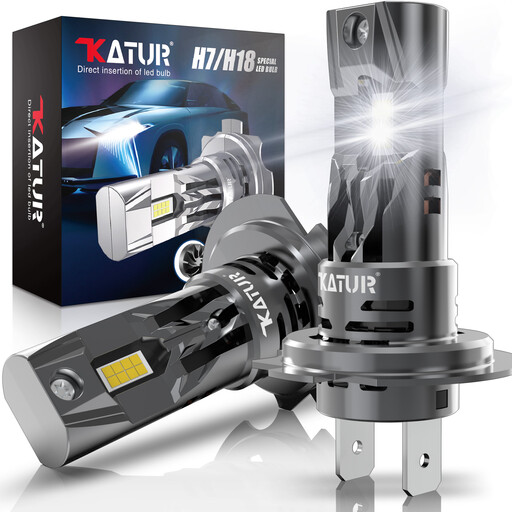
Why this model stands out?: This kit goes all-in on light output, with an impressive claimed value of 30,000 lumens per pair. It's aimed at those who want maximum lighting range without sacrificing installation simplicity, thanks to its compact 1:1 design.
Pros:
Best for?? Drivers who frequently travel on unlit roads and prioritise maximum light range to anticipate obstacles from a distance.
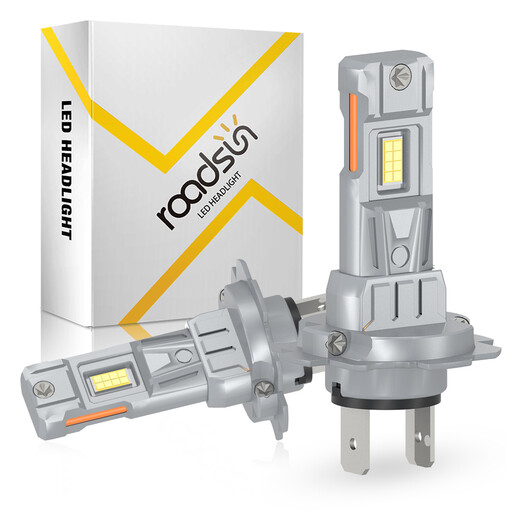
Why this model stands out?: Its strong suit?? Pure simplicity. With its 1:1 design and adapter-free construction, it truly delivers on the "Plug and Play" promise. An ultra-accessible option, even for mechanical novices.
Pros:
Best for?? Car and motorcycle owners who are fans of "Do It Yourself" (DIY) and are looking for a simple, fast, and hassle-free upgrade solution.
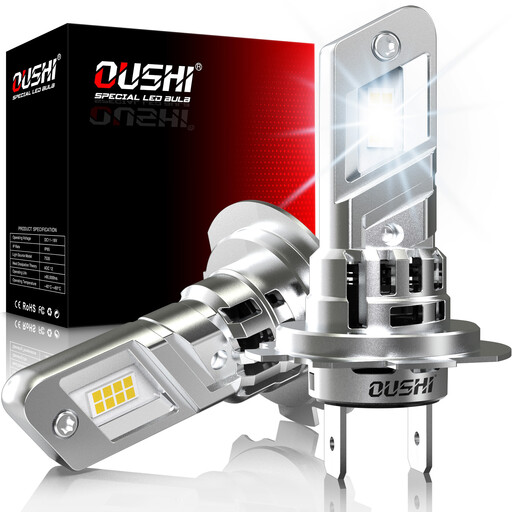
Why this model stands out?: Its specialty?: compatibility with the most finicky vehicles. Its latest-generation CANBUS system is specially designed for the onboard computers of recent European cars, which are known to be sensitive to bulb changes.
Pros:
Best for?? Owners of European vehicles or models known for their sensitive electronic systems, who want a flawless installation and to avoid dashboard error messages at all costs.
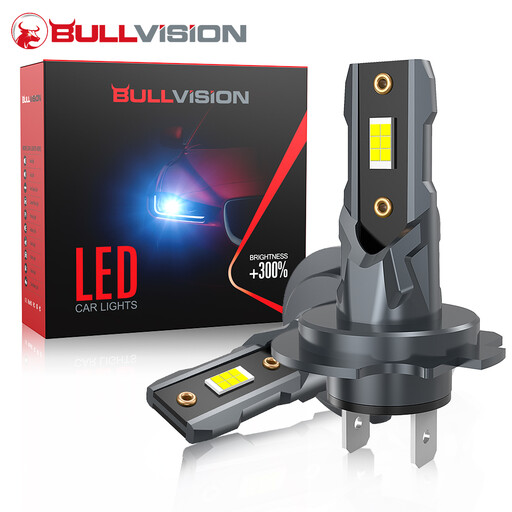
Why this model stands out?: This is the balanced choice. It combines performance, durability, and simplicity of installation. Its major asset?: an ultra-precise beam pattern that replicates the original halogen beam to avoid glare, while being much more powerful.
Pros:
Best for?? Drivers looking for a significant improvement in their lighting while being considerate of other road users, thanks to a well-defined beam pattern. Note: The manufacturer states that an additional CANBUS decoder may be required for certain Volkswagen, Mercedes-Benz, or BMW models.
The choice of an LED bulb is highly personal?: it depends on your vehicle, your driving habits, and your expectations. If the models in our selection don't check all your boxes, explore our catalogue to discover other hidden gems.
Discover our complete selection of exclusive LED bulbs to find the perfect model for your headlights.
French regulations are very clear on this subject. To be legally driven on public roads, an LED conversion kit must have received a specific ECE approval for the vehicle model in question. In the absence of this approval, most aftermarket kits are, by default, reserved for use on a racetrack or private property. It is your responsibility to verify that your installation complies with the law and technical inspection requirements.
To put it simply, the CANBUS (Controller Area Network) is your car's electronic "brain," allowing all components to communicate with each other. If your vehicle was made after 2005, there's a high chance it's equipped with one. In that case, a CANBUS H7 LED bulb is almost essential. Without it, the onboard computer, tricked by the LED's low power consumption, is likely to alert you of a "burnt-out bulb."
Manufacturers claim impressive figures, sometimes up to 50,000 or 60,000 hours. In practice, this longevity depends entirely on the quality of the cooling system (fan, aluminium heat sink). Good heat management is the secret to maintaining stable performance and hoping for a lifespan far exceeding that of a halogen bulb, which barely surpasses 1,000 hours.