
Livraison le jour même ou le lendemain

Qualité garantie

Débloquez vos offres de bienvenue: Livraison GRATUITE | Jusqu'à -80 % | 30 jours d'essai gratuits à JoyPlus
Téléchargez l'application
Replacing old halogen bulbs with an LED kit has become a classic upgrade for many drivers. An H7 LED bulb can not only give a vehicle a modern facelift with its pure white light, but more importantly, it can radically improve night-time visibility—a crucial safety feature.
But with an overwhelming number of options on the market, it's hard to know where to start. This guide is here to help you understand the essential criteria and to present our top picks, without drowning you in technical jargon.
Before you take the plunge, here are the key points to check to ensure your new LED kit delivers on all its promises.
Two numbers to remember: lumens (lm) for light intensity and kelvins (K) for colour.
Ease of installation is one of the biggest advantages of recent kits.
Thermal management is the key to an LED's longevity. The best models combine an active cooling system (usually a silent, high-speed fan) with an aluminium alloy body. This design ensures efficient heat dissipation, allowing manufacturers to claim theoretical lifespans of up to 50,000 hours.
Here is a selection of kits that stand out for their value and simplicity, perfect for an effective first upgrade.
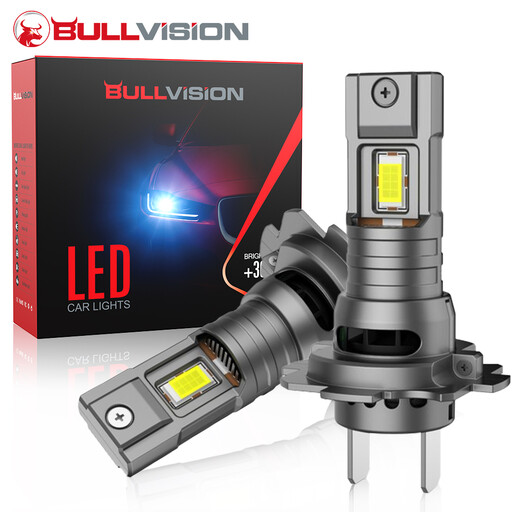
Key Feature: This kit focuses on raw power with its advertised 17,000 lumens per pair. It's designed for those seeking maximum visibility, whether for low beams or high beams. Its compact 1:1 design makes installation much easier.
Advantages:
Best for? Those who frequently drive on poorly lit country roads and make lighting power their absolute priority.
Manufacturer's Note: Use on Volkswagen, Mercedes-Benz, or BMW vehicles may require an additional Canbus decoder to prevent error messages.
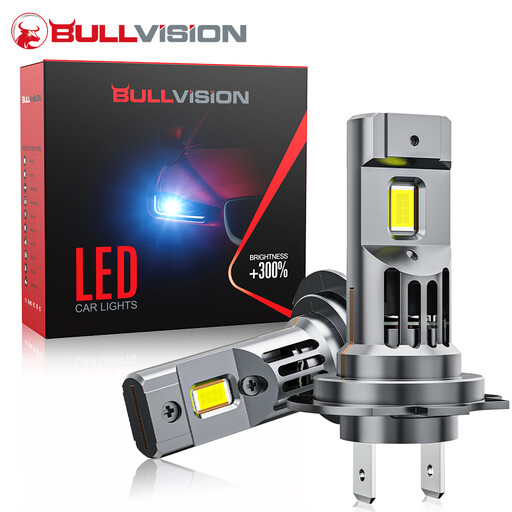
Key Feature: This kit is the perfect balance between performance and budget. At 10,000 lumens, it already offers a dramatic improvement over halogen, while retaining the benefits of a simple installation and broad compatibility thanks to its integrated Canbus driver.
Advantages:
Best for? Ideal for a first conversion to LED technology. An excellent choice for daily use, combining safety and style.
Manufacturer's Note: Use on Volkswagen, Mercedes-Benz, or BMW vehicles may require an additional Canbus decoder to prevent error messages.
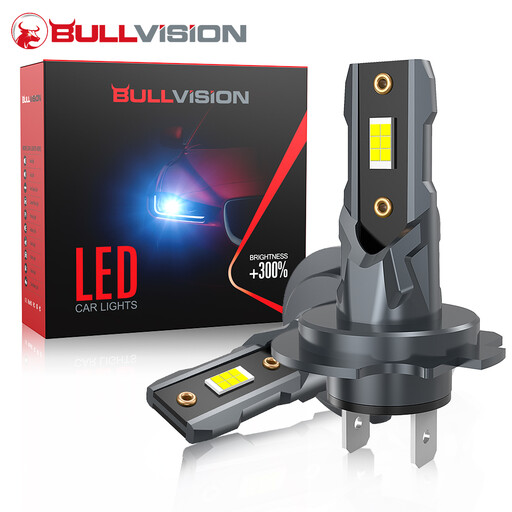
Key Feature: This model is the sensible choice. It provides 12,000 lumens of power, more than enough for most driving situations, while incorporating the same cooling and easy-installation technologies as other models in the range.
Advantages:
Best for? The pragmatic driver looking for a reliable and high-performing solution that offers a significant visibility boost without going to extremes.
Manufacturer's Note: Use on Volkswagen, Mercedes-Benz, or BMW vehicles may require an additional Canbus decoder to prevent error messages.
Not convinced by the models in our selection? Looking for a different type of lighting for your car? Feel free to explore our full catalogue.
? Discover our entire range of designer lighting
Yes, for the majority of "plug-and-play" kits with a 1:1 design, installation is a breeze. You just unplug the old bulb and clip in the new one. The only real difficulty can sometimes be accessing the bulb, which varies in ease depending on your car model. Remember to turn off the ignition and wear gloves during handling.
Normally, no. That's precisely the role of the integrated Canbus system. It simulates a power consumption similar to a halogen bulb to trick the onboard computer and prevent alerts on most vehicles. As we've seen, cars from the VAG group (Volkswagen, Audi), as well as BMW and Mercedes-Benz, are often more finicky and may require an external decoder if the kit is not specifically designed for them.
Let's be clear: French regulations on vehicle lighting modifications are very strict. Technically, replacing a halogen bulb with an LED in a headlight that was not designed for it (the optic) is not permitted for use on public roads. This is because the European approval (ECE) applies to the entire headlight assembly (the headlight and its original light source). In practice, these kits are often tolerated, but their use is officially restricted to tracks, off-road, or on older vehicles not subject to the same standards. Be sure to do your research before you start.