
Livraison le jour même ou le lendemain

Qualité garantie

Débloquez vos offres de bienvenue: Livraison GRATUITE | Jusqu'à -80 % | 30 jours d'essai gratuits à JoyPlus
Téléchargez l'application
Is driving at night or in the rain a nightmare with your worn-out headlights? That dim, yellowish glow from old halogen bulbs isn't something you have to live with. Upgrading to an H7 LED bulb kit is a true revolution for your driving safety and comfort.
The only problem: the market is a jungle of different models with often confusing spec sheets. Between lumens, kelvins, and Canbus compatibility, it's hard to know where to start. Our mission? To guide you step-by-step in making the right choice. Follow our guide to find the perfect kit for your car or motorcycle, without making a mistake.
Before diving in headfirst, let's review the few characteristics that make all the difference between a good and a bad H7 LED bulb. Here are the points to check for a successful purchase.
This is fundamental: the bulb must be compatible with your vehicle. The good news is that most modern kits are plug and play. This means they connect directly in place of your halogen bulbs, with no need to break out the wire cutters on your electrical harness.
A word of caution for newer vehicles, however: the Canbus error-free system is a key point to watch out for. This onboard computer monitors your car's electrical health. Since an LED consumes far less power than a halogen, the system might think a bulb is out and trigger a dashboard warning. To avoid this unexpected light show, opt for a "Canbus ready" kit that includes a resistor to trick the system.
The power of an H7 LED is expressed in lumens (lm). The higher this number, the more intense the light output. In practical terms, this translates to a beam that reaches farther and shines wider, allowing you to anticipate road hazards much sooner.
The color temperature, measured in kelvins (K), determines the hue of the light. The market standard is the 6000K H7 bulb, which produces a cool white light very similar to daylight. It's the color of choice for drivers: it enhances contrast, makes road signs easier to read, and reduces eye strain on long night drives. A must-have for H7 low beams.
One of the biggest advantages of LEDs is their long lifespan. Say goodbye to the fragile filament of halogen bulbs that burns out without warning. Be aware, however, that an LED's longevity is directly tied to its ability to dissipate heat. A good cooling system (aluminum body, integrated fan) is therefore non-negotiable to ensure stable performance and rock-solid reliability for tens of thousands of hours.
To move from theory to practice, we've scrutinized several promising models based on performance, ease of installation, and reliability.
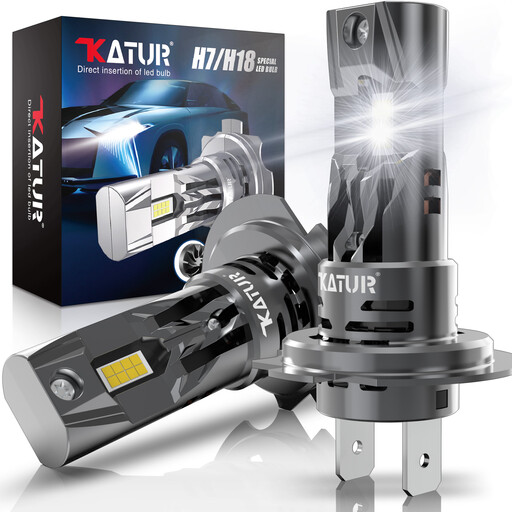
Why it stands out: This kit is a crowd-pleaser with its impressive light output. With a claimed 30,000 lumens per pair, it's the choice for those who want to turn night into day. Its 1:1 design, identical to a halogen bulb, makes installation child's play.
Pros:
Who is it for? For high-mileage drivers and those who often travel on poorly lit country roads, seeking maximum safety.
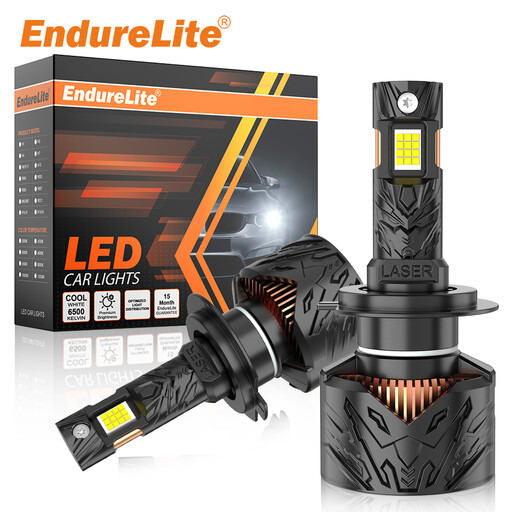
Why it stands out: Here, the killer feature is the beam's precision. The manufacturer has focused on perfectly replicating the original halogen beam pattern to provide accurate light without ever dazzling other road users.
Pros:
Who is it for? For considerate drivers looking for powerful lighting that doesn't disturb others. Ideal for mixed city and highway driving.
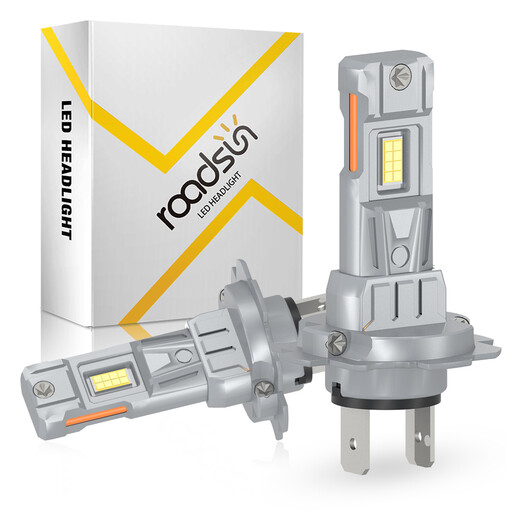
Why it stands out: The key word for this model? Simplicity. Its size is strictly identical to a halogen H7 bulb, allowing it to be installed without an adapter, even on vehicles that usually require one.
Pros:
Who is it for? For DIY enthusiasts who want a quick and uncomplicated upgrade, as well as for ATV or motorcycle owners who demand reliable lighting in all conditions.
Our selection focuses on the highly popular H7 base, but the world of LED lighting is much broader. If you need a different type of bulb or simply want to explore more options, our full catalog is here for you.
? Discover our complete range of LED spot bulbs
Unfortunately, no. You must check two things: the base type (in this case, H7) and the electrical system. On recent cars equipped with an onboard computer (Canbus), it's almost mandatory to choose an H7 LED kit that is "Canbus error-free" to prevent a warning light from appearing on your dashboard.
Absolutely not! In most cases, installation is child's play. The kits are plug and play: you unplug the old bulb and plug in the new one. That's it. Be aware that on some car models, access to the headlight housing can be a bit tight and may require removing one or two plastic covers, but it's nothing insurmountable.
Yes, it's the de facto standard. A 6000K temperature produces a cool white light that is very close to daylight. It's the top choice for drivers because it enhances contrast, makes signs and white lines much more visible, and is less tiring on the eyes during long trips. It's also what provides that modern look, a far cry from the yellowish glow of halogens.