
Livraison le jour même ou le lendemain

Qualité garantie

Débloquez vos offres de bienvenue: Livraison GRATUITE | Jusqu'à -80 % | 30 jours d'essai gratuits à JoyPlus
Téléchargez l'application
Upgrading to LED headlights promises better visibility and increased safety. A great idea on paper. The problem is, the H7 LED bulb market is a real jungle, filled with marketing promises that often lead to disappointment. Our mission ? To help you navigate the pitfalls and make the right choice. This guide breaks down the most common scams and gives you the keys to a successful H7 halogen replacement.
Many drivers have learned the hard way: their first LED kit, bought based on aggressive marketing, turned out to be a disaster. Here are the 3 traps you must not fall into.
To avoid falling for the trap, here are the technical specifications to scrutinise.
The number one criterion is physical compatibility with your headlight housing. Look for models that feature a 1:1 design compared to a standard H7 halogen bulb. This means the LED bulb's dimensions are virtually identical to the original bulb's. This feature is the only true guarantee of a successful plug-and-play installation, without needing to modify the headlight assembly.
How heat is dissipated is crucial for the bulb's longevity.
Fanless h7 led models: These bulbs use a passive heat sink, often made of aviation-grade aluminium. With no moving parts, reliability is maximised, and operation is completely silent. This is the preferred option for durability and peace of mind.Here is a selection of products that meet the needs of different user profiles, taking our reliability and compatibility criteria into account.
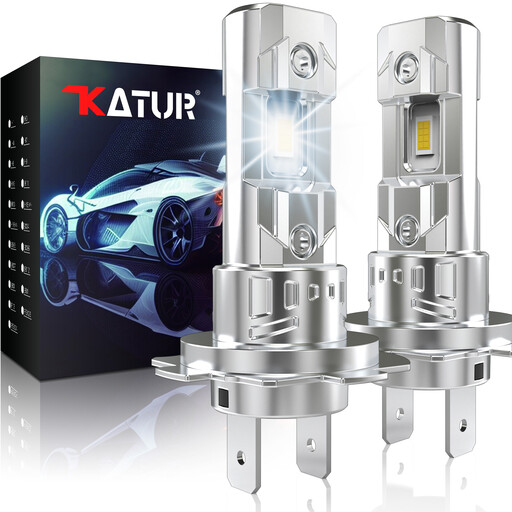
Why it's a great choice : This kit is a true clone of a classic H7 bulb. Its ultra-compact size and fanless design make it the perfect solution for those who want better lighting without any installation hassle.
Its 1:1 mini size ensures a perfect fit, even in the tightest headlight housings. The fanless design eliminates any risk of mechanical failure or noise, countering issues of overheating and unreliability.
True "plug-and-play" combined with reliable passive cooling. In short, a simple lighting upgrade that's built to last.
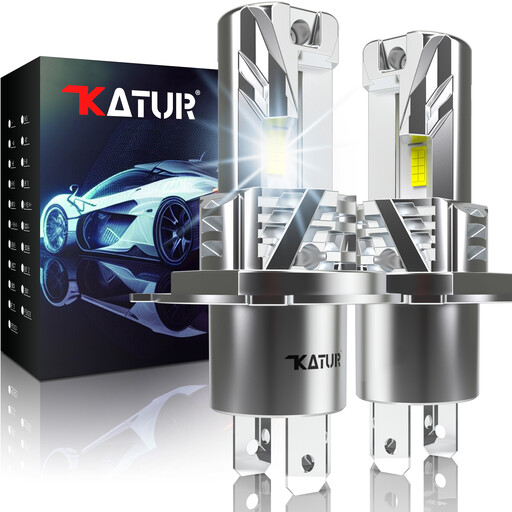
Why it's a great choice : For vehicles that use H4 bulbs (which handle both high and low beams). This model serves as a golden rule reminder : always check your vehicle's manual for the correct bulb type (H4, H7, H1, etc.) before buying.
Clearly identified as H4, it prevents ordering mistakes. Its compact, fanless design also solves compatibility and reliability problems, even for this dual-function bulb type.
An all-in-one solution (high/low beam) for H4 headlights that maintains a compact design and easy installation, while delivering a spectacular increase in brightness.
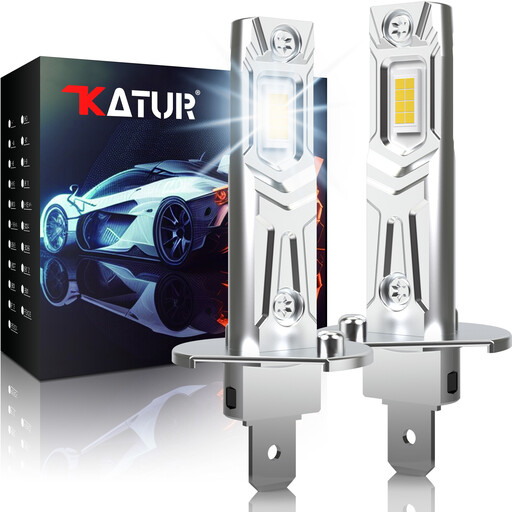
Why it's a great choice : This kit is for vehicles equipped with H1 bulbs, a base type often used for high beams or fog lights. It highlights the diversity of formats and the importance of choosing the right model for the right function.
Its clear H1 designation prevents any errors. The 1:1 mini format is vital here, as H1 housings are often very tight. It avoids the classic trap of a bulky bulb that won't fit.
An ultra-compact, "plug-and-play" design that perfectly adapts to the space constraints of H1 headlights, making the upgrade accessible to everyone.
Discover our complete selection of bulbs that meet our quality and safety criteria.
Regulations vary by country and can be very strict. In France, for example, replacement bulbs must have a specific ECE approval to be used on public roads, which is extremely rare for aftermarket LED kits. In short : the vast majority of LED kits on the market are, by default, intended for off-road or track use only. It is your responsibility to check that your installation complies with local laws and vehicle inspection requirements.
Your car's CAN bus system constantly monitors the proper functioning of the bulbs. Since an LED consumes much less power than a halogen, the on-board computer may interpret this as a burnt-out bulb and display an error message on your dashboard. While many modern LED kits are "CAN bus ready" (they include a built-in resistor), some vehicles (especially German models) may require an external anti-error module (CAN bus decoder).
The advertised lifespans (30,000, 50,000 hours, etc.) are laboratory figures. In reality, everything depends on the quality of the heat sink and the operating conditions. A good fanless H7 LED model with a quality heat sink will easily last for several years, far, far exceeding the lifespan of a halogen bulb (around 1,000 hours). It's an investment that quickly pays for itself.