
Livraison le jour même ou le lendemain

Qualité garantie

Débloquez vos offres de bienvenue: Livraison GRATUITE | Jusqu'à -80 % | 30 jours d'essai gratuits à JoyPlus
Téléchargez l'application
Upgrading old halogen bulbs to an H7 LED kit has become a go-to move for many drivers. And for good reason: the improvement in visibility and modern aesthetics is undeniable. The problem? The jungle of offers and marketing jargon makes choosing a daunting task. As a product expert for Joybuy, I'm here to help you see things more clearly. This guide breaks down the key points for selecting the perfect H7 LED bulb for your car and, most importantly, how to avoid the most common pitfalls.
Before you take the plunge, it's crucial to know the pitfalls that too often lead to a disappointing purchase.
To make an informed choice, focus on these three fundamental parameters.
Raw power isn't everything. The true quality of an H7 LED headlight lies in the precision of its beam pattern. A good LED bulb must perfectly mimic the beam of the halogen it replaces. This is the absolute prerequisite for achieving a sharp cut-off line with LED low beams: illuminating the road, not the eyes of oncoming drivers.
In terms of color, most kits opt for a cool white at 6000K. This hue, close to daylight, enhances contrast, making signs and obstacles at night stand out.
Heat management is the key to longevity.
The Canbus is like your car's nervous system: it allows all the onboard electronics to communicate. One of its jobs is to monitor the health of your bulbs. Since an LED is far less power-hungry, the onboard computer (OBC) mistakes it for a faulty bulb and gives you a warning. To prevent your dashboard from lighting up like a Christmas tree, opt for an H7 LED kit certified as "Canbus Ready" or "error-free." Be aware that on some particularly sensitive vehicles (especially German makes), an external Canbus decoder may still be necessary.
Here are a few options that cater to different user profiles, based on the criteria we've discussed.
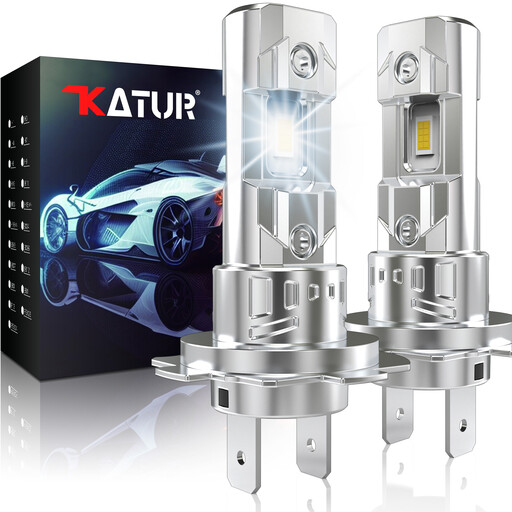
Who is it for? For the driver who wants better visibility without the hassle. Its compact, fanless design radically simplifies installation, even in the tightest headlight housings. Zero noise, zero risk of fan failure: it's peace of mind guaranteed.
With its 1:1 design that mimics a halogen bulb and no external driver, it's a true " plug and play " solution that installs in a snap, avoiding the trap of complex fittings.
Its passive 6063 aluminum heat sink ensures absolute silence and efficient heat dissipation for its power level, all without any fragile moving parts.
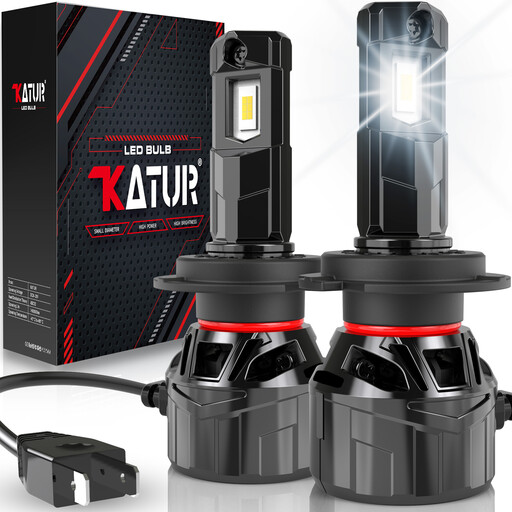
Who is it for? For those who want to turn night into day. Ideal for frequent night drivers and those on poorly lit country roads. Here, raw power is kept in check by equally impressive cooling.
It tackles the overheating problem at its source with a 16,000 RPM turbo fan and an aluminum body. The result: the advertised power is real, and it stays that way.
The combination of high power (120W, 30,000 lm) and active cooling delivers a wider and deeper beam pattern. A real boost for active safety.
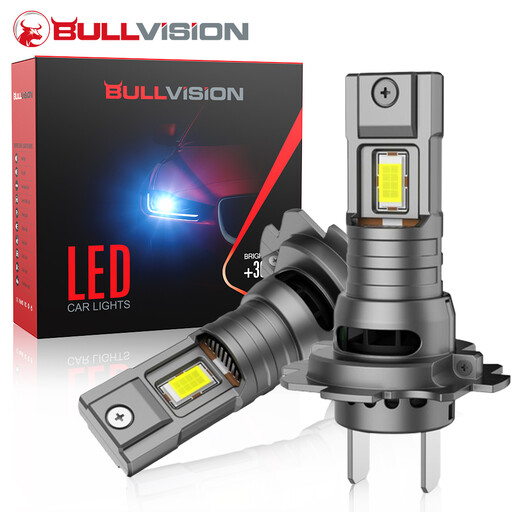
Who is it for? The stress-free solution for owners of modern cars. If your biggest fear is a dashboard error light, this kit makes Canbus compatibility its top priority.
It tackles the headache of electronic compatibility head-on. Its integrated smart driver and " CANbus ready " design are engineered to communicate flawlessly with 99% of vehicles on the market.
No more dashboard warnings, radio interference, or flickering headlights. It's the guarantee of a worry-free upgrade for your modern car's LED bulb.
Whether you're looking for an **H4 LED bulb**, an **H11 LED kit**, or another format, we have selected a full range of products that meet the same high-quality standards.
This is a tricky question. Officially, regulations for replacing halogen bulbs with LEDs (known as "retrofitting") are very strict in many regions. To be 100% compliant, the LED kit must have a specific ECE approval for your car model. In reality, few kits on the market have this vehicle-specific approval and are often sold for "off-road use only." The most important thing, which is non-negotiable for everyone's safety, is to have your headlights professionally aligned after installation to ensure a correct beam pattern and avoid dazzling other drivers.
If your car was made after 2005, and especially if it's a European brand (like Peugeot, Renault, Volkswagen, Audi, BMW, etc.), it most likely has a Canbus system. The tell-tale signs after installing LEDs are a "bulb failure" error message on the dashboard, flickering headlights, or headlights that simply refuse to turn on.
Absolutely not. In fact, it's the number one trap. A flood of lumens is useless if the light is scattered everywhere. The design of the LED chips and their placement on the bulb are infinitely more important. A good H7 LED kit must, above all, produce a precise beam pattern with a sharp cut-off line. It's better to have surgical precision than an uncontrolled blast of light.