
Livraison le jour même ou le lendemain

Qualité garantie

Débloquez vos offres de bienvenue: Livraison GRATUITE | Jusqu'à -80 % | 30 jours d'essai gratuits à JoyPlus
Téléchargez l'application
Upgrading to LED lighting is one of the best investments for your car, promising dramatically improved night visibility and enhanced safety. The problem: the H7 LED bulb market is a jungle of marketing promises and misleading technical specs. Between the race for lumens and not-always-honest "Plug & Play" claims, it's easy to make the wrong purchase. This guide is here to cut through the noise, help you avoid the common pitfalls, and choose the H7 LED kit that truly meets your needs (and fits your vehicle).
As the Head of Product Recommendations at Joybuy, my mission is to separate fact from fiction to offer you objective, concrete buying advice. Here are the 3 most common mistakes to avoid:
To make an informed choice (no pun intended), you need to look beyond the spec sheet. A powerful and reliable H7 LED bulb is judged on very specific criteria. Here are three essential ones to check before you pull out your credit card.
The number one criterion isn't raw power, but the precision of the light beam projected onto the road. A good LED bulb must perfectly mimic the beam pattern of an original halogen bulb.
To achieve this, prioritise models with a 1:1 design (identical dimensions to halogen) where the LED chips are positioned with millimetre precision. This is the only way to ensure the light is properly focused by your car's LED headlight housing, with a sharp cut-off line for your LED low beams. You gain increased lighting range without turning your car into an anti-aircraft spotlight for other drivers.
Power means heat. An overheating LED will see its brightness plummet and its lifespan melt away. An effective cooling system is therefore non-negotiable. It generally relies on a combination of:
Good cooling promises maximum and consistent brightness, delivering that signature 6000K cool white light from the first day of use to the last.
To avoid turning your dashboard into a Christmas tree of warning lights, an integrated error-free CANbus system is essential, especially on recent European vehicles. This small, intelligent circuit simulates the power consumption of a standard halogen bulb, tricking the onboard computer so it doesn't detect any issues. A good CANbus system guarantees a hassle-free installation: no dashboard errors, no radio interference, and no flickering.
To help you see how these criteria apply in practice, here are a few recommended options, each tailored to a specific need.
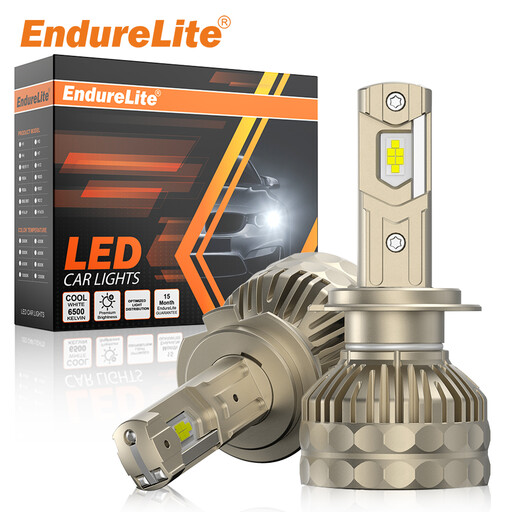
Why we chose it: This is the perfect balance for those seeking a noticeable upgrade without the hassle. It offers a significant brightness boost and an ultra-simple installation, making it the ideal candidate for a first-time LED upgrade.
Its 1:1 Mini Size design ensures physical compatibility with most headlight housings. No more struggling with oversized bulbs that refuse to fit.
Plug and Play installation (non-polarity) and an integrated CANbus system for an easy, error-free upgrade on most vehicles.
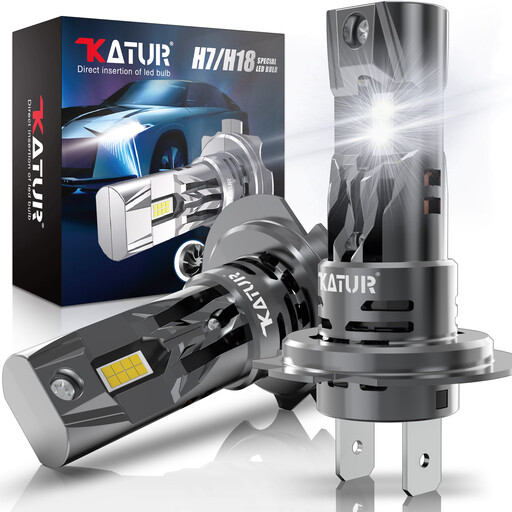
Why we chose it: For those who want it all: a spectacular increase in brightness and a more modern look. This kit goes all-in on raw power, but it's controlled power, thanks to a state-of-the-art cooling system.
It doesn't just boast an impressive lumen figure. It pairs it with an ultra-high-performance cooling system (16,000 RPM turbo fan) to ensure that power is sustained over time, with no drop in performance.
100W and 30,000 lumens of power per pair for visibility that reaches far, far down the road. The precise chip design ensures a well-focused beam, even at this intensity.
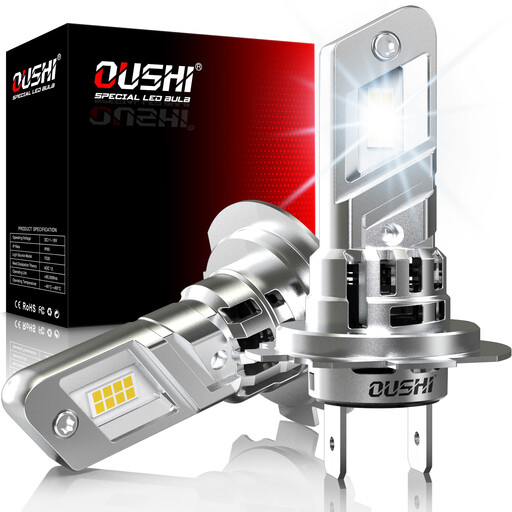
Why we chose it: Here, the absolute priority is peace of mind. This model was designed for maximum compatibility with the most finicky electronic systems, especially those from European brands.
It tackles the problem of electronic errors head-on with a latest-generation CANBUS system, specifically designed to communicate flawlessly with the electronics of continental cars.
A manufacturer-claimed 98% compatibility rate and a 1:1 design that allows for a modification-free installation, even in the tightest headlight housings.
Take a look at our full selection of products that check all the boxes from our guide: performance, reliability, and compliance.
Yes, and the difference is striking... provided you choose a quality model. A good H7 LED bulb produces a much whiter and more intense light (around 6000K-6500K compared to 3200K for a halogen) and illuminates further. But be careful, raw power isn't everything: it's the beam quality that determines the real-world effectiveness. A well-designed LED conversion kit will offer broader and deeper illumination, with no dark spots.
Absolutely, for most models. If you opt for a "Plug & Play" kit with a 1:1 design, the installation is literally as simple as changing a stock bulb. No tools or headlight modifications are needed. You unplug the old one and clip in the new one. Just remember to work with gloves, with the headlights off and cool, as a simple precaution.
The simplest and most reliable solution is to choose a kit with an integrated error-free CANbus decoder from the start. These systems are now designed to be compatible with the vast majority of vehicles. In the rarest of cases, on particularly sensitive car models, an external CANbus decoder can be added. But honestly, with modern kits, this is becoming increasingly exceptional.