
Livraison le jour même ou le lendemain

Qualité garantie

Débloquez vos offres de bienvenue: Livraison GRATUITE | Jusqu'à -80 % | 30 jours d'essai gratuits à JoyPlus
Téléchargez l'application
Replacing old halogen bulbs with an H7 LED kit is one of the most popular upgrades for motorists, enhancing both safety and the car's aesthetic. The promises are tempting: better night-time visibility, lower power consumption, and that sought-after modern look with a 6000K cool white light. However, the market is a jungle of offers and marketing claims where it's easy to get lost.
As a product expert for Joybuy, I'm here to separate fact from fiction for you. Here are the 3 pitfalls to watch out for before choosing your next H7 LED bulb and the criteria that truly matter to ensure you make the right decision.
Forget the marketing hype and focus on the technical specifications that make a real difference in the performance and lifespan of your LED headlight.
The number one criterion isn't the amount of light (lumens), but its projection. A quality LED bulb must perfectly replicate the filament position of a halogen H7. This ensures the light illuminates the road, not the eyes of oncoming drivers. Prioritise models with thin LED chips positioned to mimic the original design. This is a non-negotiable point for your safety and the compliance of your lighting.
The longevity of a car LED bulb is directly linked to its ability to dissipate heat. Overheating is a surefire way to cause a drop in brightness and premature failure. There are two types of cooling:
The choice depends on the bulb's power and the space available in your headlight assembly.
To avoid dashboard warnings or flickering headlights, Canbus compatibility is essential for most modern vehicles. Make sure the H7 LED kit you're interested in mentions a built-in decoder ("Canbus Ready" or "Error Free"). Be aware that for some particularly sensitive car models, an additional external decoder may be necessary.
Because every driver has specific needs, here is our selection for various uses, based on the objective criteria we've just discussed.
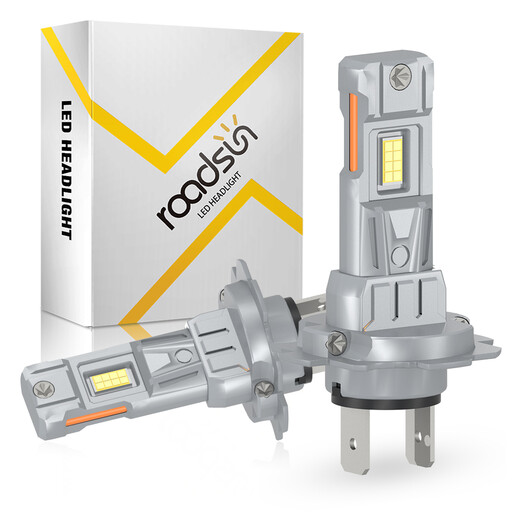
Our verdict: Perfect for those looking for a simple and quick upgrade. Its ultra-compact size is designed to replace a halogen bulb without worrying about available space or the need for adapters.
Its "Real 1:1 Mini Size" design is the direct solution to the problem. It slips into the headlight and allows you to close the dust cover without forcing or tinkering.
A 100% direct installation, with no adapters or modifications. The perfect entry-level option.
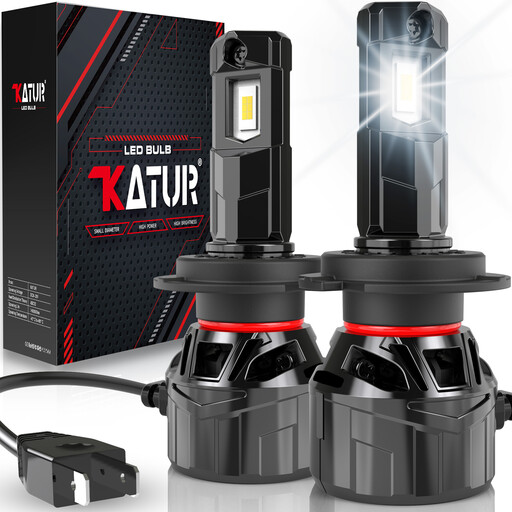
Our verdict: For those who want maximum light without sacrificing reliability. This model combines impressive raw power with active cooling to ensure consistent performance.
This kit doesn't just boast a stratospheric lumen figure. It pairs it with a turbo fan (16,000 RPM) and an aluminium body to counter the risk of overheating and the subsequent performance drop.
Its active cooling system maintains maximum light intensity over time. A decisive advantage for long night drives.
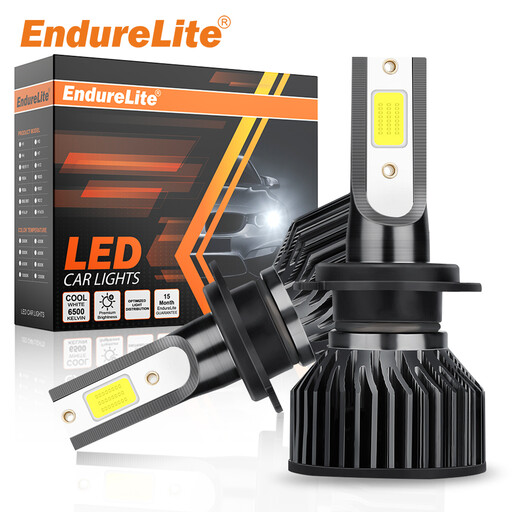
Our verdict: The ultimate versatile option. It offers a noticeable performance boost over halogen, with well-balanced power and effective cooling. The right balance of performance, durability, and price.
At 13,000 LM, this model avoids overkill and focuses on a real-world light gain, supported by active cooling and an advertised 99% Canbus compatibility.
Its excellent performance-to-price ratio makes it the smart choice for a first LED upgrade. All the benefits, without going to extremes.
Discover our full selection of products that meet our selection criteria and regulations.
This is the most sensitive issue. To be legally used on public roads in France, an LED kit must have ECE R37 certification (for the bulb) and comply with the ECE R48 standard (for the installation). To date, the vast majority of H7 halogen replacement kits do not have this certification. Their use is therefore, in theory, restricted to track or private property use. It is your responsibility to check the current legislation and the compliance of your installation.
The risk exists, particularly on recent or German-made vehicles. This is why quality LED bulbs integrate a Canbus (or OBC error-free) system that simulates the power consumption of a halogen bulb to trick the on-board computer. While most recent kits are effective, a small percentage of highly sensitive vehicles may require the addition of an external Canbus decoder.
Yes, by far! But on one condition: the heat must be perfectly managed. A standard halogen bulb lasts between 500 and 1,000 hours. A well-designed LED, with high-performance cooling (fan or passive heat sink), can exceed 30,000 hours of operation. Therefore, the quality of the cooling system is what will make all the difference in achieving this longevity.