
Livraison le jour même ou le lendemain

Qualité garantie

Débloquez vos offres de bienvenue: Livraison GRATUITE | Jusqu'à -80 % | 30 jours d'essai gratuits à JoyPlus
Téléchargez l'application
Upgrading your vehicle to LED lighting is a smart move. The goal: gain better nighttime visibility, enhance your safety, and give your car a modern touch. The problem: the H7 LED bulb market is flooded with marketing promises that make choosing a daunting task. Between astronomical lumen figures and not-so-honest "plug-and-play" claims, it's easy to make the wrong purchase.
As the Head of Product Recommendations at Joybuy, my role is to help you see things more clearly. Let's break down the pitfalls to avoid and the essential criteria for a successful upgrade from an H7 halogen bulb to an LED kit.
Before you take the plunge, beware of these three common traps that can turn a promising upgrade into a real disappointment.
To make an informed choice, focus on these three key points. They are your guarantee of performance, compatibility, and longevity for your future H7 low beams.
To guide you, here are some options that meet different needs, taking into account the criteria we've just discussed.
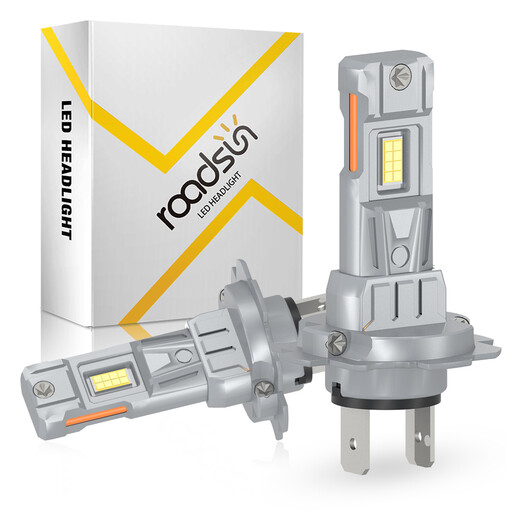
Why we chose it: Ideal for getting started. This model focuses on simplicity with a design that perfectly mimics the size of a halogen bulb. The result: no need for adapters or complex modifications.
Its 1:1 design ensures perfect physical compatibility, thus avoiding the trap of oversized kits that simply don't fit into the headlight housing.
A genuine "plug-and-play" installation that can be done in minutes, even without tools or technical knowledge.
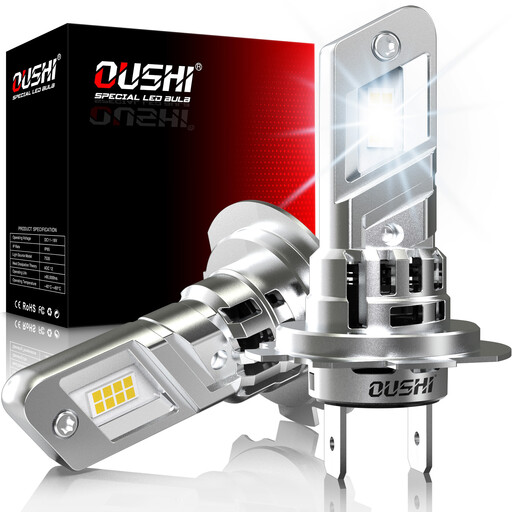
Why we chose it: Designed for drivers who make no compromises on lighting power. This model combines high output with active cooling to ensure stable performance over time.
It avoids the pitfall of inefficient cooling thanks to its turbo fan, which actively dissipates heat, thereby preserving the light intensity and longevity of the LED chips.
Superior luminous flux for maximum beam range and width. An integrated CANbus system ensures compatibility with most European vehicles.
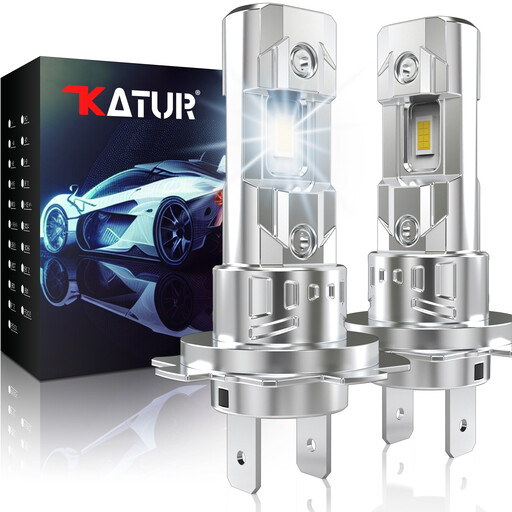
Why we chose it: The perfect solution for those who prioritise longevity and absolutely silent operation. The absence of a fan eliminates any source of noise and any risk of mechanical failure, while also simplifying installation.
This model bypasses the trap of a reduced lifespan thanks to its aviation-grade aluminum body, which provides reliable passive cooling with no wearing parts.
100% silent operation and maximum reliability thanks to the fanless design. Compact format for wide compatibility.
We have selected a full range of products for you that meet our strict selection criteria and are suitable for European vehicles.
The question of homologation is key. To be used legally on public roads, replacement bulbs must have the proper certification for your region (e.g., DOT in the US, ECE in Europe). Many H7 LED kits are sold for "off-road" or "track use" only. It is therefore your responsibility to check the product's compliance with current legislation and ensure the light beam is correctly adjusted to avoid dazzling other drivers.
It's very likely if your car was made after 2005, and it's almost standard on European brands (Peugeot, Renault, Volkswagen, Audi, etc.). These vehicles use a CANbus system that interprets the low power consumption of LEDs as a faulty bulb. To avoid a dashboard error message or a flickering phenomenon, opt for an H7 LED kit with a built-in CANbus or plan to add an external decoder.
Manufacturers often advertise lifespans of 30,000 to 60,000 hours. In practice, this longevity depends almost exclusively on the quality of the cooling system. A well-designed model that effectively manages heat can indeed last for several years, far surpassing a halogen bulb. Conversely, a low-quality kit will overheat, rapidly lose intensity, and fail much sooner than expected.