
Livraison le jour même ou le lendemain

Qualité garantie

Débloquez vos offres de bienvenue: Livraison GRATUITE | Jusqu'à -80 % | 30 jours d'essai gratuits à JoyPlus
Téléchargez l'application
Driving at night or in the rain with original halogen lighting is often a source of discomfort, or even stress. Limited visibility, a yellowish light that tires the eyes... If this sounds familiar, it's high time to upgrade. Installing an H7 LED bulb is now the go-to solution for many car and motorcycle drivers looking to improve their safety and comfort.
As the head of product selection at Joybuy, I'm here to help you navigate the jungle of LED bulbs. The goal of this guide is to give you clear selection criteria and present our top picks, all without any confusing technical jargon.
Before you take the plunge, let's review the key points that will make all the difference in the performance and compatibility of your future bulbs.
There are two units of measurement to remember: lumens (lm) for light intensity, and Kelvin (K) for the colour of the light.
The fear of a complicated installation is often a barrier to purchase. Rest assured?: most modern kits are designed to be "plug and play".
An LED generates heat. To ensure its longevity and stable performance, this heat must be dissipated effectively. Two technologies compete?:
To put theory into practice, here is our selection of LED kits that meet the most common needs and constraints.
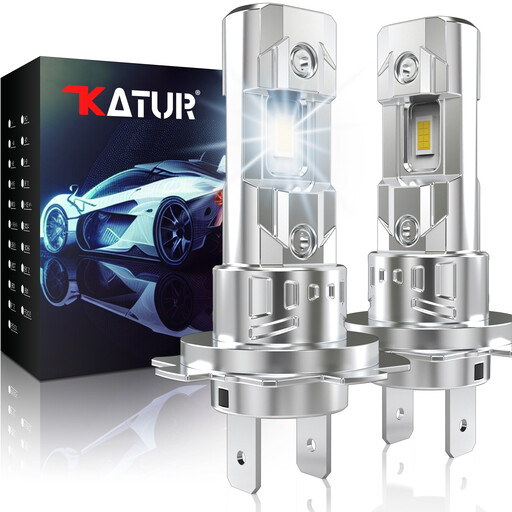
What makes it stand out?: This model shines with its mini size design and passive cooling. The absence of a fan is a guarantee of absolute silence and reliability, eliminating any risk of mechanical failure.
Advantages:
Who is it for?? Ideal for drivers looking for a reliable, silent, and ultra-simple solution to install, even in the tightest headlight housings.
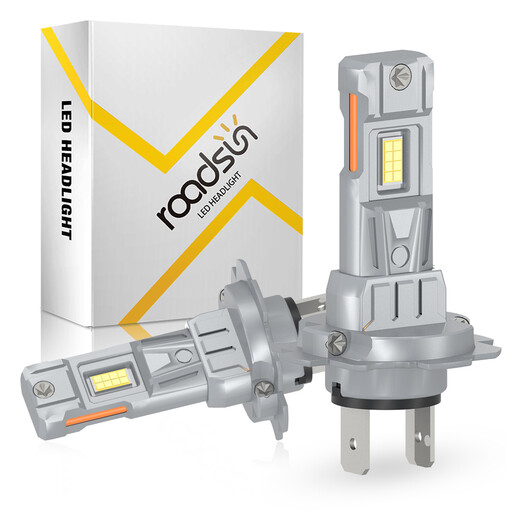
Its unique feature?: The promise of a "plug and play" installation in the strictest sense. This Roadsun model is an exact replica of a halogen H7 bulb, requiring no adapter.
Advantages:
Who is it for?? For everyone, including the least DIY-savvy, who wants an immediate, hassle-free upgrade with the certainty of perfect physical compatibility.
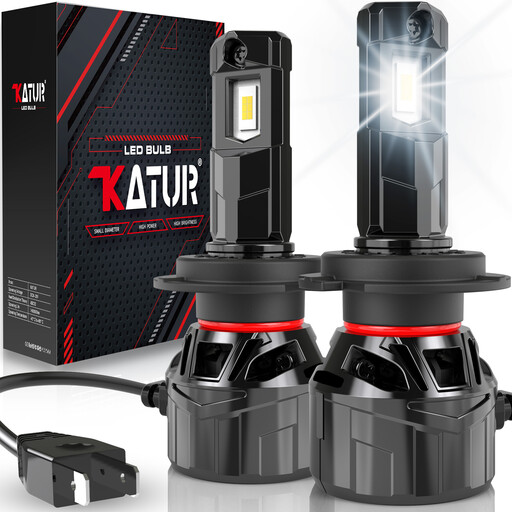
The performance powerhouse?: This H7 LED kit is all about raw power. With an advertised 120W and 30000 lumens for the pair, it relies on active cooling via a turbo-fan to deliver on its promises.
Advantages:
Who is it for?? For demanding drivers who seek the pinnacle of light output, on both 12V and 24V vehicles, and for whom performance is the top priority.
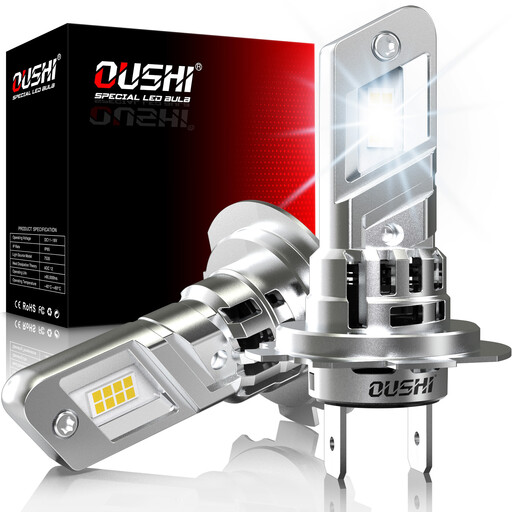
The error-free solution?: The strong point of this OUSHI model is its compatibility with the most finicky on-board electronics. Its latest-generation error-free H7 LED system promises operation without radio interference or dashboard warnings on 98% of vehicles, including the most sensitive ones.
Advantages:
Who is it for?? For owners of recent or European vehicles known for their sensitive CANBUS systems, who want a zero-fault, zero-warning installation.
This selection is just a glimpse of the solutions available to you for modernising your lighting. To discover a wider range or find bulbs for other socket types, feel free to explore our dedicated category.
? Discover our complete collection of plug and play car headlights
1. Are H7 LED bulbs legal? Regulations vary strictly by country and region. To be street legal, replacement LED bulbs (known as "retrofits") may require specific ECE approval for your vehicle model. Without this certification, the use of most kits is restricted to off-road or private property use. Always check product compliance and current legislation in your area before driving on public roads.
2. How do I know if I need an error-free (CANBUS) H7 LED bulb? If your vehicle was manufactured after 2005, and especially if it's a European brand (Audi, BMW, VW, Peugeot, Renault...), there's a high chance you'll need a CANBUS model. The classic symptoms after installing a standard LED? A "bulb out" error message on the dashboard, or a slight flickering of the headlights.
3. What's the difference between an H7 LED bulb with and without a fan? A fanless bulb (with passive cooling) is 100% silent and mechanically simpler, making it less prone to failure. A model with a fan (active cooling) dissipates heat more effectively, which generally allows it to deliver higher and more stable light output. The choice depends on your priority: absolute silence and reliability, or raw performance.