
Livraison le jour même ou le lendemain

Qualité garantie

Débloquez vos offres de bienvenue: Livraison GRATUITE | Jusqu'à -80 % | 30 jours d'essai gratuits à JoyPlus
Téléchargez l'application
Driving at night with original H4 halogen headlights can often feel like an uphill battle. Poor visibility on dimly lit roads, yellowish light that strains the eyes, and frequent replacements are all-too-common frustrations for drivers and motorcyclists.
Upgrading to LEDs is the go-to solution for enhancing both safety and comfort. A modern H4 LED bulb promises a whiter, more intense light and an incomparably longer lifespan. This guide is here to help you see things more clearly by breaking down the essential criteria and presenting our selection of the best models for 2026.
Before you dive into replacing your H4 halogen bulbs, a few technical concepts are essential to make the right choice and ensure compatibility with your vehicle.
A bulb's performance is primarily measured by two criteria?:
One of the biggest advantages of modern LED kits is their ease of installation. Most models are designed to be "Plug & Play", meaning they fit directly in place of your original bulbs without any headlight modifications.
On recent vehicles, another point is crucial?: compatibility with the onboard electronics. Most modern cars include a diagnostic system (the onboard computer or OBC) that constantly monitors bulb function. Since an LED consumes far less power than a halogen, the computer may mistake it for a burnt-out bulb and trigger a dashboard warning. To avoid this issue, choose an error-free H4 LED bulb equipped with a CANbus module, which tricks the electronics by simulating the power consumption of a standard bulb.
An LED bulb's lifespan is directly linked to the efficiency of its cooling system. There are two main technologies?: passive cooling (aluminium heat sink) or active cooling (with an integrated mini-fan). Proper cooling not only guarantees a lifespan measured in tens of thousands of hours but also ensures that light output doesn't diminish over time.
Here are a few models that check all the boxes for performance and reliability to modernise your H4 LED headlight.

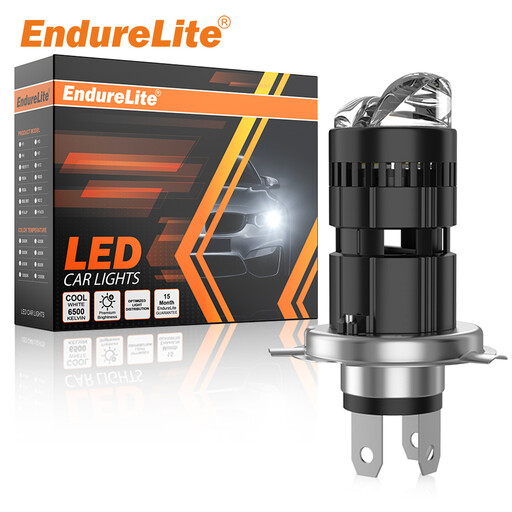
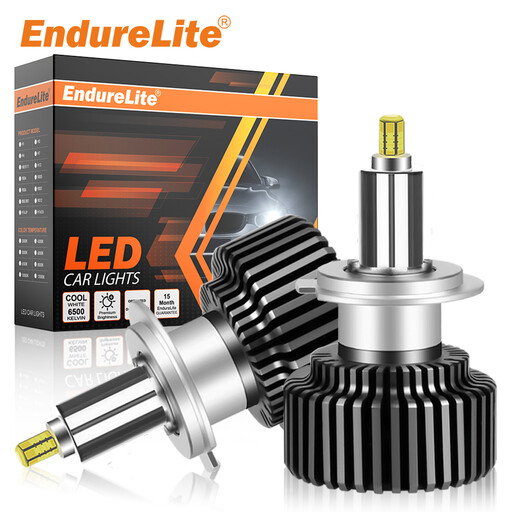
The LED market is evolving at lightning speed, with a multitude of models for every need (colour, power, budget). If our selection doesn't precisely meet your requirements, feel free to explore other avenues.
? Discover our full range of low-voltage LED bulbs to find the right model for your vehicle.
Regulations on this point are very strict in many regions. To be road-legal, an LED kit must have a specific ECE type-approval, which is unfortunately still rare for aftermarket models. In practice, most kits are not approved for use on public roads. It is therefore wise to keep your original bulbs. In any case, having the headlight aim professionally adjusted after installation is essential to avoid dazzling other drivers and to ensure your safety.
If your car was made after 2005-2010, it is highly likely to be equipped with an onboard computer (OBC) that monitors the electrical system. In this case, a model with a CANbus (error-free) module is almost mandatory to prevent a dashboard error message or flickering headlights. For older vehicles without these electronics, it is generally not necessary.
The H4 bulb is a standard dual-filament (low beam and high beam) bulb with a three-prong base. Most H4 LED kits are "Plug & Play" and can therefore be installed without modification. The only real point to watch out for is the clearance at the back of the headlight housing. The LED's cooling system (heat sink or fan) is often bulkier than the base of a halogen bulb. Be sure to check the product's dimensions and the available space behind your headlight before ordering.