
Livraison le jour même ou le lendemain

Qualité garantie

Débloquez vos offres de bienvenue: Livraison GRATUITE | Jusqu'à -80 % | 30 jours d'essai gratuits à JoyPlus
Téléchargez l'application
Driving at night or in bad weather with ageing halogen headlights is a bit of a gamble. Reduced visibility, eye-straining yellowish light, limited range... these are problems too many drivers are familiar with. If you're thinking about replacing your H4 halogen bulbs with LEDs, you've come to the right place.
This guide is designed to give you clear guidelines and concrete selection criteria for choosing the perfect H4 LED bulb for your vehicle and driving habits. As the head of product recommendations at Joybuy, my mission is to guide you toward smart choices, without the unnecessary marketing jargon.
Switching to LEDs is an excellent decision for your safety and comfort. But be aware, not all bulbs are created equal. Here are three essential criteria to consider before you buy.
A bulb's performance is primarily measured in lumens (lm), which indicate the amount of light emitted. A powerful H4 LED bulb will offer better visibility. However, excessive power can dazzle other road users. A good balance is typically between 8,000 and 30,000 lumens per pair.
The colour temperature, measured in Kelvins (K), defines the hue of the light.
Modern vehicles are equipped with an on-board diagnostic system (the car's computer) that can signal an error if the bulb's power consumption is too low, which is the case for LEDs compared to halogens. This can lead to error messages or flickering.
To avoid this issue, opt for a CANBUS H4 LED (Controller Area Network Bus). These bulbs integrate a resistor or a smart driver to communicate correctly with your car's system.
Installation should also be straightforward. Most H4 LED kits are designed to be "Plug and Play," meaning they connect directly to the original socket without any wiring modifications.
LEDs generate heat that must be dissipated to ensure their performance and longevity. There are two main systems:
After analysing technical specifications and user reviews, here is our selection of three models that meet distinct needs.
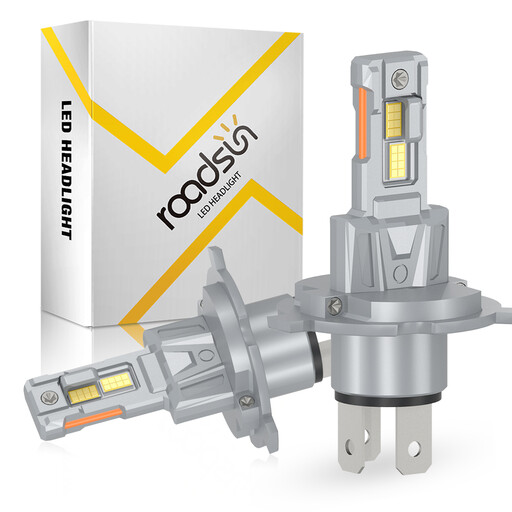
Key Feature: Its fanless design and robust construction make it a top-tier choice for those seeking silence and durability. It is particularly well-suited for harsh conditions, such as off-roading.
Advantages:
Who is it for? Off-road enthusiasts in 4x4s, drivers of SUVs or heavy-duty trucks, and generally anyone who wants a silent and ultra-reliable solution for both daily and intensive use.
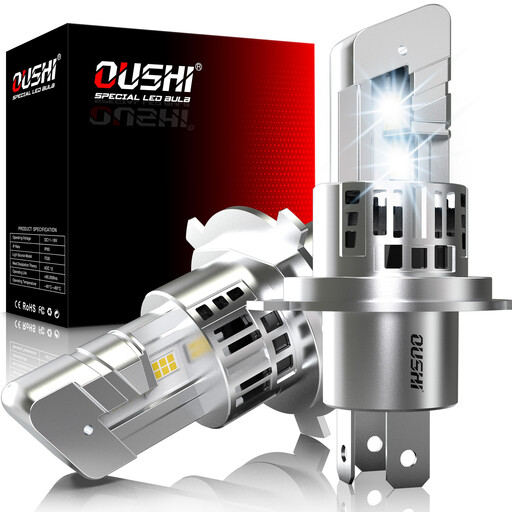
Its Key Advantage: This bulb focuses on extremely high light output and advanced CANBUS compatibility, making it an ideal candidate for modern European vehicles.
Advantages:
Who is it for? Owners of modern vehicles, especially European models, who demand maximum light performance and a flawless CANBUS H4 LED solution to avoid dashboard errors.
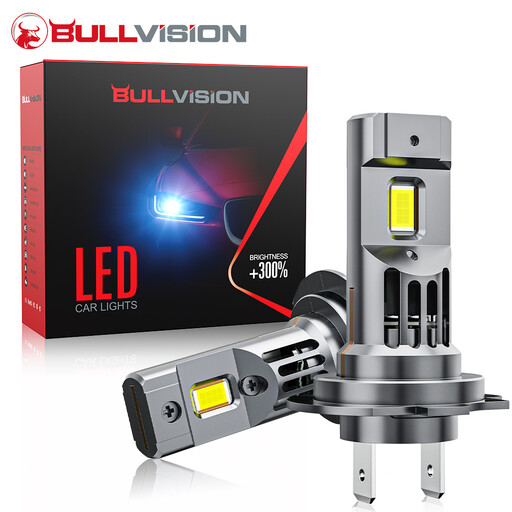
The Perfect Balance: The Bullvision bulb offers an excellent compromise between performance, ease of installation, and value for money. Its 1:1 format makes it particularly easy to install.
Advantages:
Who is it for? Those looking for a simple and effective upgrade, perfect for a first experience with an H4 LED kit. A versatile and balanced option for everyday driving.
This selection is just a glimpse of the solutions available to modernise your lighting. To discover a wider range and compare other models, feel free to browse our complete category.
Discover All Our H4 LED Car Bulbs
French regulations are strict on this point. To be compliant, aftermarket LED bulbs must have ECE R37 approval, which guarantees they meet European safety and performance standards (especially to avoid dazzling other drivers). It is therefore crucial to verify that the chosen model has this certification for use on public roads, and to have the beam pattern alignment checked after installation.
Mechanically speaking, if your vehicle is equipped with H4 bulbs (sometimes called 9003 LED bulbs), an H4 LED kit will fit. The real issue is electronic, related to the CANBUS system. For vehicles made after 2005, it is highly recommended to choose a "CANBUS Ready" model or add an external decoder if needed, to prevent any error messages.
This is one of the major advantages of LED technology. While a standard halogen bulb lasts an average of 500 to 1,000 hours, a quality H4 LED model can operate for 30,000 to 70,000 hours. In practical terms, it could very well last as long as your vehicle, saving you from repeated replacements.