
Livraison le jour même ou le lendemain

Qualité garantie

Débloquez vos offres de bienvenue: Livraison GRATUITE | Jusqu'à -80 % | 30 jours d'essai gratuits à JoyPlus
Téléchargez l'application
Is driving at night a struggle with your yellowish, dim headlights? Rest assured, you're not alone. Many drivers are looking to improve their visibility for obvious safety and comfort reasons. Upgrading to an H11 LED kit is the simplest and most effective solution to replace your old halogen bulbs.
This guide gets straight to the point: we'll decipher the technical specs for you and help you choose the perfect model for your vehicle, cutting through the marketing jargon. Our goal is to give you all the key information for a successful and safe purchase.
Before making the switch, a few technical concepts are essential to distinguish a great deal from a disappointing one.
While physically very similar, the H8, H9, and H11 bases are often interchangeable. Their differences lie in their power output and original intended use.
Fortunately, the majority of H11 LED replacement kits are designed to be universal and compatible with all three bases (H8/H9/H11). A word of advice: always check the manufacturer's stated compatibility for a hassle-free installation.
Two values are important to watch closely when judging the performance of an H11 LED bulb:
Modern vehicles, especially European models, integrate an onboard diagnostic system (CANbus) that checks if the bulbs are working correctly. Since LEDs consume far less power than halogens, the car's computer might interpret this low consumption as a fault and display an error message.
To solve this problem, simply choose a CANbus H11 LED kit. These models include a resistor or circuit that simulates the power draw of a conventional bulb, ensuring compatibility with 99% of cars on the road, with no dashboard warnings.
We have scoured the market to bring you a selection of kits that tick all the boxes: performance, reliability, and ease of installation.
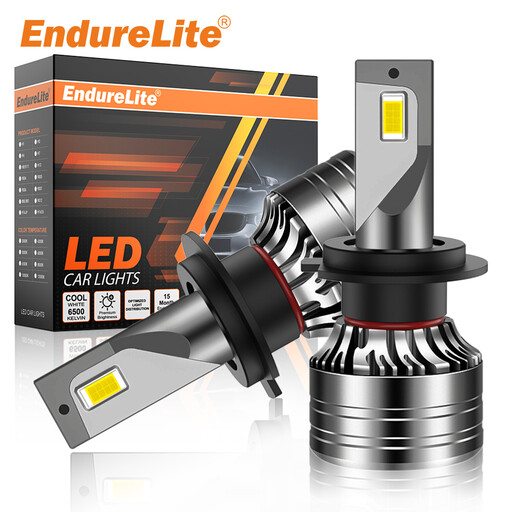
Highlights: This kit's main feature is its "1:1" design, meaning it has the exact same dimensions as the original bulbs. This ensures the light beam is perfectly focused, illuminating the road without dazzling other drivers—a crucial detail for everyone's safety.
Benefits:
Who is it for? The driver looking for a clear and reliable upgrade, with an installation as simple as changing a standard bulb.
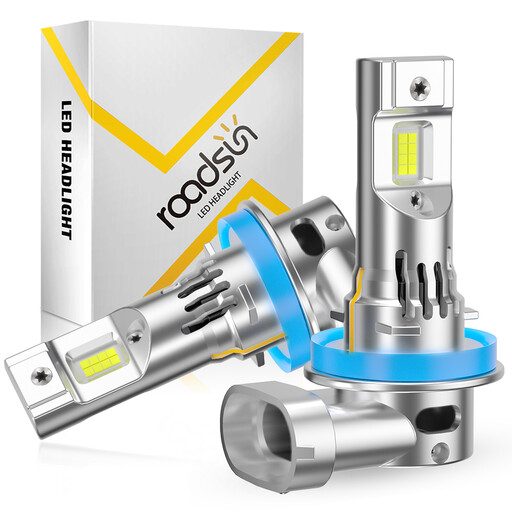
Highlights: This model is all about extreme simplicity with its non-polarity design, making it impossible to plug in incorrectly. Its ultra-fast fan (16,000 RPM) is another major asset for guaranteeing consistent performance.
Benefits:
Who is it for? The DIY enthusiast who wants a quick installation, a modern look, and uncompromised visibility.
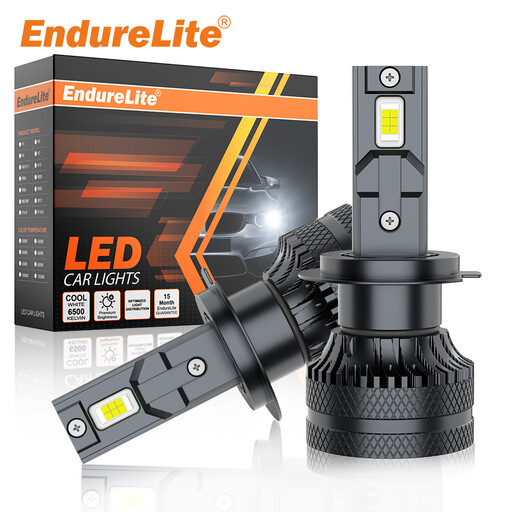
Highlights: With a stated 20,000 lumens per pair, this kit plays in the big leagues and is aimed at fans of raw performance. It's designed for those who demand the most powerful lighting possible.
Benefits:
Who is it for? Those who clock up the miles on poorly lit roads and for whom lighting power is the number one criterion, without sacrificing reliability.
The models in this guide are optimised for H11 LED headlights and emit a cool white light. If you're looking for different lighting, whether for the cabin, number plate, or other lights, a multitude of other solutions exist.
Feel free to explore other options, such as cool white spotlights for auxiliary lighting, to find the perfect solution for every need.
1. Is it legal to replace H11 halogen bulbs with LEDs in Europe? European regulations are very strict. To be approved for use on public roads, aftermarket LED bulbs must have an ECE certification. Be aware that many kits are sold with the disclaimer "for off-road use only." It is therefore imperative to check the product's certification to remain compliant with the law.
2. What is the real difference between 6000K and 6500K? The difference is subtle. 6000K is a pure, very neutral white. 6500K has a very slight blue tint, closer to the light of a clear sky. The choice ultimately comes down to your personal preference.
3. Do I have to buy a kit with a fan? Yes, for main headlights, it's essential. A powerful H11 LED generates a lot of heat at its base. Without an effective cooling system (active fan or passive heat sink), the chip will overheat, leading to a drop in brightness and a drastically reduced lifespan. The fan is therefore a guarantee of performance and longevity.