
Livraison le jour même ou le lendemain

Qualité garantie

Débloquez vos offres de bienvenue: Livraison GRATUITE | Jusqu'à -80 % | 30 jours d'essai gratuits à JoyPlus
Téléchargez l'application
Upgrading from outdated halogen lighting to modern technology is no longer a luxury—it's a matter of comfort and safety. If you feel like your headlights struggle to cut through the darkness on poorly lit roads, switching to an H11 LED bulb can be a true game-changer for your night-time driving.
Our goal is simple: to help you see clearly through the jungle of today's options. We'll break down the criteria that truly matter and present our selection of the best products, so you can make the right choice without getting lost in technical jargon.
Before you jump on the first kit you see, let's review a few essential technical criteria to ensure optimal compatibility and performance.
First things first: ensure the kit is compatible with your vehicle. The H11 base is a very common standard. The good news is that it's often interchangeable with H8 LED bulb and H9 LED bulb bases. These three models share the same connection base, although their power or intended use (low beams, high beams, fog lights) may vary slightly.
The other key area to watch is your vehicle's on-board electronics. Modern cars are equipped with a CANbus system that constantly monitors the proper functioning of all components. Because an LED bulb consumes far less power than a halogen one, the on-board computer might mistake it for a fault and display an error message. To avoid this unpleasant surprise, choose a kit with a built-in CANbus error-free system, which ensures seamless communication with your vehicle.
The performance of an H11 LED headlight is judged by two main criteria: lumens (lm) for brightness and Kelvins (K) for light colour.
An LED bulb generates heat, and this heat must be effectively dissipated to ensure its longevity. Two technologies compete in this area:
Proper thermal management is the key to a lifespan that can reach tens of thousands of hours—far longer than any halogen bulb.
After poring over the technical specifications, we've selected three models that stand out from the crowd, each with its own strengths.
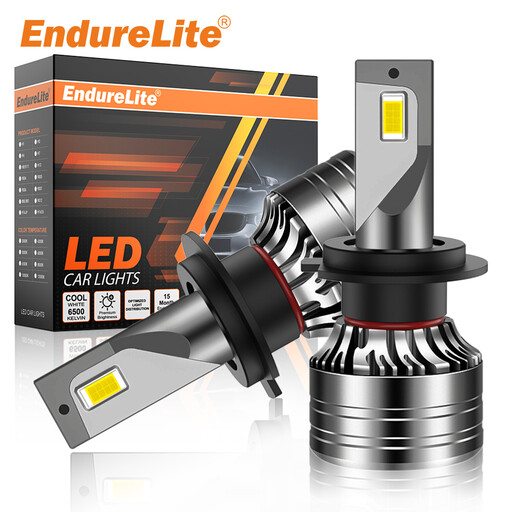
Why They Stand Out: This kit is all about light output. The manufacturer claims up to 300% more visibility than stock bulbs. Their design, modelled after halogens, is engineered to produce a clean, precise beam pattern that doesn't blind other drivers.
Pros:
Who is it for? For those who primarily want maximum light output to make their drives on country roads or poorly lit motorways safer, without a complicated installation.
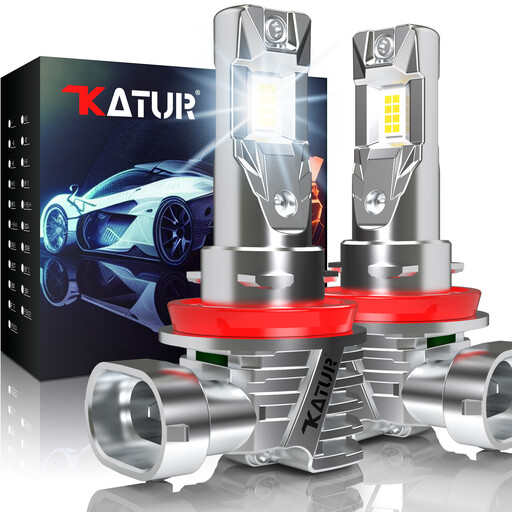
Why They Stand Out: The key strength of this KATUR model is its compact, fanless design. The result is absolute silence and enhanced reliability, as there are no moving parts that could fail. Its mini-format is a real advantage for the most cramped headlight housings.
Pros:
Who is it for? Ideal for drivers seeking the reliability and silence of a system with no moving parts, or for those who lack space behind their headlight optics.
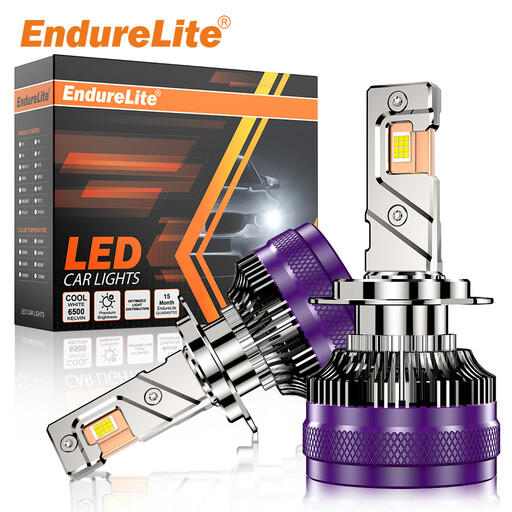
Why They Stand Out: This ENdureLite K26 model is the Swiss Army knife of our selection, offering an excellent balance of performance, durability, and simplicity. The manufacturer promises a three-minute installation thanks to its all-in-one design. Its active cooling is designed to remain effective even under extreme conditions.
Pros:
Who is it for? The smart choice for those who want a simple and effective halogen replacement, delivering a significant increase in light and near-universal compatibility.
LED technology doesn't stop at main headlights. If you want to standardise all your car's lighting or are looking for a different type of bulb, the catalogue is vast.
To discover a wider range of solutions, including other models of waterproof lamps for your vehicle, feel free to explore our complete selection.
Discover Our Selection of Waterproof Lamps
Yes, in most cases. This is one of the advantages of this standard: the H8, H9, and H11 bases share the same connection design. The only differences relate to power and a slightly different positioning tab, but this generally doesn't prevent compatibility. That's why manufacturers often offer three-in-one H8/H9/H11 LED bulb kits. A quick look at your vehicle's manual is still a good idea to verify the intended use (low beam, high beam, or fog lights).
Usually, no. Most modern kits are "CANbus Ready," meaning they already include what's needed to prevent error messages on 95% to 99% of vehicles. However, be aware that some cars (especially German brands or very recent models) have particularly sensitive monitoring systems. If you still notice flickering or an error message on your dashboard, adding an external CANbus decoder will solve the problem.
Yes. Most regulations worldwide require headlights to be white. The 6000K (cool white) shade falls squarely into this category and is therefore permitted. However, colours that are distinctly blue (typically above 8000K) are prohibited. Be careful, though: the most important step is to have your headlights properly aligned after installation. A poorly aimed beam that dazzles other drivers is dangerous and will likely cause you to fail a vehicle safety inspection.