
Livraison le jour même ou le lendemain

Qualité garantie

Débloquez vos offres de bienvenue: Livraison GRATUITE | Jusqu'à -80 % | 30 jours d'essai gratuits à JoyPlus
Téléchargez l'application
The gym ball, also known as a Swiss ball, has become an essential accessory for home fitness, yoga, and Pilates. But don't let its simple appearance fool you: choosing the wrong model can quickly turn a good idea into a purchase you'll regret. To avoid falling for marketing ploys, it's crucial to focus on the criteria that truly matter for your safety and the effectiveness of your workouts.
As a product expert for the editorial team, my mission is to guide you. Let's review the two most common mistakes when buying a gym ball and, more importantly, how to avoid them.
To make the right choice, two technical criteria need close attention. They are your guarantee of a durable purchase that is perfectly suited to your needs, whether for muscle strengthening, as a pregnancy ball, or even as a supplementary office chair.
The correlation between your height and the ball's diameter is the very first thing to check. An incorrectly sized model will force you into poor posture, negating all the benefits of your exercises. The test is simple: when sitting on the fully inflated ball, your knees should form a right angle (about 90°) and your thighs should be parallel to the floor.
Here are some guidelines to help you:
If you plan to use the ball as an office seat, remember to measure the height of your desk to ensure a perfectly ergonomic position.
Safety is the non-negotiable criterion. A quality ball is made of dense, durable PVC (polyvinyl chloride). The "Anti-Burst" label is a good starting point, but it must be backed by a clear promise: in the event of a puncture, the ball must deflate slowly and in a controlled manner.
Also, remember to check the maximum supported weight, especially if you plan to use it with weights or dumbbells. Finally, a slightly textured, non-slip surface is a significant advantage for ensuring good stability during your movements, whether for yoga or Pilates.
To help you decide, here are a few models that perfectly illustrate these criteria and cater to different needs.
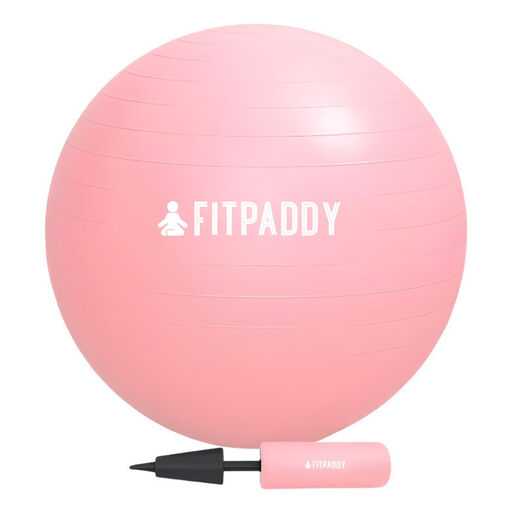
Why we recommend it: This 65 cm ball is the perfect all-rounder, ideal for most users (between 1.65 m and 1.85 m) looking for a model for their home fitness routine. It's perfect for strength training, balance, and flexibility.
By offering the most common diameter (65 cm), it minimises the risk of choosing the wrong size for the majority of buyers. The included pump is a real plus, saving you a separate purchase.
Its durable PVC construction is a guarantee of longevity for regular use. The complete kit (ball + pump) makes it ready to use right out of the box.
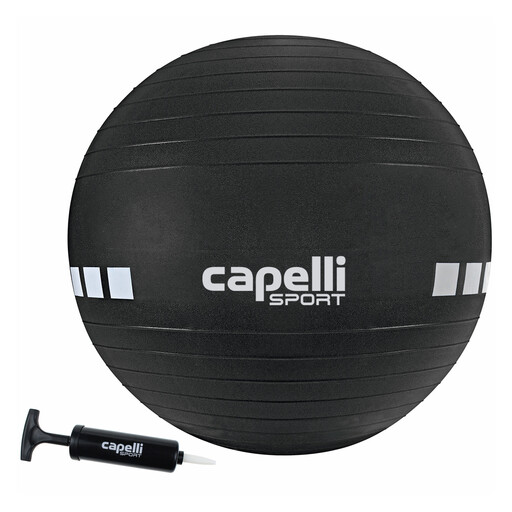
Why we recommend it: With its 75 cm diameter, this ball is perfect for people over 1.85 m or for those who want a tall, active seat at the office. Highly versatile, it's suitable for yoga and Pilates as well as for posture correction work.
It checks the safety box with its anti-burst design and non-slip surface. The fact that it's offered in several sizes (including this 75 cm model) with a clear guide helps users avoid making a mistake.
Its high maximum load capacity (up to 150 kg) and sturdiness make it a reliable partner for intensive workouts or for daily use as an office seat.
We have put together a complete selection of products that meet our quality criteria and safety standards.
The golden rule: the ball's diameter depends on your own height. The test is simple: sit on it. If your hips are at the same level as or slightly above your knees, with your feet flat on the floor, it's the right size. For a quick reference, refer to our size guide (55, 65, and 75?cm) earlier in this article.
Crucially, do not inflate it to its maximum size all at once. First, inflate it to 80% of its final size and wait 24 hours. This allows the PVC to soften. Then, finish inflating it to the indicated diameter, checking with a tape measure. A properly inflated ball is firm but should still have a little give when you press on it.
Yes, replacing your chair with a gym ball is an excellent practice for improving your posture and engaging the deep muscles of your back and abdomen. However, be careful not to use it continuously: alternate in 30-minute sessions several times a day to avoid fatiguing your back. Finally, check that the ball's height allows you to rest your forearms flat on the desk in a comfortable position.