For an on-the-go snack, plain almonds with almonds as the sole ingredient are a simple choice; if you prefer a toasted flavour, try roasted almonds with no added salt, after checking the ingredients. Auchan and Monoprix product listings show 52 to 57 g of fat per 100 g for three plain or unsalted roasted varieties. None of these descriptions demonstrates a reduction in fat. If reducing fat is your deciding factor, check the nutrition information and the comparison behind any claim before you buy.
Who are these options for?
People looking to reduce their fat intake
If that’s your priority, don’t assume that ‘plain’, ‘roasted’ or ‘no added salt’ means less fat. The three products listed by Auchan and Monoprix contain 52 to 57 g of fat per 100 g. Compare the labels; if a verifiable reduction is essential, consider a different type of snack too.
People who prefer a snack with no added salt
Plain or unsalted roasted almonds are easy to carry in your gym bag. Check the ingredients list, allergen information and storage instructions on the pack you choose.
People preparing a snack to take with them
If you prefer roasted almonds but don’t want to carry the large pack, put a portion in a sealed container. Store the rest according to the instructions on the packaging.
What should you check before buying?
| What to check |
Look for |
Who is it for? |
| Fat |
The amount per 100 g and, if a fat-reduction claim is made, the comparison shown on the packaging. |
If my main aim is to reduce fat, ‘no added salt’ isn’t enough to make my choice. Around 42% of consumers put this check first. |
| Salt and ingredients |
The salt content per 100 g and the ingredients list, including any additions. |
For a simple snack with no added salt, I want to know exactly what’s in the pack. This is the top priority for around 33% of consumers. |
| Portability and storage |
The pack size and instructions for storing it after opening. |
When I pack my gym bag, I prefer to take a portion and store the rest properly. Around 25% of consumers put this convenience first. |
What common misconceptions should you avoid?
-
Assuming ‘no added salt’ means ‘less fat’
The plain or unsalted roasted products listed by Auchan and Monoprix contain 52 to 57 g of fat per 100 g. A claim about salt doesn’t tell you whether the fat content has been reduced.
Read the nutrition information per 100 g and check the comparison shown if the packaging claims a reduction.
-
Confusing plain almonds with a seasoned recipe
Carrefour’s listing for Seeberger plain almonds names blanched almonds as the ingredient; Auchan’s listing for Seeberger salted and roasted almonds also includes sunflower oil and salt. These recipes suit different preferences.
If you want an ingredients list that contains only almonds, check the specific pack rather than relying on the word ‘almonds’ alone.
-
Overlooking allergen information
As well as almonds themselves, some products may indicate the possible presence of peanuts or other allergens.
If you have an allergy, read the information on the pack you’re buying, including any ‘may contain’ statements.
-
Leaving an opened pack in your gym bag
An open pack is harder to protect while you’re on the move. Monoprix’s listing for Maître Prunille roasted almonds says to reseal the pack and consume within 15 days of opening.
Prepare a portion in a sealed container and follow the storage instructions for the main pack.
Brands and products to know
Vico Natur’ & Bon
The 180 g pack of unroasted, unsalted almonds listed by Monoprix is aimed at people looking for a short ingredients list.
- Monoprix lists ‘almonds’ as the sole ingredient.
- The same listing shows 53 g of fat per 100 g and notes the possible presence of peanuts and other tree nuts.
Maître Prunille
The 250 g product listed by Monoprix contains dry-roasted almonds with no added salt.
- A roasted option for anyone who likes that flavour but doesn’t want a salted recipe.
- Monoprix lists 57 g of fat per 100 g and notes that the facility also handles other tree nuts, sesame and peanuts.
Seeberger
The products listed by Carrefour and Auchan let you distinguish plain almonds from a roasted and salted recipe. These characteristics don’t necessarily apply to the whole brand.
- Carrefour lists blanched almonds as the ingredient in its plain variety, which contains 53 g of fat per 100 g.
- The salted and roasted variety listed by Auchan also contains sunflower oil and salt, so check which recipe suits your needs.
Almond snacks available on Joybuy
These two almond snacks are flavoured. They’re suited to choosing a flavour and a format to take with you, rather than looking for plain almonds with a single ingredient or a proven reduction in fat.
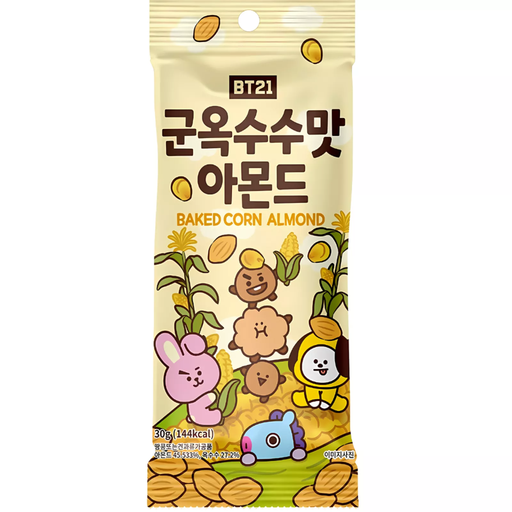 Image unavailable
BT21 Baked Corn Flavor Almond, 30 g
This 30 g pack is a handy choice if you’re looking for a corn-flavoured almond snack to pop in your bag. Its flavour doesn’t indicate a reduction in fat, so check the nutrition information, ingredients and allergens on the packaging.
View on Joybuy
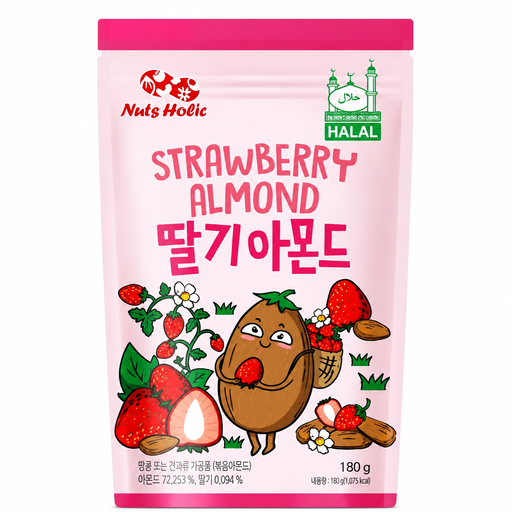 Image unavailable
Nutsholic Almonds Strawberry Flavour, 180 g
This 180 g pack may suit you if you’d like to prepare a portion of strawberry-flavoured almond snack before heading out. It’s not a substitute for a plain product with minimal ingredients; check the label to compare fat content and check the ingredients and allergens.
View on Joybuy
Frequently asked questions
Are almonds with no added salt lower in fat?
Not necessarily. Auchan and Monoprix listings for three plain or unsalted roasted products show 52, 53 and 57 g of fat per 100 g respectively. Compare the ‘fat’ line per 100 g, and don’t assume there’s a reduction just because the pack says ‘no added salt’.
Which almonds should you take in a gym bag?
If you’re looking for a simple ingredient list, choose a plain variety that contains only almonds; if you prefer a toasted flavour, look for roasted almonds with no added salt. Either way, prepare a portion to take with you and check the storage instructions on the pack.
How should you store almonds after opening?
Follow the instructions on the pack you choose and reseal the main pack after taking out your portion. For its roasted almond product, Monoprix says to reseal the pack and consume within 15 days of opening; this guidance doesn’t automatically apply to other products.
What should you check on the packaging if you have an allergy?
Check the almonds and any other allergens listed on the specific pack, including ‘may contain’ statements. Some products listed by Monoprix note the possible presence of peanuts or other tree nuts, so don’t rely on the product name alone.


