
Same-day & Next-day Delivery

Quality Guaranteed

Unlock Your Welcome Offers: FREE Delivery | Up to 80% OFF | Free 30-day JoyPlus trial
Download the APP
Redoing the seals in your bathroom or kitchen? The idea can seem daunting, especially when you picture yourself struggling with a caulking gun. Fortunately, there are gun-free bathroom silicone sealant solutions designed specifically for weekend DIYers. The problem is, the market is flooded with products promising the world, and it's easy to fall into the classic traps that lead to disappointment: a seal that blackens, cracks, or fails to adhere.
As a Product Specialist at Joybuy, my mission is to help you cut through the noise. Let's break down the mistakes to avoid and the essential criteria for choosing a product that will guarantee a clean, durable, and hassle-free result.
The desire to get the job done quickly can make us overlook the essentials. Here are the most common pitfalls that turn a quick DIY session into a total nightmare.
For pro-level results, even as a novice, focus on these three technical points before you check out.
The heart of the matter is the composition. For wet areas, a sanitary sealant is essential. This is usually an acetoxy-cure silicone (identifiable by its slight vinegar-like smell during application), which offers excellent adhesion on smooth, non-porous surfaces like enamel, ceramic, or glass.
The non-negotiable feature: the presence of fungicidal agents. These additives block the development of mould on the surface of the seal. Without them, even the best-applied seal will eventually blacken in a humid environment. Check that the packaging explicitly states "contains fungicides" or a specific mould-resistant silicone formulation.
Since the goal is to reseal a shower with ease, the design of the tube is as crucial as its contents. A good ready-to-use sealant tube should offer:
A seal is only effective if it adheres perfectly to the surfaces. Before buying, carefully read the list of compatible materials on the packaging. A good transparent or white sanitary sealant should stick to:
Also, pay attention to exclusions. Most silicone sealants do not adhere to synthetic materials like acrylic (common on modern bathtubs), polyethylene (PE), polypropylene (PP), or Teflon (PTFE). Using the wrong product on these surfaces guarantees almost immediate peeling.
Here is our selection of products that check all the boxes, suitable for different user profiles.
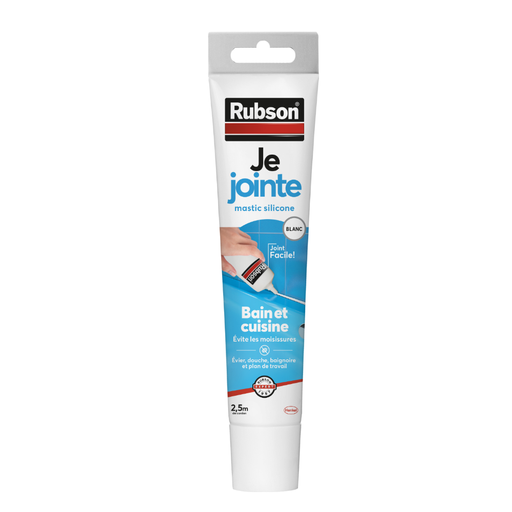
Why it's the right choice: Perfect for a targeted repair, like a sink seal or a small section of a shower. Its compact size means you don't have to buy a large cartridge that will just dry out in a cupboard. It's the ideal solution for a quick, waste-free fix.
This is a specific sanitary sealant, not a "do-it-all" product. Its formula is designed for wet areas, and its integrated applicator is made for beginners, which minimises the risk of a messy application.
Ready to use without a gun. Excellent adhesion on classic surfaces (enamel, porcelain, ceramic). Mould-resistant formula.
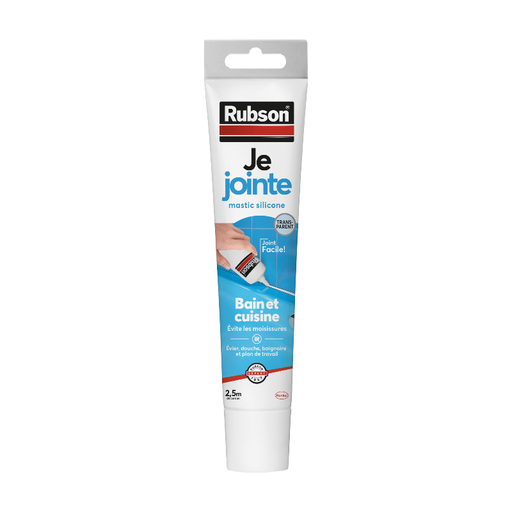
Why it's the right choice: With coloured tiles, a stone worktop, or a glass shower screen, a white seal can look out of place. The transparent version provides the same waterproof seal but with a virtually invisible finish that blends into any decor.
Its transparency forgives minor application mistakes, a real plus for a beginner. It's a sanitary formula with fungicides, which avoids the trap of an "all-purpose" product that always ends up blackening.
Discreet, transparent finish. Durable and waterproof silicone formula. Integrated applicator for easy, gun-free application.
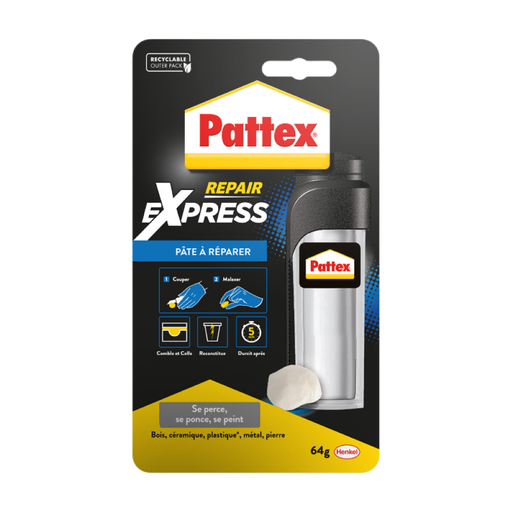
Why it's the right choice: Sometimes the problem is more than just a seal to redo. To fill a hole, repair a chip on a tile, or even rebuild a small missing piece, an epoxy putty is much more suitable. This product is kneaded and applied by hand for repairs that are built to last.
It avoids the classic mistake: using a silicone sealant for a job it wasn't designed for. Instead of trying to fill a hole with a silicone that will remain flexible, this putty hardens like a rock. It's the ideal solution for durable repairs and filling.
Can be sanded, drilled, and painted once dry. Sets quickly in 5 minutes. Adheres to many materials (wood, metal, ceramic, stone).
The products above are perfect for bathrooms and kitchens, but some projects (sealing near a hob, a fireplace, etc.) require special performance. In these cases, a high-temperature sealant is essential.
A high-quality seal, applied correctly in a well-ventilated room, can last between 5 and 10 years. Its longevity depends on the quality of the mould-resistant silicone, the frequency of cleaning, and the ambient humidity. Regular maintenance is the key to making it last.
Absolutely not! This is the classic beginner's mistake. The new silicone will never adhere properly to the old one, and moisture will get trapped underneath, encouraging mould to return. For a perfect and durable seal, it is imperative to completely remove the old sealant, degrease the surface (with denatured alcohol, for example), and ensure it is perfectly dry before applying the new one.
The secret is to act quickly, before the silicone starts to "skin over" (usually in under 10 minutes). The simplest method: dip your finger in soapy water and run it along the seal in a continuous motion with light pressure. You can also use a sealant smoothing tool. The advantage of a ready-to-use sealant tube is that it often lays down a thinner, more uniform bead, which makes this step much easier.