
Livraison le jour même ou le lendemain

Qualité garantie

Débloquez vos offres de bienvenue: Livraison GRATUITE | Jusqu'à -80 % | 30 jours d'essai gratuits à JoyPlus
Téléchargez l'application
A guinea pig house isn't just for decorating a cage. It needs to provide a cosy spot for resting, a safe hideaway, and, depending on the design, a secure area for exploring. The same criteria apply to a small animal hutch, a hamster hideout, or a rabbit playpen.
Before you place an order, it's worth knowing a few common pitfalls. A product described as spacious may have a much smaller usable area because of a steep ramp or poorly positioned partitions. Wood can absorb moisture and odours if the structure is tricky to clean. And a so-called versatile enclosure might not be suitable for outdoor use or for an animal that likes to gnaw on materials.
Here are the key factors to consider when comparing your options methodically.
For a guinea pig cage, start by checking the floor area before looking at height. Guinea pigs mainly use horizontal space. A house with a ramp can add an exploration zone, but the slope, width, and grip matter just as much as the ramp's presence.
For hamsters and mice, a hamster hideout needs a wide enough entrance and proper ventilation. For a rabbit or several guinea pigs, the play area must allow them to turn around, move about, and easily reach a sheltered space.
Wood gives a natural finish and can work well for a wooden guinea pig house. However, check the surfaces, corners, and any areas that could absorb urine. A smooth finish, removable parts, and easy access make cleaning much simpler.
For daily use, regularly remove soiled bedding and check that the material has no splinters or parts that could come loose. If the manufacturer provides care instructions, follow them. Also avoid cleaning products that could leave irritating residues for your pet.
A guinea pig enclosure or mesh run for rodents should be placed on a stable surface and checked after each assembly. Inspect the panel joints, the door's sturdiness, and make sure there are no sharp edges.
For an indoor and outdoor enclosure, also consider the weather, humidity, heat, and the possible presence of other animals. A portable fence doesn't offer complete protection from predators. Indoors, keep the enclosure away from electrical cables, radiators, and busy areas.
The models below cater to different needs and requirements. Before ordering, check each product's details for dimensions, materials, and usage conditions.
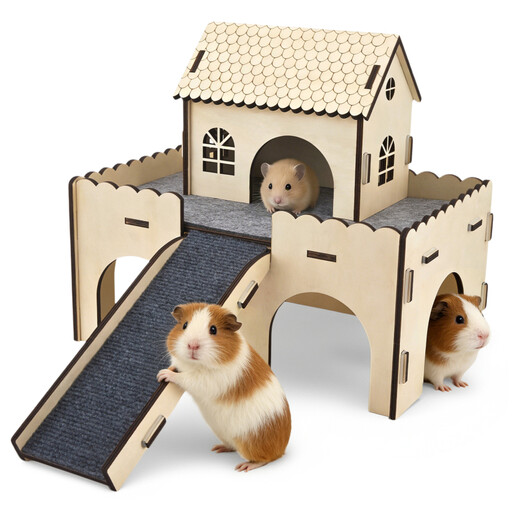
Why this suits this profile: This two-storey wooden house combines a resting area, a hideout, and a ramp in a design made for small pets.
The separate hiding area means you won't mistake a simple decorative accessory for a proper resting spot.
Two levels, a ramp, and a hiding area are listed in the product details.
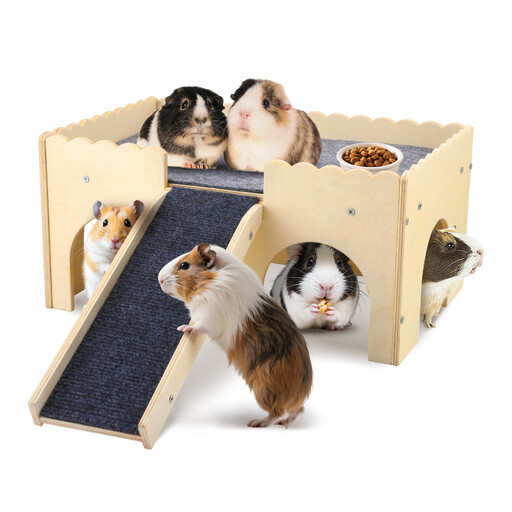
Why this suits this profile: This model is for those looking for a well-structured wooden house with multiple access points and removable parts.
The four entrances listed reduce the risk of a hideout that's difficult to reach or inspect.
Listed dimensions of 38 × 25 × 18 cm, ramp, removable ladder, and soft mat according to the product details.
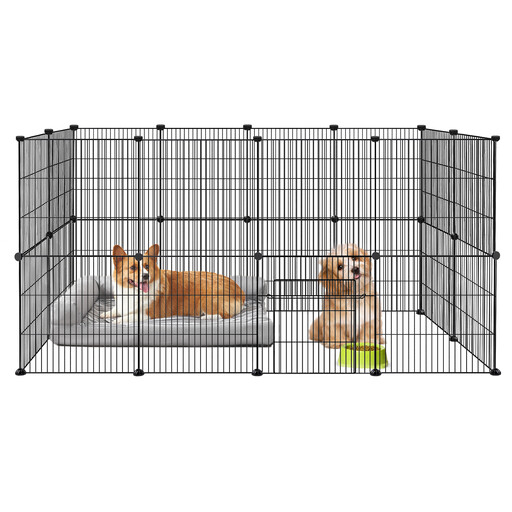
Why this suits this profile: This playpen is ideal for households wanting to create a flexible exercise area for rabbits, guinea pigs, or small dogs.
The panel design lets you adjust the layout and more easily control the different access points.
24 panels with door, dense mesh, and listed for both indoor and outdoor use.
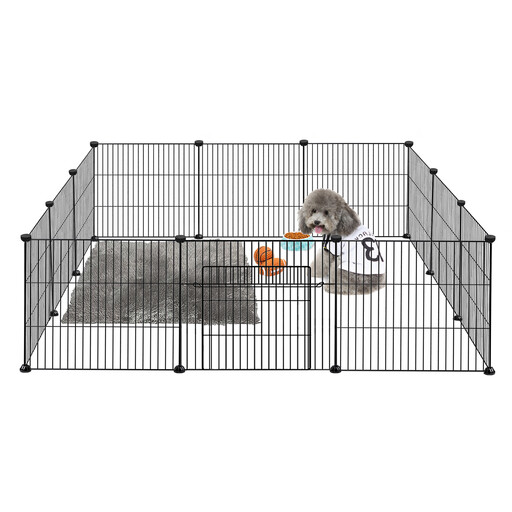
Why this suits this profile: A 12-panel setup can work well for a smaller indoor space or occasional supervised use.
The smaller number of panels makes storage easier and stops you buying a structure that's too big for the room.
12 panels with door, dense mesh, and listed for use with several small pets.
We've put together a comprehensive, real-time updated selection of products that meet these strict criteria as well as European safety standards.
Place the house or playpen in a quiet spot, away from draughts and heat sources. For an outdoor enclosure, provide a shaded area and protection from the elements. The ground should stay dry and be level enough to stop the panels from tipping over.
Add suitable bedding, a separate feeding area, and an easily accessible water source. Regularly check the wooden parts, ramp, fastenings, and mesh. A product will last longer if soiled areas are cleaned promptly and standing moisture is avoided.
The house must let your pet enter, turn around, and stretch out comfortably. If the habitat is shared, provide several entrances or multiple hideouts to avoid blocking situations. Always compare the listed dimensions with the actual interior space available.
Yes, as long as the entrance, ventilation, floor area, and cleaning options are suitable for the animal. For a hamster, pay particular attention to the size of the openings and any parts that could be gnawed. For a hedgehog, choose a stable hideout that's easy to access and simple to clean.
A model listed for both indoor and outdoor use can work for supervised outings, but this doesn't guarantee it will withstand permanent exposure. Check the product details for guidance, protect the space from rain and strong heat, and never leave your pet unsupervised in an exposed environment.