
Livraison le jour même ou le lendemain

Qualité garantie

Débloquez vos offres de bienvenue: Livraison GRATUITE | Jusqu'à -80 % | 30 jours d'essai gratuits à JoyPlus
Téléchargez l'application
Choosing a guinea pig habitat isn’t just about picking a cage that looks nice or fits easily into a corner. The space needs to be safe, simple to clean, and suited to your pet’s habits. A guinea pig run can be used for daily exercise, while a house or hideout provides the essential shelter they need to rest.
However, some listings hide flaws that aren’t obvious from a single photo. Here are the key points to examine before comparing models.
A small animal enclosure must prevent escapes while minimising the risk of injury. Mesh that’s too widely spaced can let a head or paw through. A lightweight structure may also shift when your guinea pig pushes against the panels, especially on a smooth floor.
So check the distance between the mesh, the rigidity of the panels, and whether the fixings are reliable. For outdoor use, also check the resistance to moisture and whether the run can be anchored to the ground.
A wooden rodent house offers a cosy resting spot, but narrow corners, absorbent surfaces and non-removable parts quickly trap dirt. A hideout should have accessible openings and surfaces you can inspect regularly.
A house with multiple entrances makes it easier for your pet to move around and prevents them from getting trapped. That said, you still need to check the sturdiness of the structure and the quality of the wood finish.
The actual usable space shrinks as soon as you add a food bowl, water bottle, litter tray, house and various small animal accessories. A run that looks spacious when empty can quickly feel cramped once it’s furnished.
Before buying, sketch out where the essentials will go and leave enough clear space for your pet to move around. For multiple guinea pigs, this check is even more important.
For an indoor and outdoor run, choose a structure where the panels stay firmly connected. A sufficient height discourages climbing attempts, while still letting you reach your pet without sudden movements.
A run with a door makes access and cleaning much easier. Examine the locking mechanism carefully: a latch that lifts easily may not be secure enough against a curious guinea pig – or another pet in the home.
Mesh panels should have protected edges and a smooth finish. The fixings must not have any sharp parts that paws or noses could reach.
Length and width matter more than the number of accessories included. A guinea pig ramp can add enrichment, but it shouldn’t take up too much floor space or have a slope that’s too steep to climb.
For a house, check both the external dimensions and the actual space inside. The wooden model measuring 38 × 25 × 18 cm, for example, has four entrances and a removable ramp according to its product listing. Compare these measurements to your pet’s size and the intended use: resting, hiding or occasional play.
A hamster hideout isn’t automatically suitable for a guinea pig. These species are not the same size and have different movement needs. Check the list of animals specified by the seller and measure the opening before ordering.
Painted metal, washable plastic and untreated wood all have different maintenance requirements. For a run, look for surfaces that are easy to wipe clean and panels you can move without having to dismantle the whole thing.
For a wooden hideout, check there are no splinters, exposed nails or parts that could come loose easily. The wood must stay dry and be checked regularly. If the habitat is kept outdoors, protect it from rain and avoid spots that get direct sunlight for long periods.
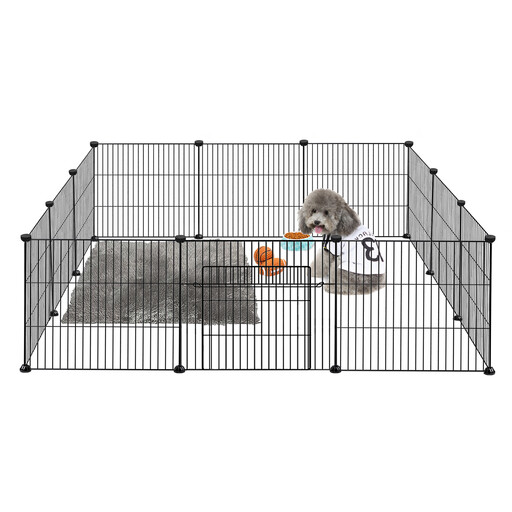
Why this suits this profile: its 12 panels with a door are ideal for a first, flexible setup – indoors or outdoors – as long as you check the dimensions on the product page.
The door means you don’t have to remove a panel every time you let your pet out, while the dense mesh limits gaps where small paws could get caught.
12 panels, integrated door, and suitable for both indoor and outdoor use.
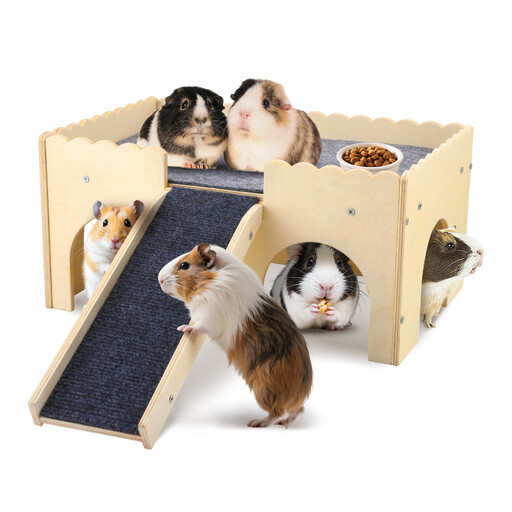
Why this suits this profile: this wooden house offers a more sophisticated setup, with a ramp, a removable soft mat and multiple access points.
The removable mat makes cleaning easy, and the four entrances reduce dead-end spaces.
Stated dimensions of 38 × 25 × 18 cm, removable ramp and four entrances.
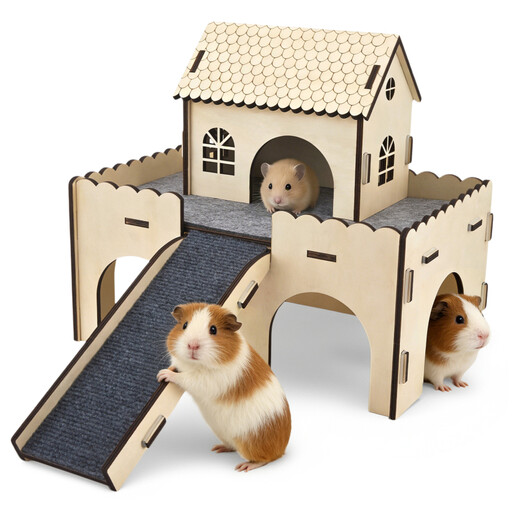
Why this suits this profile: its two-level layout is designed for those who want to create more activity, rest and hiding spaces.
The hiding area and ramp help organise the space, but you should check the overall stability before use.
Two levels, a ramp and a dedicated hiding and resting area.
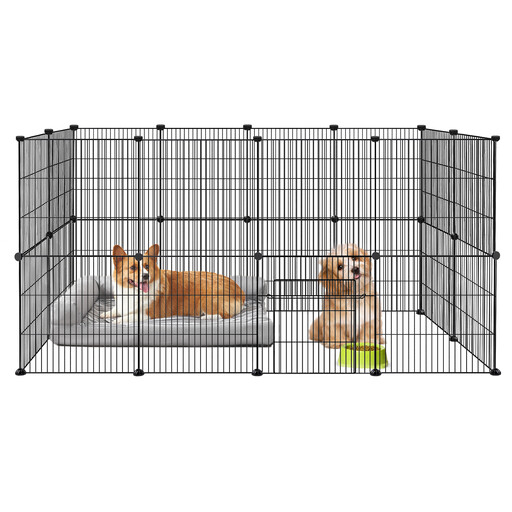
Why this suits this profile: its 24 panels let you create a much larger area or change the layout regularly to suit the room and your needs.
The high number of panels stops you from overcrowding a small space and gives you far more configuration options.
24 panels, integrated door, and suitable for both indoor and outdoor use.
We’ve put together a comprehensive, real-time list of products that fully meet these strict selection criteria and European safety regulations.
The ongoing cost depends mainly on bedding, cleaning and any replacement of wooden parts. A habitat with no electrical components keeps recurring costs low, but it does need regular manual cleaning.
The size depends on how many animals you have and how long they spend in the run. You need to subtract the space taken up by the house, food bowl and accessories. Choose a shape that gives a good running length rather than a very compartmentalised layout.
Yes, as long as its entrances and interior space are suited to your pet’s size. Check the quality of the finish, that there are no splinters, and that it’s easy to clean. A house designed for a hamster may be too small for a guinea pig.
The lifespan depends on the quality of the joints, exposure to moisture, how often it’s handled, and how well it’s maintained. A run kept dry and inspected regularly will stay functional much longer than one left out in all weathers. Check the fixings before each use and replace any part that becomes warped or damaged.