
Livraison le jour même ou le lendemain

Qualité garantie

Débloquez vos offres de bienvenue: Livraison GRATUITE | Jusqu'à -80 % | 30 jours d'essai gratuits à JoyPlus
Téléchargez l'application
Choosing a grid notebook? It seems simple enough. Yet, between paper that tears, ink that bleeds through the page, and a binding that doesn't survive the bottom of your bag, the wrong choice can quickly become a nightmare. As the Head of Stationery at Joybuy, my mission is to help you navigate the options and find THE notebook that meets your needs—without falling for marketing hype.
Before we get to the selection criteria, let's break down the deal-breakers that can ruin your experience:
To avoid these pitfalls, focus on three technical criteria that make all the difference.
Expressed in grams per square metre (gsm), paper weight defines the paper's thickness and opacity. It's the number one criterion for saying goodbye to ink bleed-through.
The way the pages are bound directly impacts your notebook's everyday durability and practicality.
Finally, the size and cover should be suited to your daily routine and travels.
Rather than an endless list, here are our targeted recommendations for different users, based on the quality criteria we've just covered.
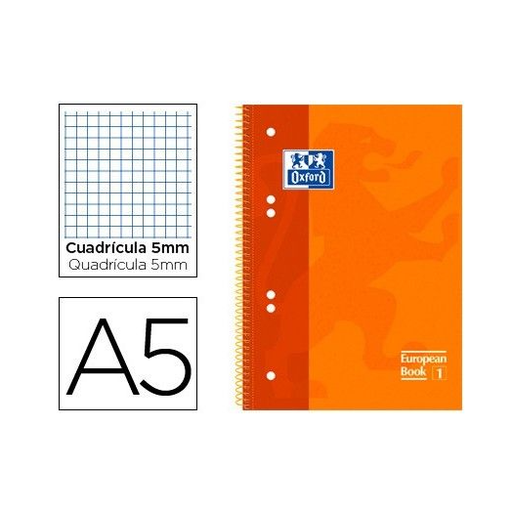
Why we recommend it: Built for intensive use, this notebook combines an extra-rigid, backpack-proof cover, a spiral binding for a perfect lay-flat opening, and high-quality paper for quick, clean note-taking.
Its 90 gsm Optik Paper is the anti-bleed-through guarantee, avoiding the 'blotting paper' trap. Its sturdy spiral binding is designed to withstand rough handling.
Ultra-smooth paper where ink never shows through, and micro-perforated pages for a flawless tear-out. Ideal for turning in assignments or filing your notes.
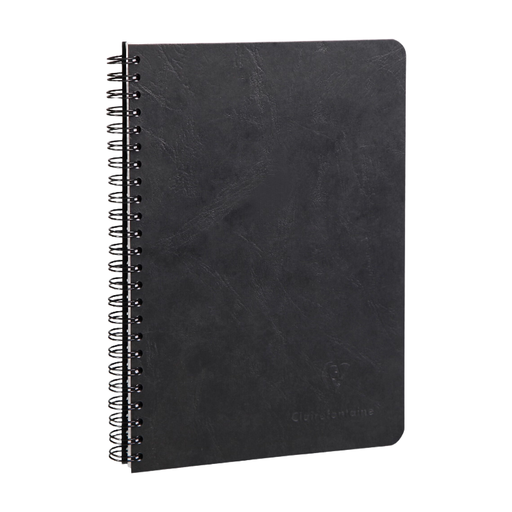
Why we recommend it: Its understated aesthetic, textured leather-effect cover, and French manufacturing make it a beautiful object that is as elegant as it is functional. It's designed for professionals who don't compromise on quality and durability.
The famous 90 gsm Clairefontaine Vélin Velouté paper offers a perfect glide and unbeatable opacity. Its wire-o binding is built for daily use and will never fail.
Impeccable paper quality, compatible with all pens, including the most finicky fountain pens. Its hardcover effectively protects your notes on the go.
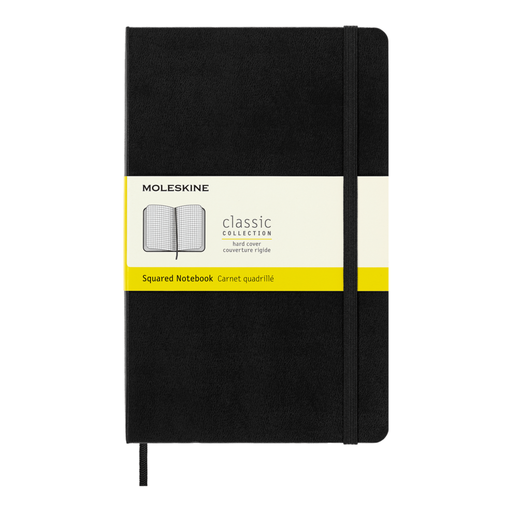
Why we recommend it: It's a cult classic, favoured by creatives for its minimalist design and thoughtful details. Its lay-flat opening is perfect for drawing, planning, or writing across a two-page spread.
Its sewn binding, renowned for its legendary durability, makes it a reliable travel companion that will never lose its pages. The 'fragile binding' trap is thus avoided.
The 180° opening is a real bonus for comfort. The expandable inner pocket, ribbon bookmark, and elastic closure are the little details that make all the difference in daily use.
We have curated a complete selection of notebooks that meet our strictest quality criteria.
It all depends on your pens! An 80 gsm paper is a good all-around standard, perfect for ballpoint pens and pencils. If you're a fan of fountain pens, felt-tips, or highlighters, aim for 90g paper (or higher) to ensure the ink won't bleed through.
For a student, a spiral binding is often the most practical choice. It allows you to fold the notebook back on itself (saving space on a small desk) and guarantees a perfectly flat opening. A stitched binding, while more traditional, is less flexible for intensive note-taking in lectures.
Look for the term "micro-perforated pages". Major brands like Rhodia or Oxford are known for the quality of their perforations, which guarantee a clean and neat tear-out. Be wary of entry-level products, where this promise is rarely kept.