For fans of indulgent flavours
If you’re having brioche, jam or cereal, you might be looking for a lemon and honey flavour. The Twinings recipe described by Auchan combines lemon and honey flavourings with pieces of honey.


Start by choosing the flavour you’d like to pair with your breakfast: lemon and honey for a more indulgent note, mint and lime for a refreshing contrast, or lemon for a more subtle flavour. Then check the ingredients and brewing instructions for the product you’ve chosen. If you’re sensitive to caffeine, bear in mind that tea naturally contains it, as the French Agency for Food, Environmental and Occupational Health & Safety (Anses) points out.
If you’re having brioche, jam or cereal, you might be looking for a lemon and honey flavour. The Twinings recipe described by Auchan combines lemon and honey flavourings with pieces of honey.
After a pastry, you might prefer a minty, citrusy note to a honeyed flavour. The Twinings mint and lime recipe featured by Auchan contains spearmint leaves.
You compare the herbs, peels, flavourings and brewing instructions before choosing your morning tea. These details help you tell a simple lemon-flavoured blend apart from a recipe that also contains mate or ginger.
For a sweet breakfast, start with the flavour you’re after, then compare the ingredients and brewing instructions on the box you’re considering.
| What to consider | What to check | Who it’s for |
|---|---|---|
| Indulgent flavours | Tell honey flavourings apart from pieces of honey, and check the nutritional information if sugar content matters to you. | With jam or brioche, I’m looking for a lemon and honey note, but I wouldn’t judge the sugar content by the flavour name alone; around 50% of consumers would put this indulgent flavour profile first. |
| Freshness | Look for mint, lemon or lime in the ingredients list: these recipes don’t all taste the same. | After a pastry, I prefer a minty or citrusy cup to a honeyed note; around 30% of consumers would prioritise this refreshing flavour. |
| Ingredients and brewing | Check which herbs have been added, whether it’s labelled organic, and the recommended water temperature and brewing time. | For my morning tea, I want to know which herbs accompany the green tea and brew it according to the instructions on the box; around 20% of consumers would put the ingredients and brewing instructions first. |
The Twinings Citron touche de miel tea featured by Auchan contains flavourings and pieces of honey: the name refers to a flavoured blend, not simply green tea leaves.
Read the ingredients for the exact product, especially if you want to avoid honey or compare flavours.
The L’Origine du Goût lemon and ginger tea described by E.Leclerc contains 30% ginger, while Petit déjeuner à l’Élysée bio combines green tea, mate and lemon, according to Kusmi Tea. These recipes are more than a simple green tea and lemon pairing.
Choose these blends if their ingredients appeal to you; otherwise, compare them with a lemon-flavoured recipe without these herbs.
Instructions vary by recipe: the Lipton organic lemon tea featured by Auchan recommends brewing for 2 minutes at 90 °C, while the 1336 lemon tea featured by Auchan recommends 2 to 3 minutes at between 75 °C and 90 °C.
Start with the instructions on your box rather than automatically leaving the tea to brew for longer.
Anses states that caffeine is naturally present in tea and that people’s sensitivity to its effects varies.
If caffeine matters to you, take into account the other drinks you consume that contain it.
Green tea with lemon in tea bags, including an organic version featured by Auchan.
A range of flavoured blends lets you choose between honeyed, citrus and minty notes.
Kusmi Tea describes Petit déjeuner à l’Élysée bio as a blend of green tea, mate and lemon.
Carrefour offers green tea with lemon in a box of 25 tea bags.
The range featured by E.Leclerc includes loose-leaf green tea with lemon and ginger.
Auchan offers Chinese Sencha green tea with lemon in tea bags.
These products mainly offer minty notes, along with a lemon and ginger blend and a mandarin and orange blossom recipe. Choose the flavour that appeals to you with your sweet breakfast, then check the size of each box.
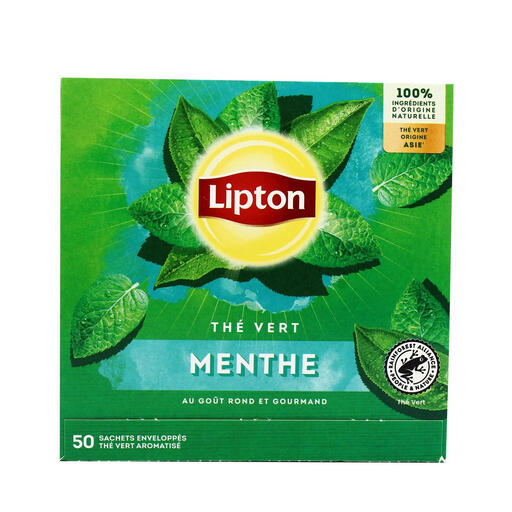 Image unavailable
Worth considering if you prefer a minty note with a sweet breakfast. Box of 50 tea bags, 80 g; if you’d like a mint and lime flavour, compare the ingredients of the product you choose.
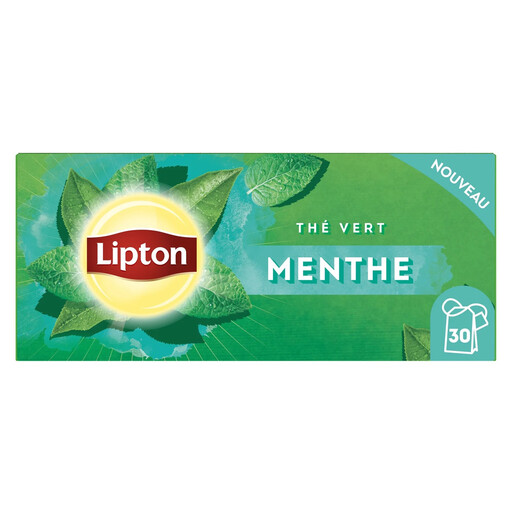 Image unavailable
Another size to consider if you’re looking for green tea with mint. Box of 30 tea bags, 48 g; check the ingredients if you’d also like a citrus note.
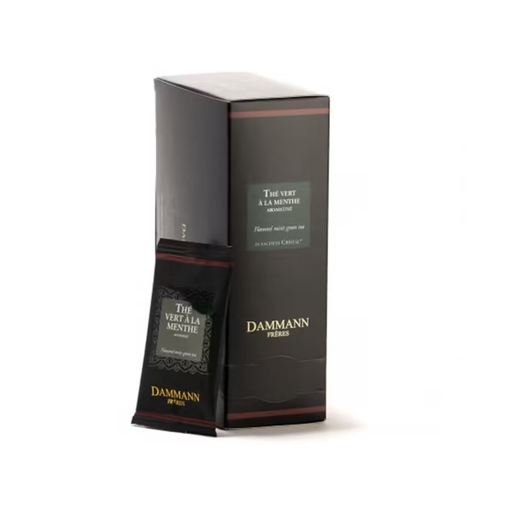 Image unavailable
For anyone who prefers a minty note to a lemon and honey flavour. Box of 24 tea bags, 48 g; check the ingredients if you’re specifically looking for a mint and citrus recipe.
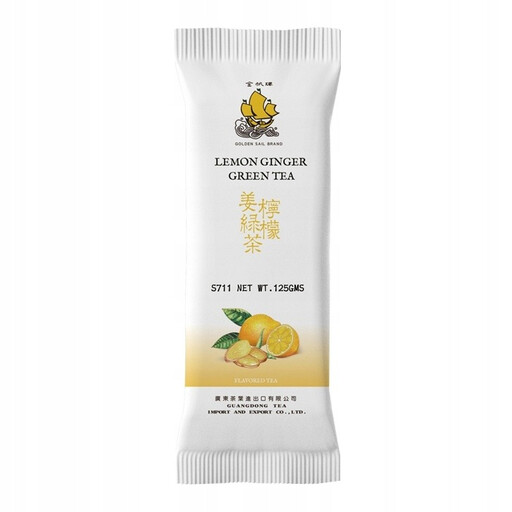 Image unavailable
Worth considering if you’re after lemon and ginger rather than a minty or honeyed note. 125 g pack; check the brewing instructions for this product.
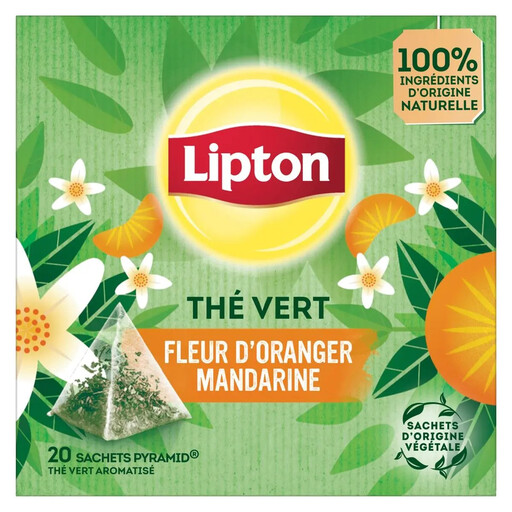 Image unavailable
For anyone who prefers a floral and fruity blend to recipes with mint or plain lemon. Box of 20 tea bags, 30 g; check the ingredients if you have a particular citrus fruit in mind.
The name alone doesn’t tell you how much sugar it contains. The Twinings Citron touche de miel tea featured by Auchan contains flavourings and 1% pieces of honey; check the nutritional information on the exact box if sugar content is a factor in your choice.
Start by following the instructions for the product you’ve chosen. Auchan recommends brewing its Lipton organic lemon tea for 2 minutes at 90 °C, compared with 2 to 3 minutes at between 75 °C and 90 °C for 1336 lemon tea. Don’t automatically apply the instructions for one recipe to another.
Yes, caffeine is naturally present in tea, according to Anses. If you’re sensitive to it, take into account any other caffeinated drinks you have during the day.
Check the ingredients list to distinguish between green tea, flavourings, peels and other herbs, then look at the brewing instructions. In France, the Directorate General for Competition Policy, Consumer Affairs and Fraud Control (DGCCRF) states that food labelling must be visible, legible and written at least in French.